What does it take to stay vibrant in work and in life, not just for a season, but over the long haul? That is the question of regenerative vitality: how we renew our energy rather than deplete it. Tony Martignetti offers an image worth borrowing: the lighthouse.
A lighthouse, Tony points out, doesn't scatter light randomly. It is "directionally focused," aimed at what is meaningful and at guiding others home. He confesses he hasn't always lived this way. Scattering your light everywhere, he says, is exhausting: "It's exhausting and also draining."
That image matters now because of what Tony sees around us: a world where "everyone's kind of moving to the average." His answer is not more effort, but a different way of showing up.
-
Tony Martignetti (00:00)
it's not like you're doing it because you're trying to fit into other people's definition of what performance should look like.
Instead, it's more of a sense of, okay, I'm I'm being me. I'm being my unique self. I'm being who I am. My multidimensionality integration is already done. And now I'm allowing it to just be expressed.
especially in a world when it would seem like everyone's kind of moving to the average or feeling like we're moving to the average. Now is the time when we need to move away from that and stop performing to the average. Instead, let's play out loud.
Jiani (00:36)
Welcome to MAGICommons Dialogic Lab where we invite explorers to reimagine a future of flourishing. Today our guest is Tony Martigetti.
He has invested decades in the space of life science and technology and now he dedicated all his efforts and energies into reimagining leadership through the lens of multidimensional leadership.
in our conversation, a few key themes emerged. First, leadership is not a unique privilege to a few because somebody has a title. Leadership is an innate divine right bestowed to each one of us. No matter who we are, where we are in our life, we all each lead in our respective space.
We also talked about the importance of keeping our self-editing in check because that is the very thing that keeps us fragmented. So how do we develop a healthy relationship with self-editing at the same time, embrace and integrate all dimensions, even polarities within ourselves so we become a cohesive and coherent living human being.
We also explored the possibilities of play and how play can potentially help curate safe spaces for us to experiment and integrate different dimensions.
Jiani (02:01)
congratulations on your new book, Hidden Brilliance. And I read through your book and you have been channeling and advocating this perspective of multidimensional leadership. Can you help us understand what do you mean by multi-dimensional leadership? What what what is that?
Tony Martignetti (02:20)
Yeah. Well, first of all, thank
you for bringing that to the surface because I think it's such an important thing right now. And I'll start with just saying that, you know, leadership is not just for people who are
at the top of an organization. Leadership is for everyone. we all lead in different ways. And multidimensional is this element of, you know, bringing all the parts of ourselves into the room so we're more fully expressed and alive. And, you know, what
multidimensional means is that along the way we're we're asked to fragment ourselves, to become just our titles or to become just what is seen as valuable to others. But the reality is we're so much more than that. And oftentimes we have to go back and see what's missing so that we can bring those missing elements back to the table so we can feel more alive in the work we do. So
Those multidimensional elements could be the curiosity we left on the sidelines because we felt like it was too much, or the artistry of, you know, who we were as children or in our prior lives along the journey that was silence or suppress, and bringing it back to the table because that artistry is exactly what the technical person might need. and it's comes in many forms.
so as I've done this exploration, I've seen it so many wonderful examples in the people I've talked to. And when we do it together, it becomes even more magical. So that's what I mean by multidimensional leadership, especially in a world where AI is becoming very very challenging for people to face.
Jiani (04:01)
Mm, yeah. And
You mentioned about that being activating that multidimensional layer of us as leaders for everyone, is one of the most effective ways for us to collaborate with artificial intelligence and contributing this unique essence that only human beings can contribute and in alongside with artificial intelligence and machine intelligence and and etc. in your book you mentioned something
About self-editing. So I get
Tony Martignetti (04:32)
Mm.
Jiani (04:33)
a sense that self-editing is how we fragment ourselves and
Tony Martignetti (04:37)
Yeah.
Jiani (04:37)
reduce ourselves from this multidimensional way of being and leading into a flat
one dimensional two-dimensional way of of of of being a leader or whatever w wherever we lead, in whatever context that we we lead within. where where does this self like self-editing come from? wha what's the origin of this
Tony Martignetti (05:01)
Yeah.
Jiani (05:02)
editing behavior? Hmm
Tony Martignetti (05:05)
Well,
it comes from a mul multiple places, many places. And one of them it comes from the early parts of our careers when we start to say, okay, well, I I have an achiever mindset. You know, I'm I want to achieve. So what I do is I do the the things that get me noticed and the things that get me promoted. And so oftentimes that means focus on the things that this job requires and this field requires for me to get the next promotion.
To get recognized in my field. And so we the when you're in achievement mode, it's do the perfect thing for this role. So I'll use the example of finance, because that's what one of the one of the lives that I lived was being in the finance field. And so when you're thinking, I want to be promoted in the world of finance, what you do is you double down on being analytical and thinking, you know, how do I get the best.
analysis done. But with that, you kind of say, okay, well, there's no room for creativity. There's no room for, you know, being a connector or anything else. So you maniacally focus, and I'm not trying to be like negative, but the reality is you focus on how do I be the best analyst, the best finance person, and thinking that there's only one track for that. Eventually you come to this place where you collect a lot of experiences and you realize, wow, like
How am I going to get to that next place? And what do I need to do differently? Because what got me here is not going to get me there. And so you realize that there's an expansion that needs to happen. So you get out of achiever mode and you have to be more in an integrator and an in a synthesizer mode. And you have to switch your way of looking at things. And at that point, you start thinking, how do I bring more to the table that makes me more multidimensional?
How do I expand beyond what I was doing to achieve? And how do I collect all the things that I've done and go beyond that so I can see bigger picture? Make sense?
Jiani (07:14)
Yeah, I get a I get a part of me trying to ask ask you this is that is there a sequence? should people first anchoring in and doubling down on one dimension of themselves to be to arrive somewhere before they open up fully the other dimensions of themselves or for people who are early on in their careers is this
Make does that make sense for them to at the very beginning open up for this multidimensional beingness and leadership?
And then we'll see where where that goes. Like, cause a lot of times
Tony Martignetti (07:50)
Yeah.
Jiani (07:51)
when we're thinking about like 'cause because in one of the narratives it's like if we doubling down on something, we're showing grit, we're showing discipline or whatever discipline means to in that context.
Tony Martignetti (08:03)
Mm-hmm.
Jiani (08:04)
And we applaud for that.
Tony Martignetti (08:07)
Yes exactly. Why?
Jiani (08:09)
And so I I think that's how the world kind of knows someone because it's just easier. you don't you don't have to follow this person 24-7 to understand the full dimension. So how do we how do we make it more like I don't know more integrated, more practical,
Tony Martignetti (08:27)
Dynamic. Yeah.
Jiani (08:29)
and in this system may not be built for that yet.
Tony Martignetti (08:34)
Yeah.
Well, I love that question because there's something about this, which is, you know, do you become a specialist or do become, you know, more of a a broad you know, someone who sees things more broadly? And I think there's the answer to this is even in an early part of your career, you have to have like some depth and breadth. And so you have to continue to almost be like an accordion and think, okay, how am I doing both at the same time?
You don't want to be to have no depth at all in one area, but you also want to be thinking, how do I from time to time step out and say, okay, how can I also be expanding myself beyond what is just this one area that I'm going deep into? Because if you don't have any depth, then then the problem is you start to have the shallowness of of what you're doing. And that's not healthy. And so I think there's the answer to your question is.
Very complex. You have to kind of think both ways. make sure you have an area where you're saying, I want to focus my depth in this. And maybe that depth is having some depth in multiple areas, but also see the broader picture and see how you can expand and have views that are going beyond just one area. It's almost like the the model of the the T-shape model, which has been.
use for years to developing leaders, you know, you want to have depth in one area but breadth in others. But I think we have to have many T's. So we have to have a more yeah like think
Jiani (10:00)
Mm, many teeth mmm.
Tony Martignetti (10:03)
about it as expanding beyond just the one one depth. so what I mean by that is you know as you're building a career maybe it's thinking okay well I want to be a marketing person but I also want to have a another depth in
an understanding of tech, or I want to have another depth in storytelling, or that's like something that is another leg to stand on. Yeah.
Jiani (10:28)
Mm, I see. Yeah.
And I think it applies for both young professionals, also seasoned professionals, because sometimes one area may be deep enough and they would like to develop more depths across
Tony Martignetti (10:42)
Yes.
Jiani (10:43)
other dimensions. And for me as you are speaking the the visual language of like the T, I also see octopus. So the first octopus
Tony Martignetti (10:51)
Yeah. Perfect.
Jiani (10:53)
could be just like one leg, it's okay.
It's a beautiful tea. if you have the bandwidth and you're curious and you wanted to activate all these multiple dimensions, you become an obstacle. Yeah.
Tony Martignetti (11:03)
Yeah. Well, it's great you say that
because there's something that I developed called the identity map, which I'm sure the people other people talk about identity maps, but it kind of looks like an octopus and it really starts with like who are you at the center? But you know, how are you expanding beyond that center and creating multiple legs beyond it that become that multidimensional self? And in many ways, that's that's our personal brand, but without calling it, I've got a brand myself, it's really
You know, how are you extend ex expanding beyond the center and creating those edges of of your your brand that allows people to understand you more than just you're just the title. you have so much more to offer than just your title. And when you start to see that you have that, you know, you start to invest in those different parts and you start to see how they connect. And you can also
use them in different forums. It doesn't mean that you have to be like thinking in every moment, how do I use all my parts in in every moment? It's more about how can you sharpen those tools and then bring them in at any moment when you need them, when they're valuable. and that's that's what's really what we're doing, building capacity
Jiani (12:15)
Mm, yeah.
Tony Martignetti (12:19)
so that it becomes a kind of like a s a s Swiss Army knife of of you know, lack of a yeah.
Jiani (12:24)
that's what I'm thinking.
Yeah, Swiss n army knife style octopus.
Tony Martignetti (12:31)
Sounds kind of dangerous.
Jiani (12:33)
It's not kind of dangerous. Yeah, then I think that naturally guides this conversation into the next phase, which is because we've been talking about the skills, the the kind of the performance based skills that's relying a lot on our actions.
Then the dive into like the psychology, the energetic space of being this. because how to make sure that this Swiss knife style octopus is not dangerous, then we need the multi dimensions.
of compassion, empathy, vulnerability, and all that beautiful stuff that you mentioned in
Tony Martignetti (13:07)
Yeah.
Jiani (13:08)
in in the in the process of deep integration a
Tony Martignetti (13:11)
Yeah.
Jiani (13:11)
as we become more multidimensional. And I do personally I do see in myself I have I used to maybe I still have
a lot of polarity. So there would be one side of me who is like bowed and action driven and the other side of me just wanna chill and relax and feel cozy and cry over a good movie. So
Tony Martignetti (13:37)
Yeah.
Jiani (13:37)
I think a lot of times in the
in the outer world, when we when we in embed ourselves in different contexts, a lot of self editing sometimes will say in in your original example, if you want to be analytical, you need to edit out your ability to think compassionately or offer you know, be vulnerable, you have to edit that out and you have to only focus on analytics and brain power and put up this
percents of like yeah I can do everything listen to me
Tony Martignetti (14:09)
Yeah.
Jiani (14:09)
so how psychologically or energetically or emotionally how do how do people integrate all kinds of those different dimensions of energies emotions into this one beingness into this one
Person.
Tony Martignetti (14:29)
Yeah. I love that you bring this up because there's something about this which is it's not it's like you just kind of show up one day and you're like, I've got all these things and I'm gonna bring them all to the table. It's a practice and it comes from the word you used earlier, which is this idea of playing with polarities. polarities are, you know, and this is the practice of leadership is the ability to have one thing on one end of the polarity and then the other, and then understanding.
How to use them both and knowing how to balance them because you shouldn't be all the way in one direction and all the way in the other, you know, from one moment to the next. It's finding the ability to fine tune between them and knowing how they play. and I use the word play very intentionally because play is where you find that happy balance between the two. If you're in performance mode, it's hard to
To practice this. You have to get out of your, you know, I have to be perfect moment. And you have to be in that moment with, okay, now I'm experimenting with this. I'm allowing myself to be imperfect. I'm allowing myself to explore how this is going to show up in little micro moments so that I can see how being vulnerable and being analytical can work together, or I can see how.
Being an artist and being a you know, a tech expert can be a perfect combination, but it doesn't show up immediately. it's how you work through that integration process that allows you to finally see how these two can complement each other. and that's where the the journey is really first identifying, become aware of these parts.
And then allowing them to see how they interact with each other in a playful manner.
Jiani (16:19)
Mm, in the playful manner, that requires an environment that is safe and so
Tony Martignetti (16:23)
Yeah.
Jiani (16:24)
we can play. And as you're speaking that and I have this scenarios like, I have this, this I have dimension one, compassion, I have dimension two, playfulness, I have dimension three,
imagination and I have dimension four analytical and then in this situation I wanted to tune up my compassion
Tony Martignetti (16:45)
Yeah.
Jiani (16:45)
dosage
or whatever. I wanted to see what happens and I wanted to invite the space to incorporate more playfulness and I wanna see what happens. So it's kind of like a it's almost like an experimentation in a way that that we feel we feel safe to play and
Tony Martignetti (17:05)
Mm-hmm.
Jiani (17:05)
we stay curious throughout this process and see what
what the outcome based on different percentages of different each dimensions
Tony Martignetti (17:17)
Yeah.
Jiani (17:18)
in different situations. So it does take a lot of discernment, observation, and even if it goes
See, that's where the the tricky part is. If the the situational stake is super high, then I would be I would have I would be fearful. I
Tony Martignetti (17:37)
Yeah.
Jiani (17:37)
don't want it to play too much because I want this outcome to be predictable versus if the situation is
Okay, then I'm like okay let me play a little bit. So it it really
Tony Martignetti (17:50)
Yeah.
Jiani (17:51)
so complex. Yeah, it's so many ifs and ifs then ifs then ifs then
Tony Martignetti (17:57)
Well, I mean, what
you're what you're really tapping into here is that you you just can't do this in a place in an environment that doesn't contain that. And so it starts with there's an inner dynamic, but there's also a great way to do it together. And that's one of the things I started to create is this idea of what's called an illumination council, which is bringing people together who are on a journey like this or want to go on this journey together and allowing them to explore their multidimensional selves.
But also do it in the safe container and knowing that, hey, I'm doing this thing, I want to see what's possible, what I can express beyond what is currently being expressed. And so I need to have a safe container to do so. And so if you were to go into an organization and say, okay, well, you know, I'm I'm playing with my identities, bringing some more of my expression in place. And the place is just not that type of an environment that's allowing that to happen, you might.
meet with resistance or people might look at you weird. So you the best thing to do is make sure Yeah. But you if you start with
Jiani (18:55)
Yeah, yeah, it's like unprofessional.
Tony Martignetti (19:02)
creating the right container, which means that in this is why I when I go into organizations, I will start with like getting them into a into a state of play and invite this intentional way of people showing up differently together, then what happens is the safety gets created.
Then what happens is as they start to connect on this, they're supporting each other on the journey of doing this work. It starts to become something that ripples out from this organization, from the teams that I'm working with. And then before you know it, it becomes easier for them to express because they have built the right foundation to move from.
Jiani (19:44)
Mm, mm. So it's like an incubation experimentational
Tony Martignetti (19:47)
Yeah.
Jiani (19:50)
space. Yeah, because safety is is really what matters. and also I get a sense that once they're used to that place state they may be very motivated to come back to the organization and start
adjusting and realigning the policies, the cultures to to make play more accessible to to everyone.
Tony Martignetti (20:11)
Yeah. And and
there's countless stories about, you know, what I've seen, how I've seen this happen. Even thinking back to before I really knew what I was doing. I I had this story
Jiani (20:21)
Mm-hmm.
Tony Martignetti (20:33)
in my TED talk about this woman who I worked with who was a violinist who was also a data scientist. And and I just remember like the the ability for her to bring this thing that she didn't really share with anybody that she was a violinist and a really good one.
And she invited that idea of like, okay, well, I'm gonna share that. I mean, I'm not gonna hide that anymore. And people saw that part of her and they started to celebrate that about her. Like, wow, I we didn't know that about you. And one of the the the other parts of that, it's not like they just said, Hey, now you're a violinist and you know, you need to do any more data science. But what they did is they they saw her as someone more than just this one person.
They saw her as more than just that one part. And her confidence went up. Her ability to say, like, I can be more than just the one thing that they think of me. And they invited more of her into the room, which is why, you know, my TED talk was called don't check yourself at the door. And that was the foundation, I think, of a lot of this work that now has really blossomed. And you never know what you're gonna.
where your work's gonna lead until you start following threads and seeing what evolves. And I'm so glad that I did follow that.
Jiani (21:49)
Yeah, that's so beautiful. Yeah, I think that's what we all need to hear. I think we need somehow we we need this permission. We need
Tony Martignetti (21:58)
Yes.
Jiani (21:59)
someone to tell us, Yes you can. Yes, you are allowed. Yes, we permit you. I think maybe
Tony Martignetti (22:05)
Yeah.
Jiani (22:06)
it's coming from the childhood thing. I don't know. Like as kids and parents, that's the first power structure that we encounter and back then we have to rely all the survivals on that power structure.
and later on it just ingrained in us and we somehow we everything that we do we need some sort of permission to
yeah.
Tony Martignetti (22:25)
Well, I wanna riff on that just to say I always say pr it's permission
to shine because that's what this is all about. I mean, I think a you know, my book's called Illuminating Hidden Brilliance because, you know, inside everyone's got this beautiful light that needs to come out. But the problem is we we kind of that spark goes out because oftentimes we're we're almost told to like dim that light to fit into the boxes that people think we should be in. And that's what this is all about. It's like the light is already inside.
We need to find a way to get that light out and ensure that people know that we need all of it.
Jiani (23:01)
Yes, we do. That's where the that's where true diversity comes through. It's not just race, it's not just class, it's like individuality, everybody's multidimensionality of of being Tony, of
Tony Martignetti (23:18)
Exactly.
Jiani (23:18)
being Gianni, of being Sarah, of being Susan, of being being
Tony Martignetti (23:21)
Yes.
Jiani (23:23)
peace. So yeah, so that is the true authentic diversities that the world is really calling for.
and I
think another thing that just emerged as you were talking about it, the the role that the criticism play in the process of self-editing, in the process of dim that light, in the processing of reducing from multidimensionality into
two or one dimensionality. Mm how do you how would you recommend to people mmm
develop a new relationship with criticism. whether it's inner criticism or it's external criticism, whether this criticism is truly deserved or whether this criticism is simply an a byproduct of someone's expectation that is not in alignment with who you are.
Tony Martignetti (24:15)
It's a great question. I mean, you knew you don't want to completely ignore and I hate the word criticism because I feel like it it already has this like negative connotation because it feels like, okay, you know, it's not feedback. You know, feedback is wonderful because feedback is what we need to continue to refine and continue to find ways to make things better. But the reality is that when we put it we put it in the frame criticism.
it's it's almost immediately making it negative. And, you know, the reality is there's always a little bit of truth in what people are sharing, but you can't take everything at face value. You can't, there's always something underneath that you need to be able to say, is this really true? And you know, especially when it's the self-criticism, what is criticism but a story? And you know, I often joke at the saying that I'm a great storyteller and some of the stories I tell are completely false.
to myself.
Jiani (25:12)
Mm-hmm.
Tony Martignetti (25:13)
and we have to rewrite the stories. We have to find out what stories that we need to rewrite and change the narrative so that it can be more supportive of who we are. and if we've been editing ourselves for years, which happens, sometimes those stories have been really putting us at a detriment of who we can become. And so that criticism is something we need to a, maybe not even call it criticism, let's
find a way to make it more positive feedback or even better feed forward because what we want to do is how do we rewrite the story so that it actually becomes something that we can use going forward and allow ourselves to say what's a more empowering story and if it's coming from somebody else, you know, say what's what is true about what they s what they're saying and what what is really just them kind of projecting from their own.
understanding of the world. Make sense?
Jiani (26:12)
Yeah, I can sense there's a lot of projection. Even myself, sometimes I project.
I think being able to restrain or let go of this projection really come back to a previous point, which is an integration of
Tony Martignetti (26:29)
Yes.
Jiani (26:29)
those fragmented parts of of our being. If we are still fragmented, for sure we will project. For sure we will receive projection from others too.
So this process of integration is really what holds the foundation of of
Tony Martignetti (26:48)
Yeah.
Jiani (26:48)
a solid multidimensional leadership.
Tony Martignetti (26:53)
Yeah.
And I just want to build on that for a moment, if you don't mind, because if you're going through a journey where you're starting to put the pieces back together, I you know, I'm kind of hearkening back to a poem I wrote, which is called Pieces of Me, which was in a period of time when I was feeling like like who am I? I've got all these fragments of pieces of who I am, but I was trying to put them back together and figuring out what's what do I want to keep and what do I want to maybe discard or maybe not really.
keep going with. and when you're in that moment, that, you know, chrysalis moment, the best thing you can do is is be careful because you're vulnerable. Don't just take everything that people are saying and say, okay, you know, they may they're right. I'm, you know, I'm broken and this is not good. You gotta be careful about what you're taking in. It's almost like going on a a feedback diet, right? because at that point you're very vulnerable.
And so I think you the voice you need to be listening to most clearly is that I am piecing things back together. I'm trying to put the fragments that matter back into the hole. And when I'm back together, then I'm going to see what the hole looks like. Makes sense.
Jiani (28:08)
Mm yeah, so hold hold within a sense of deep compassion, 'cause the worst thing that can happen is judgment, because that's why we're fragmented in the first place. And
Tony Martignetti (28:23)
Exactly.
Jiani (28:23)
I think a lot of love, a lot of understanding, a lot of patience.
Tony Martignetti (28:30)
Yeah.
Yeah. Yeah, it's exactly it. Hmm.
Jiani (28:33)
And
mm.
Yeah, so coming back to this multidimensional leadership, what would be a specific step if we were to visualize the steps you outlined in in the in the writing?
can you guide us through the steps so
Tony Martignetti (28:54)
Sure.
Jiani (28:55)
we can at least attempt to reintegrate.
Tony Martignetti (28:59)
Yeah,
I've got a lot of tools to first of all just say not to be, you know, plugging the book, but I'll just say the book has a lot of really action-oriented frameworks and steps you can take because I don't want people to say, they read the book and there's lots of great stories in it and what have you, but I want them to be able to take it and move with it and actually put things in place. but the overarching theme here and the framework that is most valuable at a very high level.
is the illumination framework. And what it is is is it's framed around four Ds. The first D is discover. And Discover is really about doing the inventory, the excavation of your past and saying, you know, what did I leave behind? What are the things that really have been part of my past that I've overlooked, or maybe the stories that, you know, have been left behind that I need to come back to.
And so discover is such a critical stage of this journey. So start there, figure out what is it that I'm not expressing that needs to have a little more time to come to the surface. And then you come to the next stage, which is called distill. And distill it's it's thinking about where you are now, you know, what part of yourself, now that you've discovered it, can be brought into the current situation to serve your current purpose wherever you are in your journey.
And then the next phase is design. design is really creating the right container, the the right environment that will serve that purpose. there's a lot of moves around that. And one of them I always talk about is presence engineering because we want to make sure. Yes. It's
Jiani (30:42)
Passons engineering.
Tony Martignetti (30:46)
a mix of that, you know, kind of the technical person in me and also that sense of really the ethereal part of.
How do we create that presence that is internal and with others, relational and also environmental? How do we create the right containers for who we are becoming and it's supporting who we're becoming? So
Jiani (31:06)
Mm, and coherent.
I think coherence is the success matrix here.
Tony Martignetti (31:09)
Hundred percent. Yeah.
So design is important. And especially when you're doing this together with other people, it's great to be able to make sure you've got people around you who are, you know, gonna help to see you as you are evolving and supporting you in that journey. And then the last part is deliver. deliver is kind of those, it's like the the sustaining part. It's like, how do I ensure that I've got the right practices in place?
And the support system that really allows me to say, how do I sustain this long term? Show up every day and do the work to become and and express the multidimensional self all along the day, you know, from here on. And one part of that, which is really important, which is to be the lighthouse for others and sustain that light. Don't be burning brightly all the time and feel like, okay, I can do this without any rest. You need to
recharge your light.
Jiani (32:09)
Mm, yeah. And also I think in order to do this consistently not consistently, but continuously, and also regeneratively,
My hunch or my hypothesis is to honor the cycles. just like
Tony Martignetti (32:25)
Yes.
Jiani (32:26)
we have four seasons and our energy levels have four seasons and every month there is different seasons and the moon looks different every seas every month. So it's
Tony Martignetti (32:37)
Yeah.
Jiani (32:37)
all it's all a cycle. So maybe in the discovery stage, mm, compassionately understand or study your energy patterns and
What is your cycle? What does your cycle look like? and then how do we honor that cycle? So for the lighthouse, maybe mechanically, yes, the lighthouse can be on forever if there's electricity.
Tony Martignetti (32:59)
Yeah.
Jiani (33:00)
but energetically, yes, the lighthouse keeper may take a rest from time to time, may have his or her own cycles that he or she needs to honor. And
Tony Martignetti (33:11)
But it's an interesting thing about I'll just say about the lighthouse is that
Jiani (33:12)
I think that's the
Tony Martignetti (33:14)
excuse me. the thing about lighthouses is that they don't scatter light in you know without any intention, you know. They're directionally focused and they focus their light on the things that are really meaningful and and guiding others home and and you know it's
The intention is really there. And so it's not like, okay, I'll just scatter it everywhere and just see what happens. which I'll, you know, I'll confess that at times I felt like that. And, you know, definitely have been that way before I yeah. But you know, that's exhausting. It's exhausting and also
Jiani (33:46)
Be the light. Shine on everyone. Yeah. It's exhausting, yeah.
Tony Martignetti (33:52)
draining. And so the idea is to really be intentional about where what how are you using your light? Make sense.
I didn't mean to cut you off, but I just wanted to bring that up.
Jiani (34:03)
Yeah, to how to be intentional. It's a lot of discernment without judging, without editing, see, witness, and then adapt intentionally, honoring our boundaries, honoring that our energies and our light has limitations.
Tony Martignetti (34:25)
Yes.
Yeah.
Jiani (34:26)
And yeah, and also for this like in order to do this like regeneratively, it's almost like I think this the I think it it people have splitting kind of views about like true self or authentic self and I myself still don't understand what that is. People say it's like it's not real, but I I somehow intuitively I sense that.
w we all have some sort of true self or like unique essence. so Tony has a unique essence, Jerry has a unique essence, Gianni has a unique essence. But it's hard to describe what this unique essence is in a way that is not limiting our potentials and our
possibilities. So my hypothesis here is I'm just thinking out loud.
Tony Martignetti (35:16)
Yeah.
Jiani (35:18)
in order to do this it transcend beyond performance because whenever we perform it's like exerting something that is sometimes it belongs to us, sometimes it's not. So it's like a lot of effort, even though there's a lot of intentionality in there.
But if we are able to really connect to our deepest essence, then performance is is irrelevant because we're simply expressing that that essence. We're simply activating those dimensions to align with that deep essence. So we're simply expressing who we are
Tony Martignetti (35:59)
Mm.
Jiani (36:00)
In a in a low effort way. It's like, yeah, it just
Tony Martignetti (36:02)
Yeah. Well,
Jiani (36:03)
flows.
Tony Martignetti (36:04)
I love how you're how you're kind of you know bringing this to the surface and and thinking out loud is the best way to kind of get this here. And
Jiani (36:10)
Ha ha.
Tony Martignetti (36:11)
one of the things that you
had me thinking about, and this is the first time I'm saying it this way, was that I think about this idea of performance as being practice, practice play. It's it's practice play. If you think about performance as being practiced play, means that you've played with.
all of the elements of what you're gonna perform. And now all you're doing is you're embodying the thing you've played with over and over again and you've gotten it to the surface. Now you can just you can play it out loud. And I think
Jiani (36:43)
Play it out loud.
Tony Martignetti (36:45)
I think that is how performance can become a little more embodied and more alive. But it's not like you're doing it because you're trying to fit into other people's definition of what performance should look like.
Instead, it's more of a sense of, okay, I'm I'm being me. I'm being my unique self. I'm being who I am. My multidimensionality integration is already done. And now I'm allowing it to just be expressed. But if people are performing because in a way that is trying to fit into what other people expect it to be, that's not gonna help. And it's not going to be what we need. I mean
You as you said earlier, there's only one unique person who is, you know, unique Johnny, the unique Jerry, Tony. and and that's what we need, right? We need that uniqueness. And especially in a world when it would seem like everyone's kind of moving to the average or feeling like we're moving to the average. Now is the time when we need to move away from that and stop performing to the average. Instead, let's play out loud.
Jiani (37:51)
Play out loud. I love it. I just love it. I just love it. Play out loud.
My goodness. What a beautiful phrase to to conclude this this podcast. I get we're
Tony Martignetti (38:03)
Hmm. Yeah.
Jiani (38:04)
we're coming into this integration, synthesis stage. As we as we kind of conclude this this idea of multidimensional leadership.
integration, polarity, play out loud. If if we were to close our eyes and and reimagine a world where play out loud is the common thing to do. Like, yeah, of course we play out loud. What is performance? I don't know. Play out loud. what would the world be like through your lens? What what who would people be? What would happen and
Yeah, how would how how would we be yeah hmm.
Tony Martignetti (38:46)
There would be yeah, if I
just if I were to like just riff on that. And again, this is all happening in the moment. Like, the kind of the way I like to think about things is, you know, I just I see people being much more accepting of the imperfections. And through that process, a lot more creativity comes to the table. A lot more ideas get surfaced because we're not afraid of letting things loose.
Sure, there'll be a lot more things that don't quite land, but that is okay. because what's happening now in a lot of boardrooms and a lot of organizations is people are editing themselves down and leaving so much out of the table. I always hearken back to this. I know it's gonna sound dire, but I love this concept that Todd Henry brought to me way, way back in his book Die Empty.
Which is says that like so many people go to the grave with their ideas never being expressed. And as much as that sounds so dire, I think it's such a wonderful thing to think about in this moment is that how do we die empty? Meaning we've put it all out there and not let other people edit us or us edit us. We need to put it all out there. We need to play out loud. And that's what happens.
when we allow ourselves to be imperfect. That doesn't mean we just spout off everything that just comes off the top of our head, but it's allowing ourselves to not be edited so that we can be more fully expressed.
Jiani (40:18)
So beautiful. My goodness. Can I sit with this message in silence for a bit?
Tony Martignetti (40:25)
Gladly.
Jiani (40:26)
So beautiful. Can't wait to be there. Alright.
Tony Martignetti (40:32)
Yes.
Feels right.
Jiani (40:37)
Yeah, so right. So let's conclude.
we usually wrap everything up with putting the lamp light to kind of you as the advocator. what did little tawny like to do when
you were a little kid, like eleven years
Tony Martignetti (40:54)
Yeah.
Jiani (40:54)
old, six years old or younger, wh whenever age group that you wanted to reassociate with.
Tony Martignetti (40:58)
Yeah. Well, I
I love this question because it's a I think there's that's the the the best place to to explore identities because we were not inhibited, right? so for me when I was a child I used to create worlds. I used to draw and paint rooms and environments that expressed emotions. I know it seems really weird, but that's what I did. And I feel like in many ways that's what I've come back to.
in the work that I do, unknowingly, is how do you create an experience in a world that people can feel a little more alive, a little more expressed in their bodies, in their in in in community with others. And so yeah, that's what I did.
Jiani (41:44)
So beautiful. Yeah, and I think to me, I think emotions are real because a lot of times self-editing comes from this perspective that emotions are childish, it's not most of emotions should be suppressed, we should be emotionless, because that's where people associate professionalism with and
almost like a robot. Like the more robot
Tony Martignetti (42:06)
Yeah.
Jiani (42:07)
that you're like, the more successful you are, more powerful that you are. And I think we're we're entering in in this time in this time of collective beingness is that we have to open space for emotions and emotions are real. It's not necessarily childish. I think unintegrated emotions can be childish. I think that as adults reintegration of emotional energy is such an important
responsibility I think.
Tony Martignetti (42:34)
Yeah.
Jiani (42:35)
Hmm. And then so how do you as a play out loud adult leader and
Tony Martignetti (42:41)
Yeah.
Jiani (42:42)
speaker
and space builder? how how do you keep your own energy regenerative, alive and yeah? Hmm.
Tony Martignetti (42:49)
Yeah. That's a great question. And so multiple ways.
I guess those there's three things I'll mention. One I don't do as often as I like, and that is glass blowing. I've always enjoyed that and it's been a great practice. But lately it's just been hard for me to get there. So someday I'll get back into the shop. but the other thing I do, because I travel a lot, is I'm a museum junkie. I love museums. I just
You know, I'm always going to different museums and just trying to be in the space. And it's not just the artwork, it's these it's the architecture, it's the ambiance of what's created in museums. So museums are the other thing. And then the last thing it's kind of related to museums is I'm I'm like really fascinated with experiences, just new experiences, new places, being in community with different people. And I'm looking at it from different lenses. It's like what
what is the transformation that that is created in this experience? And also how are they designing it so that it becomes something meaningful? Because I think that's what's important right now is how do we experience experiences and how do we design it so that it is meaningful for the people who are there?
Jiani (43:59)
That's so beautiful. my goodness. Thank you so much, Tony, for sharing your presence with us and co-hosting
Tony Martignetti (44:06)
No thank you.
Jiani (44:07)
this space with us and co-exploring a future where multi-dimensional leadership is a common day practice for everyone as a leader in their own unique context.
for folks who wanted to connect with Tony, his information and his book link is in the show notes below. we welcome you to get connected and rebuild and reimagine a world into reality. So beautiful.
Tony Martignetti (44:32)
Yeah. Perfect. Thank you so much for having me on.
Jiani (44:37)
So beautiful. Thank you, Tony.
What Drains Us
Tony traces our depletion to a quiet habit he calls self-editing. It often begins in what he calls achiever mode. In the finance world he once lived in, he narrowed his focus to being the best analyst, crowding out creativity and connection. Along the way, he says, "we're asked to fragment ourselves, to become just our titles."
The curiosity we set aside and the childhood artistry we silenced go missing from the table. Performing a version of ourselves that fits others' expectations takes constant effort, and Jiani notes that effort is sometimes invested in something that was never ours to begin with. Tony names the pattern plainly: we try "to fit into other people's definition of what performance should look like."
What Renews Us
The alternative Tony offers is play, and he is deliberate about the word. Play, he says, is "where you find that happy balance" between polarities like vulnerability and analysis, or artistry and technical expertise. You can't find that balance while chasing perfection.
Then, mid-conversation, he arrives at a phrase he says he is voicing for the first time: performance as "practiced play." You play with the elements again and again, until expression becomes embodied. Jiani describes what follows as low effort: "it just flows." Tony puts it this way: "My multidimensionality integration is already done. And now I'm allowing it to just be expressed."
Play needs safety, though. Jiani raises an honest tension: when stakes are high, we want predictability, not experimentation. Tony's response is to build the container first, by gathering people who explore this together, what he calls illumination councils. He tells of a data scientist who was also a gifted violinist and had never told anyone. When she finally did, colleagues celebrated her. "Her confidence went up." Hence his invitation: don't check yourself at the door.
A Practice with Seasons
Tony offers four steps. Discover what you left behind. Distill which parts serve you now. Design the container, including presence within yourself, between people, and in the environment. Deliver by sustaining the practice every day.
Jiani brings a regenerative lens to these steps: honor your cycles. Just as we have seasons and the moon has phases, our energy rises and falls. A lighthouse can run on electricity, she notes, but the keeper may need rest. Tony echoes the point within Deliver: "Recharge your light."
While you are piecing yourself back together, Tony suggests going on "a feedback diet" and treating self-criticism as a story you can rewrite. Jiani adds that this is a time for compassion and patience.
Tony replenishes himself through glassblowing (which he admits he hasn't done lately), museums ("I'm a museum junkie"), and experiences designed to be meaningful for the people in them. All of it traces back to childhood, when, he says, "I used to create worlds."
How does it relate to Regenerative Vitality
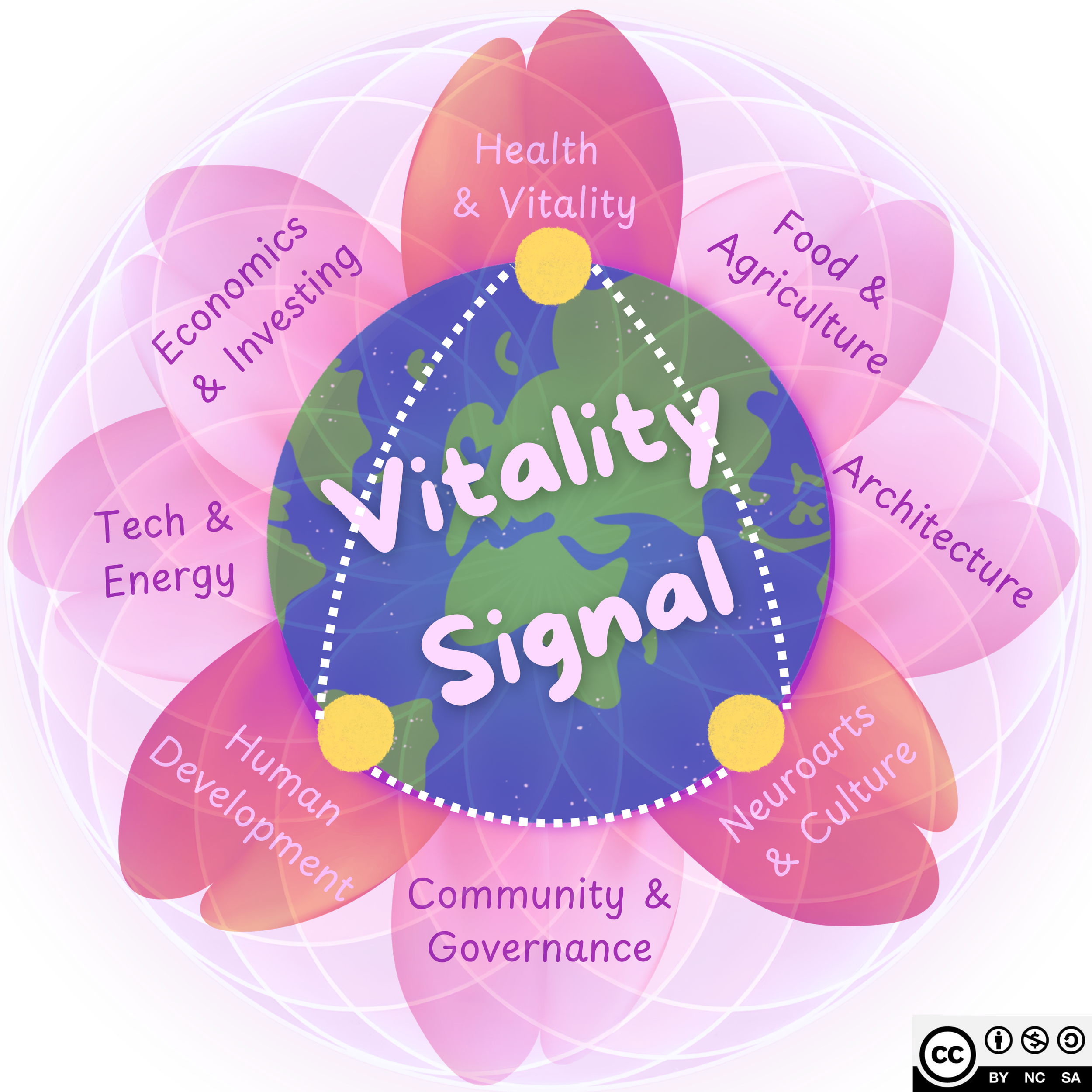
Across three domains, this conversation points to vitality that renews itself. For the individual, it returns when disowned parts of ourselves are reintegrated and expressed through play rather than performance. For teams and organizations, it grows when safe containers let people bring more of themselves, so aliveness ripples outward. And across time, it depends on honoring natural cycles, aiming our light with intention, and returning to the sources of joy that have always replenished us.
Die Empty
Tony closes with Todd Henry's idea of dying empty. It sounds dire, he admits, but he finds it freeing: "how do we die empty? Meaning we've put it all out there." This is the opposite of drain: investing yourself in honest expression renews you, while scattered, performed effort depletes you. It doesn't mean saying everything that crosses your mind, only not letting ourselves, or others, edit us into silence.
Try it this week. Remember what you loved doing at six years old, and give it a little room. Aim your light, and rest when the season calls for it.
Or, as Tony puts it: "Now is the time when we need to move away from that and stop performing to the average. Instead, let's play out loud."

Network Role
Edge Pollinator
⭐ Tony Martignetti & MAGIC
Background: Tony Martignetti has spent more than thirty years in high-tech and life sciences, beginning in finance and strategy, and now guides leaders and teams toward what he calls multidimensional leadership: integrating purpose, presence, and creativity. His book, Illuminating Hidden Brilliance, explores how brilliance goes dormant when people are asked to fragment themselves to perform.
The magic: In this conversation, Tony's magic shows up as an energy of world-building. As a child he drew and painted rooms that expressed emotions, and he sees that same instinct in his work today: creating experiences where people feel "a little more alive, a little more expressed in their bodies." It is replenished by glassblowing, museums, and meaningful experiences, and expressed through "practiced play," which lets him, and the people he guides, play out loud.
Creative Process (non-linear): Develop + Iterate Outlines & Drafts (Human + ai) ~Guest Alignment Feedback~Final Alignment by MAGICommons
