
The Curation
We are witnessing and embodying a graceful shift from extraction, separation, and endless speed to regeneration, connection, and wholesomeness. To navigate the shift, this living library serves as a compass. This collection is organized around the Vitality Signal framework, designed to help us cultivate Mindful Clarity amidst the noise and Adaptive Flow amidst the chaos. It provides the tools to restore Grounding Resilience to our bodies and the earth, while sparking the Imaginative Courage to dream of flourishing futures for all. It offers pathways for Co-Creative Resonance to heal our divides, blueprints for Aligned Integrity to re-align our inner systems, and ancient wisdom of Luminous Authenticity to anchor our souls in purpose.

Map Room These books situate us in the wider context of history and cosmic evolution, grounding our journey in core principles.
Relationality is the Interconnectedness Protocol because it argues that nothing exists in isolation; everything—human, plant, animal, and mineral—emerges through its relationships with everything else.
It is included because a flourishing world cannot be built on the "myth of the individual."
Escobar and his co-authors provide a roadmap for a "Politics of Life" that respects the Pluriverse (a world where many worlds fit).
This book provides the philosophical "glue" that binds Regenerative Design to Social Justice, teaching that to heal the planet, we must first heal our "relational tissue" and recognize that we are not on the earth, but of the earth.
Leadership for Flourishing is the Executive Protocol for the Map Room because it moves beyond the "heroic leader" model toward a Systemic Stewardship model.
It is included because it provides a research-informed, interdisciplinary framework for how leaders can intentionally create environments where individuals, teams, and whole ecosystems can flourish.
This book teaches that the primary role of a Leader for flourishing is not to "produce results," but to cultivate the conditions that make results inevitable.
This book is here to help us imagine money that acts like "nourishment" rather than "extraction."
It is selected to give our financial world a soul.
Its role is to show us how wealth can circulate through a community like water through a garden, making sure every corner is watered. It helps us build a society where the economy serves the people and the planet, rather than the other way around.

Irreducible is the Foundational Consciousness Protocol because it scientifically dismantles the idea that humans are "biological robots" or that AI will eventually become conscious.
Faggin argues that consciousness is not an emergent property of matter (like software on a computer) but an irreducible, fundamental property of nature itself—what he calls the "quantum-classical" ground of reality.
He introduces the concept of "Seity" (the unique, conscious "I" that machines lack) and "Live Information," which carries inherent meaning rather than just symbolic data.
This book is the ultimate protection against "technological dehumanization," providing a rigorous physical and mathematical argument for the primacy of the human spirit over the machine.
It integrates the latest findings in Quantum Biology and Neuro-Phenomenology to explain how focused intention interacts with the quantum vacuum.
This book is the bridge between knowing the universe is conscious (Harris) and interacting with that consciousness to manifest systemic change.
It provides the scientific framework for what ancient traditions called "magic," but what we now understand as the Directed Collapse of the Wave Function.
It shifts us from "Observer" to "Weaver."
By understanding the science of how belief and attention literally structure our local reality, we gain a sense of Radical Responsibility (out of victimization mode).
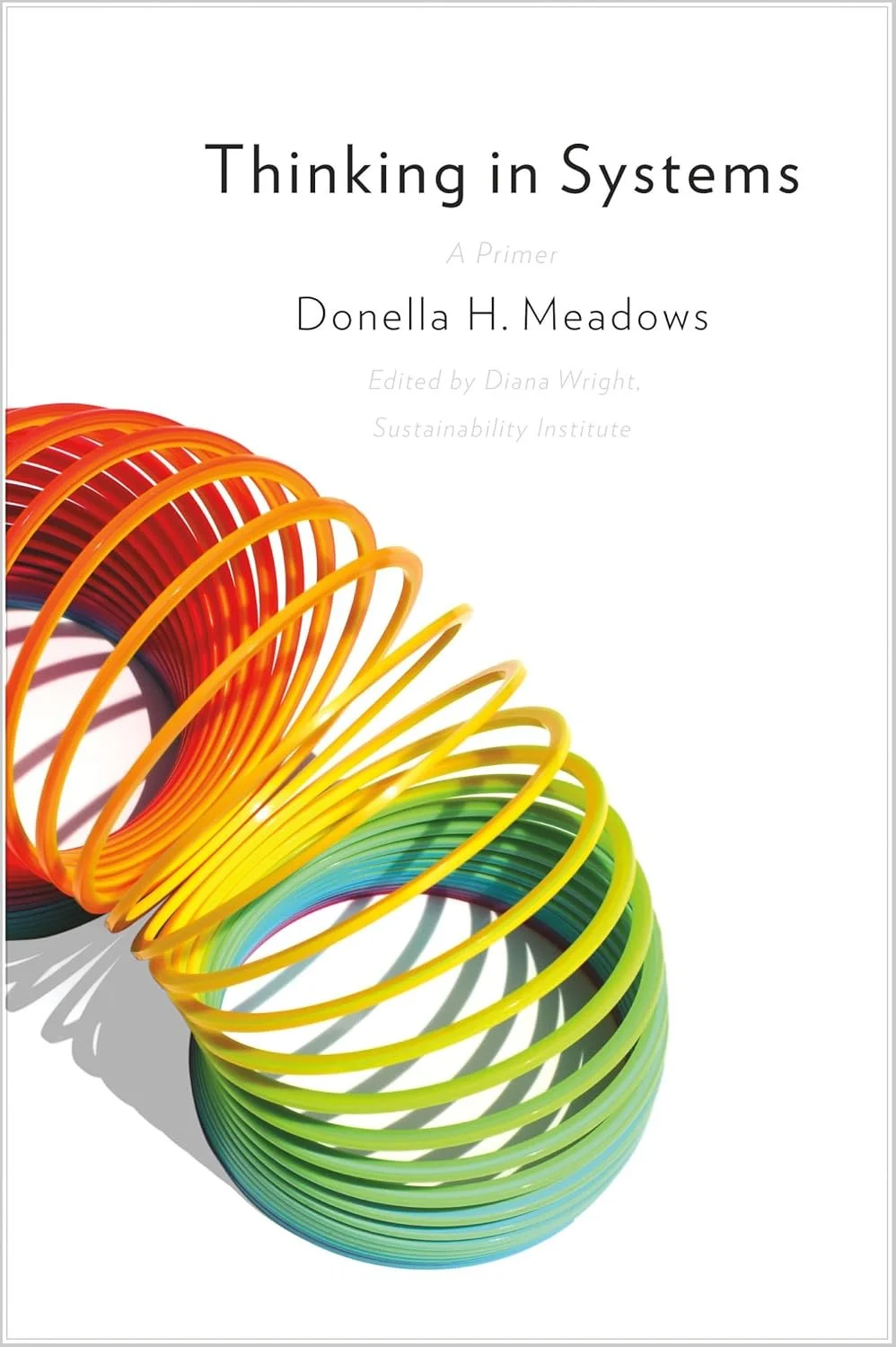
This book is the "instruction manual" for the Map Room.
It helps us see the "invisible strings" that connect everything.
It is selected to help us understand why problems keep happening and where we can actually make things differently.
It plays the role of a clarity-bringer.
It helps us build a society where we fix the deep "roots" of our problems instead of just pulling the "weeds."
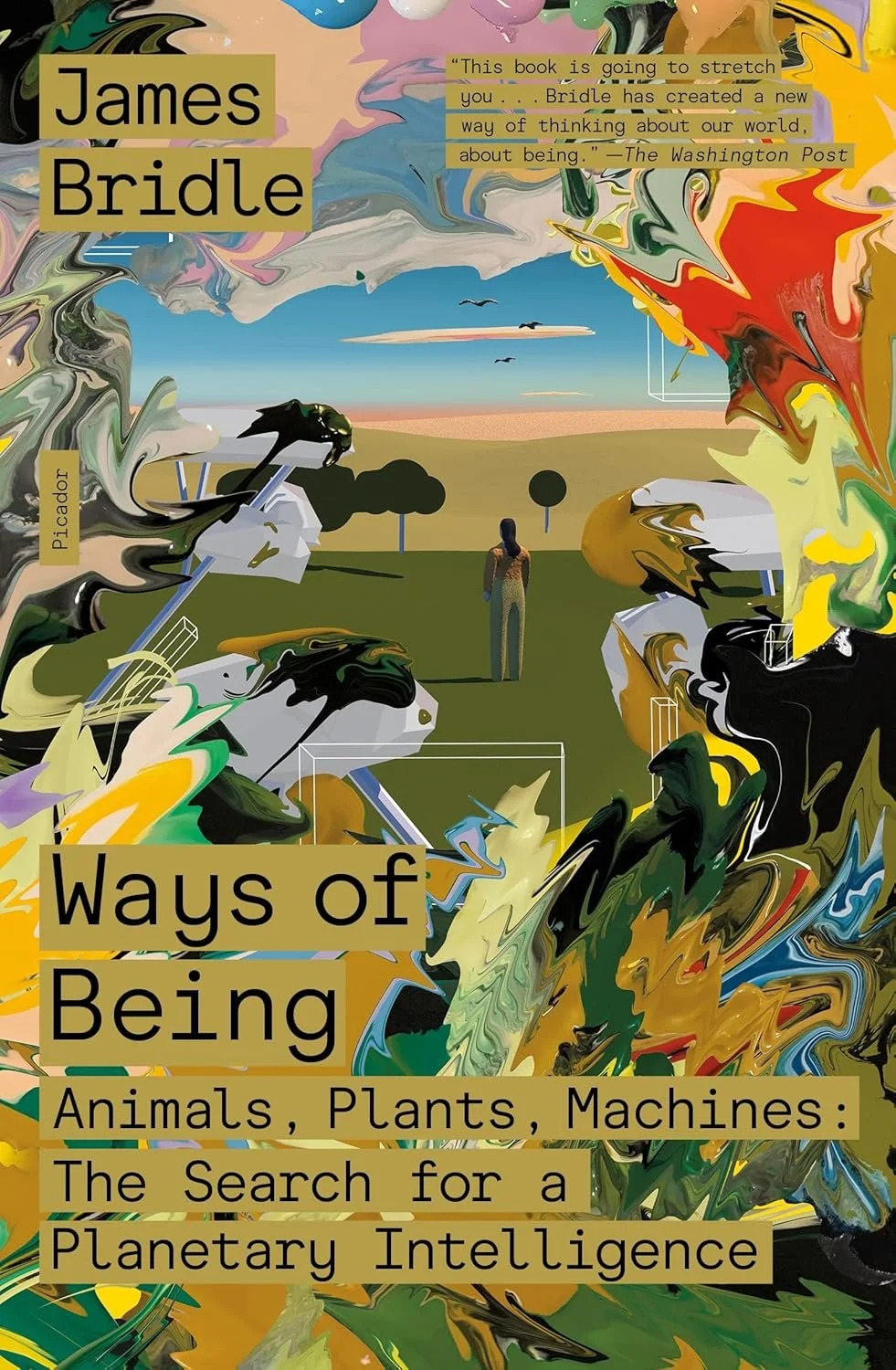
Why it is included: We usually define "Intelligence" as "what humans do" (logic, language).
Bridle explodes this narrow definition. They explore "More-than-Human Intelligence"—from the slime molds that can solve mazes to the complex social networks of forests, and even the "alien" intelligence of AI.
Bridle argues that AI should not be built to mimic corporate humans, but to help us commune with the planetary mind.
We include this to upgrade our definition of technology.
Instead of building AI to dominate nature, Bridle envisions a "Internet of Animals" and a technology stack that integrates us back into the ecology. It is a visionary text that creates a new alliance between biology and code, moving us from "Artificial Intelligence" to "Ecological Intelligence."
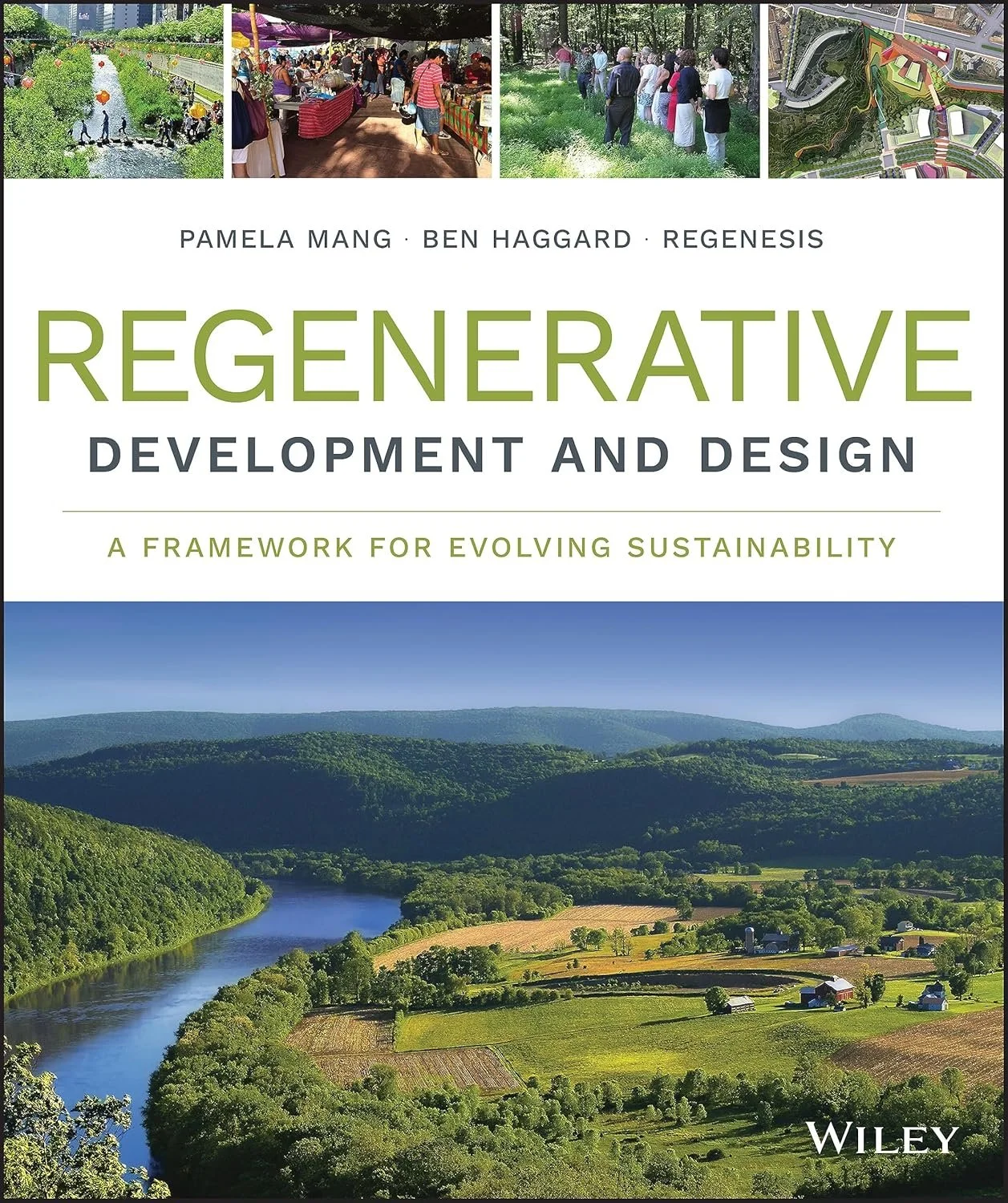
Regenerative Development and Design is the essential Evolutionary Protocol because it shifts the goal from "doing less harm" to "generating more life."
It is included because it provides a rigorous framework for treating every project—whether a building, a business, or a community—as a living participant in its local ecosystem.
By moving from a machine-mindset to a Living Systems mindset, we learn to identify the unique "essence" of a place and design interventions that allow both human and natural systems to co-evolve toward higher levels of vitality, complexity, and resilience.
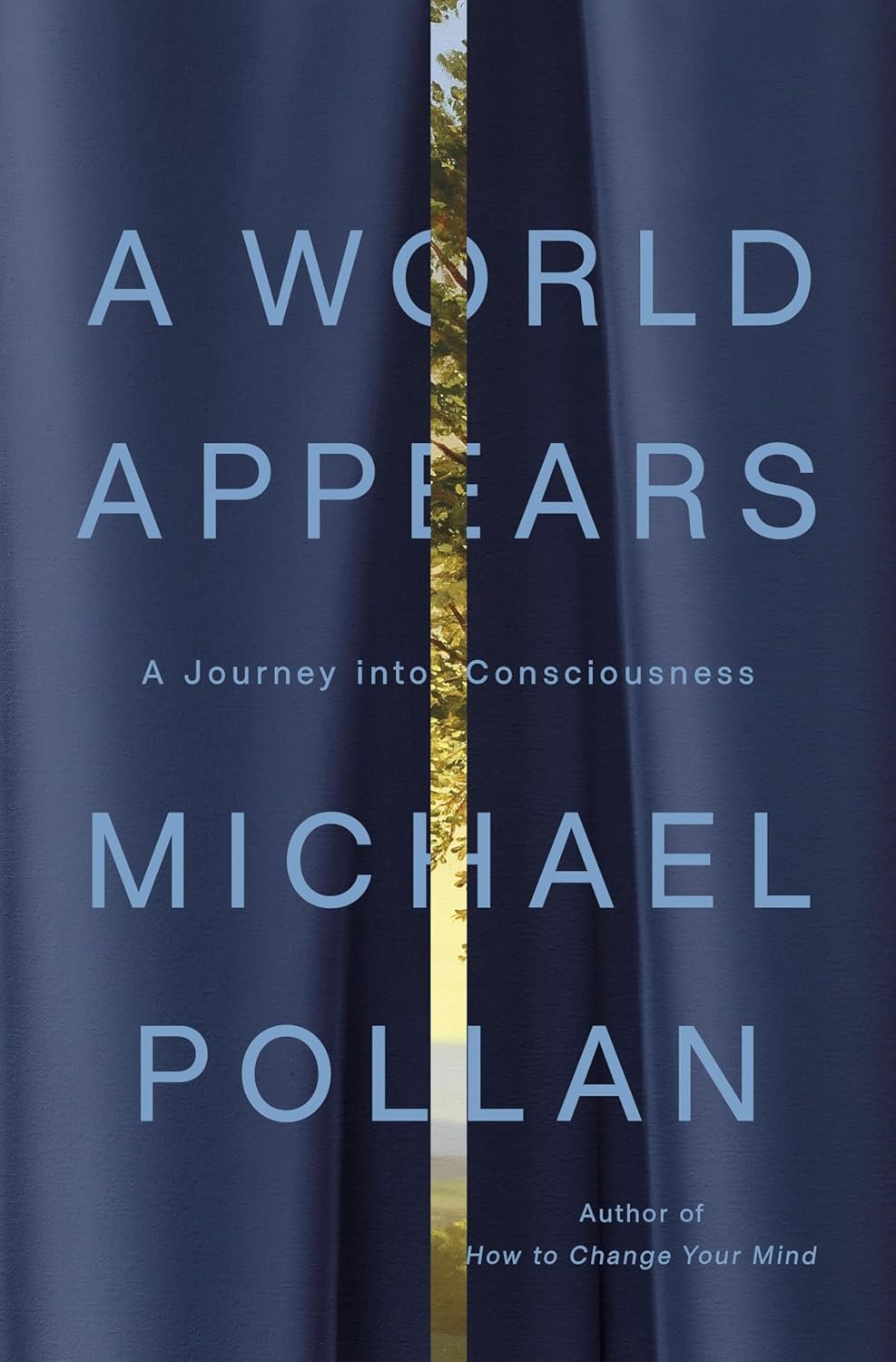
By synthesizing the latest frontiers in neuro-phenomenology, plant intelligence, and the dissolution of the egoic "Default Mode Network," Pollan demonstrates that our perception of a separate self is a biological construct that can—and must—be transcended to achieve true awareness.
This book is the bridge between the rigorous biology of the brain and the expansive mystery of the mind, providing the empirical permission to treat the world not as a collection of objects to be managed, but as a resonant, conscious ecosystem to be co-created.
As the Director of the Human Flourishing Program at Harvard, VanderWeele is the world’s leading expert on the quantitative and qualitative measurement of what makes life worth living.
When we think of health, we need to move beyond the "absence of disease" to the presence of wholeness.
VanderWeele provides a rigorous framework that integrates physical health, mental health, meaning and purpose, character and virtue, and close social relationships.
It provides the "Theological" or "Ultimate" grounding for why we care about integrity: because health is not just a biological state, but a state of being in "right relationship" with ourselves, others, and the divine/universal.

Sacred Earth, Sacred Soul is the Sacred Ecology Protocol because it revives the Celtic tradition’s "Original Goodness"—the belief that the divine is woven into the very fabric of the earth and every human soul.
It is included because it provides a spiritual foundation for Regenerative Development, moving beyond the "original sin" or "separation" models that have fueled environmental destruction.
This book shows us how to listen to the "sacred heartbeat" of the world. It provides the soulful resonance needed to ensure that flourishing is not just technologically advanced, but spiritually grounded in a deep, indigenous love for the living earth.
Most of our modern crises (climate change, inequality, war) stem from a worldview called Materialist Reductionism.
This is the belief that the universe is just dead matter and that our "consciousness" is an accidental glitch in the brain.
If we believe we are separate, accidental biological machines, we treat the world as a resource to be exploited.
Harris explores Panpsychism—the idea that consciousness is a fundamental fabric of the universe.
It provides the "Zero-Point" logic: if the universe is conscious, then Ethics is Physics.
Integrity becomes a law of nature, not just a social suggestion.
It reminds us that even with AI and Quantum Computers, we do not yet know what we are.
This prevents the "God Complex" humans tend to assume.
Elgin provides the "Soul-Level Logic" for the 2026-2050 timeline.
He argues that we are not just facing a "technical glitch" in our civilization, but a collective Journey of Initiation.
It provides the protocol for Long-Term Integrity—the ability to stay grounded and compassionate as the world "unravels" so that a mature planetary community can be born.
It shifts us from "Crisis Manager" to "Planetary Elder."
By viewing the current global turbulence as a "Rite of Passage" for the human species, the individual moves beyond the duality of optimism and pessimism.
It provides the courage for Pure Intention in the face of uncertainty, ensuring that we are not just "fixing the past," but midwifing a "Mature Planetary Community."
Kaku explains that we have reached the limits of silicon; to solve the "intractable" problems of the 21st century, we must move to the subatomic.
It is included because it maps how Quantum Computing will "collapse" decades of trial-and-error into seconds of simulation.
For us, this book provides the vision for Radical Abundance: a world where we can "calculate" the cure for cancer, design a star-in-a-bottle (Fusion), and rewrite the chemistry of fertilizer to feed the planet without destroying it.
It shifts us from "Resource Management" to "Information Orchestration." It teaches that in a quantum-capable world, the only true scarcity is imagination and ethics.
It prepares us to handle "infinite" computational power with the gravity and wisdom required to ensure it serves humanity rather than just accelerating extraction.

This book serves as the Physical Foundation for the Map Room.
It is included because a flourishing society cannot exist on energy from combustion and extraction. Black provides the most current roadmap for the Great Transition, proving that the shift to abundant, clean energy is no longer a hopeful "green" wish, but an economic and technological inevitability.
It maps the convergence of solar, storage, and intelligent grids, providing us with a clear-eyed understanding of how the very "fuel" of civilization is being rewritten.
By understanding that we are transitioning from "finite fuels" to "infinite flows," we can stop making decisions based on the fear of depletion and start architecting for a world of abundance.
In a flourishing society, we move away from "top-down" hierarchies and toward "side-by-side" networks.
Impact Networks is included because it provides the practical protocol for System Weaving.
It turns the abstract idea of "collaboration" into a rigorous individual skill set.
It shifts your relational integrity from "What can I get from this person?" (transactional) to "How can I weave these people together to serve the whole?" (generative).
By mastering the "5 Cs" (Clarify, Convene, Cultivate, Coordinate, Collaborate), the individual becomes the "glue" that allows a fragmented system to start functioning as a harmonious organism.
This book is here to help us stay "centered" in a busy world.
It teaches us how to sense the "vibe" of a situation and stay anchored in our own calm energy.
Its role is to be an "inner compass."
It helps us build a society of people who are intuitive and steady, even when things around them are changing quickly.

This book is here to help us find the "stillness" inside.
It is selected because in a world full of noise, silence is where we find ourselves.
Its role is to protect our inner peace.
It helps us build a society where we value quiet time and deep listening, allowing the best ideas to rise from the silence.
This book is here to heal our relationship with money and "stuff."
It is selected to help us move from a feeling of "never enough" to a feeling of "sufficiency."
Its role is to quiet the inner voice of greed.
It helps us build a society where we feel rich because we have enough to share and enough to be at peace.
This book is here to help us make peace with technology.
It suggests that tech is like a "seventh kingdom of life" that wants to grow and learn with us.
It is selected to help us steer technology in a direction that serves life.
It helps us build a society where our tools make us more human, more creative, and more connected to the world around us.
We selected this book to help us work together in a digital world without losing our diversity.
It offers new ways to vote and share ideas that make sure everyone’s voice is heard, especially the quiet ones.
Its role is to be a "collaboration kit."
It helps us build a society that uses technology to bring us together and help us make better decisions as a group.
This book is selected to show us that we can share things fairly without fighting.
It provides the "rules of the heart" for managing shared resources like water, air, or digital spaces.
It is important because it proves that trust and community are more powerful than greed.
It helps us build a society where we take care of our "common house" together, with fairness and respect.
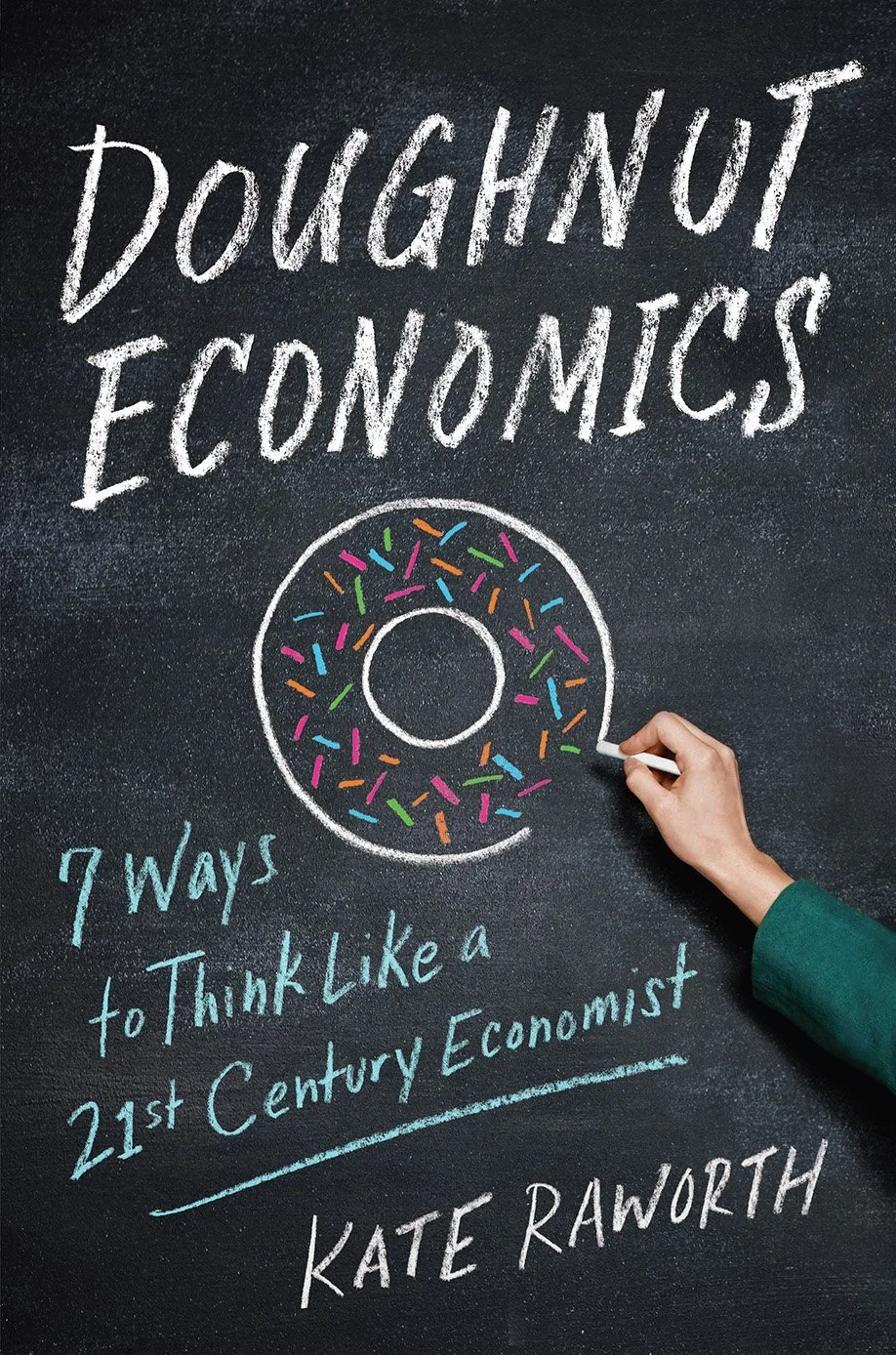
This book is here to give us a new "compass" for success.
It shows us how to stay within the "sweet spot" where everyone has enough to live well, but we don't destroy the planet.
It plays the role of a clear goal-setter.
It helps us build a society that balances human needs with the health of the Earth, making sure no one falls into the "hole" of poverty.
This book is here to show us how to "lead from the future."
It teaches us how to stop repeating the mistakes of the past and start listening to what the world needs next.
Its role is to help us stay open-hearted and open-minded during big changes.
It helps us build a society where we can face challenges together with courage and a clear sense of what is trying to be born.
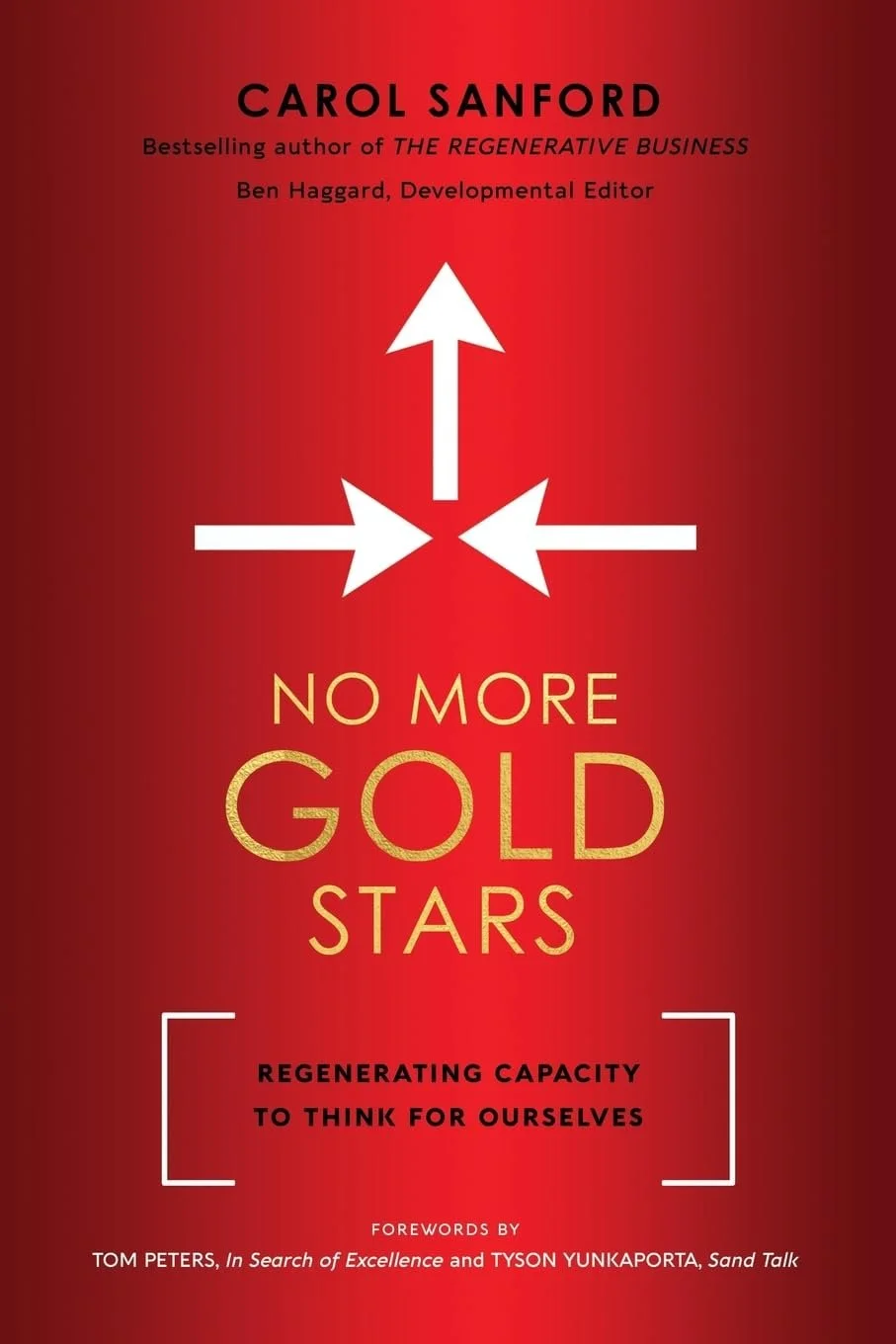
We selected this book to help us "think for ourselves in a sovereign way."
It reminds us that we don't need external rewards or "gold stars" to know we are doing good work.
It is important because it builds our "inner backbone."
It helps us build a society of sovereign, wise people who act out of their own clear values rather than just following orders or seeking approval.
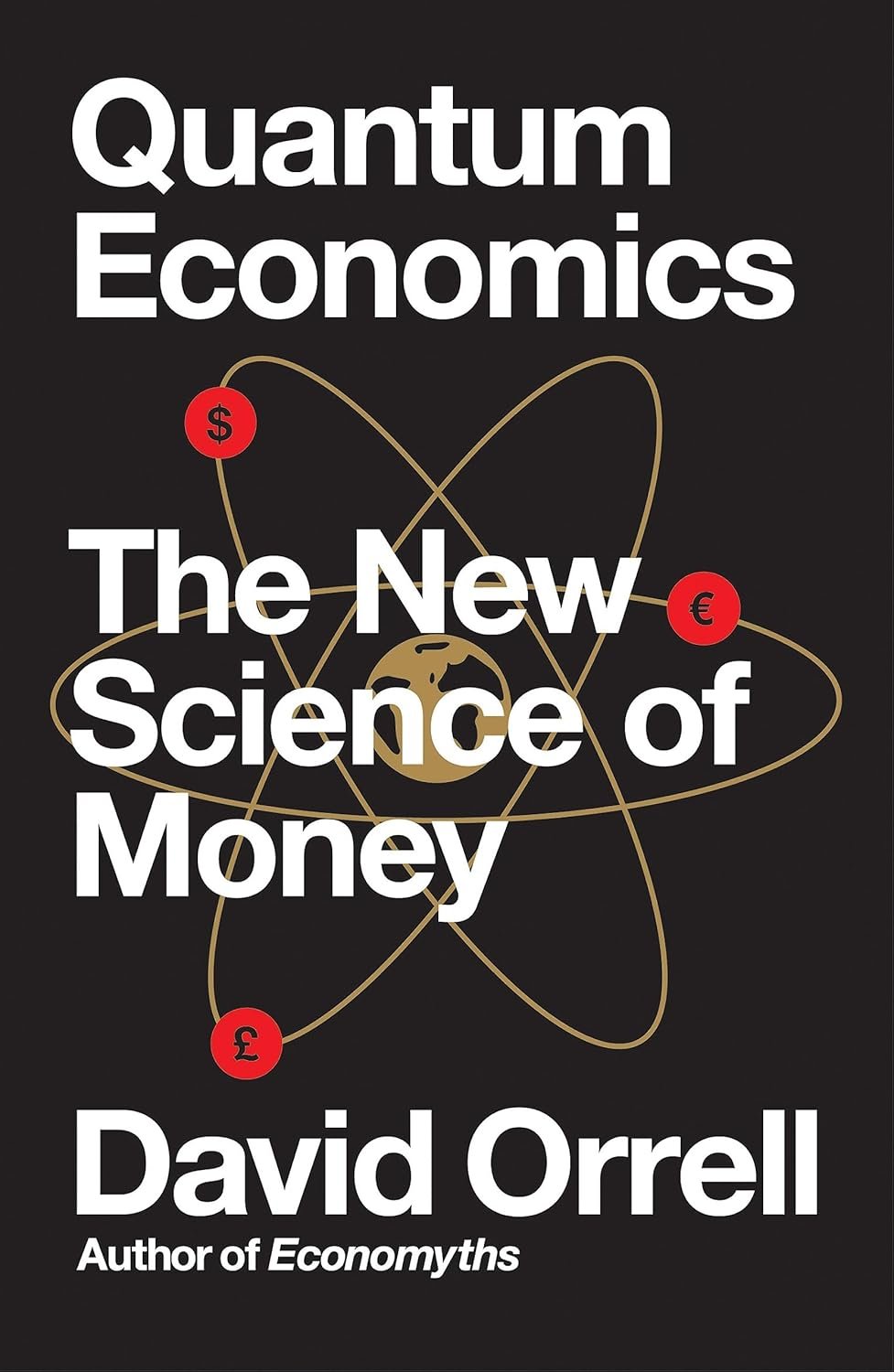
It replaces the "Science of Scarcity" with a Science of Money that respects human psychology and uncertainty.
By seeing the economy as a living, quantum system, we can build tools that are more stable, fair, and aligned with nature.
It helps us move from "managing a machine" to "nurturing a field of possibilities," ensuring our financial systems support life rather than just chasing abstract growth.
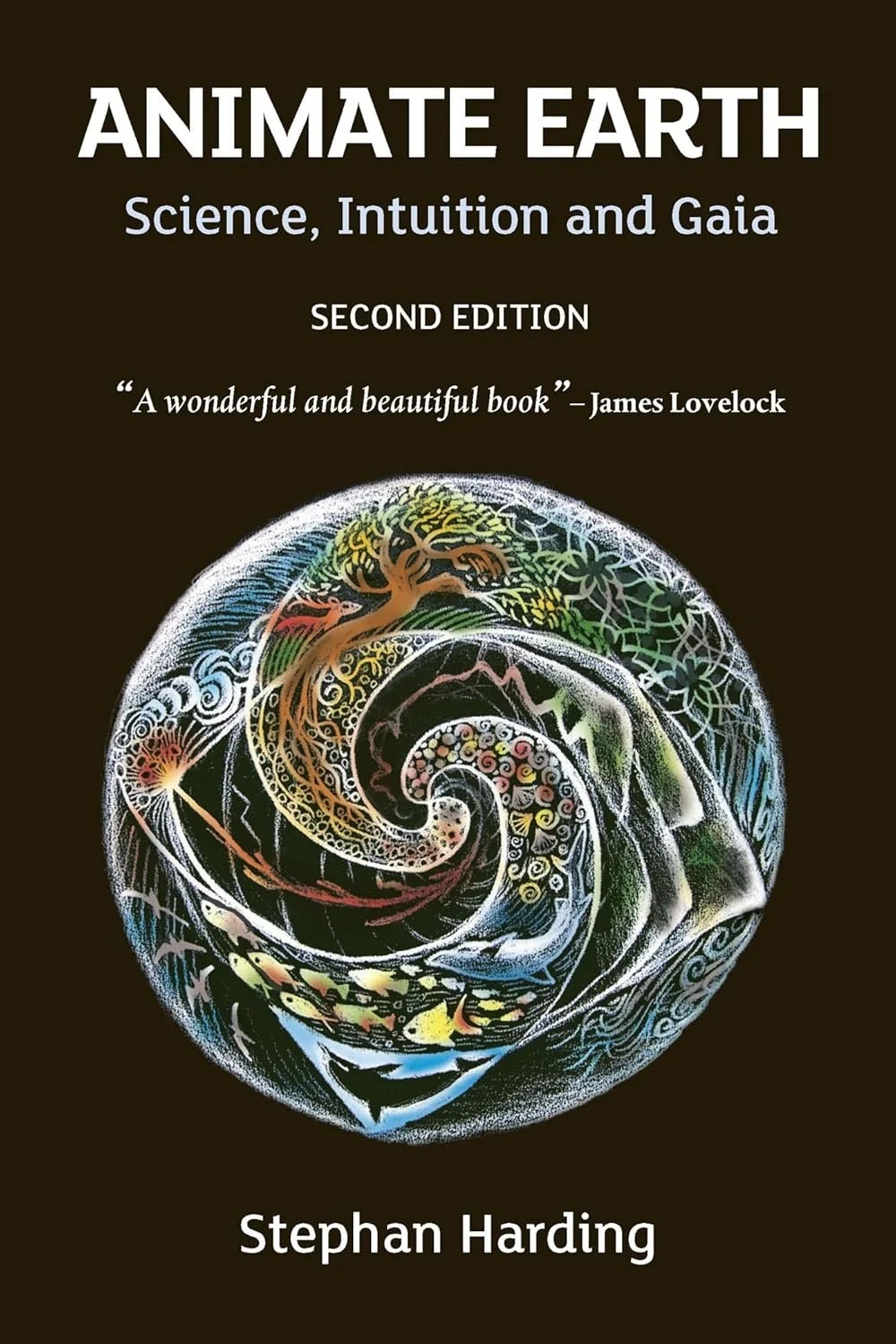
This book is here to help us feel the "heartbeat" of the world.
It explains that the Earth is not just a bunch of rocks and water, but a living, breathing being that takes care of us.
It is important because it shifts our science from cold facts to warm connection.
It helps us build a society that listens to the needs of the planet as if they were the needs of our own family.
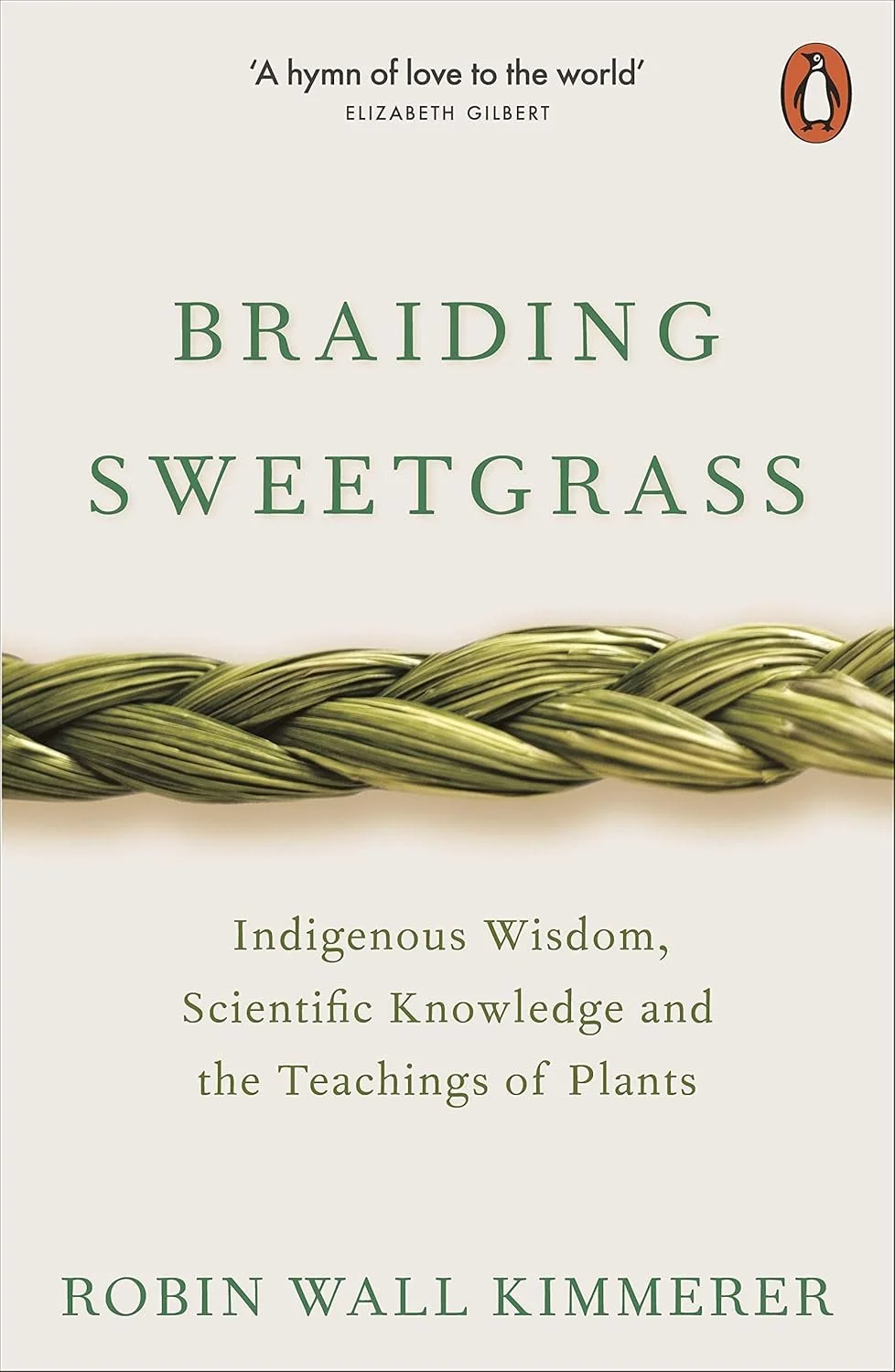
This book is here to teach us how to be "good guests" on Earth.
It reminds us that the plants and animals are our oldest teachers, offering us everything we need for free.
It is selected to help us move from a mindset of taking to a mindset of giving back.
In a flourishing society, we don't just "use" nature; we enter into a deep, loving friendship with it.
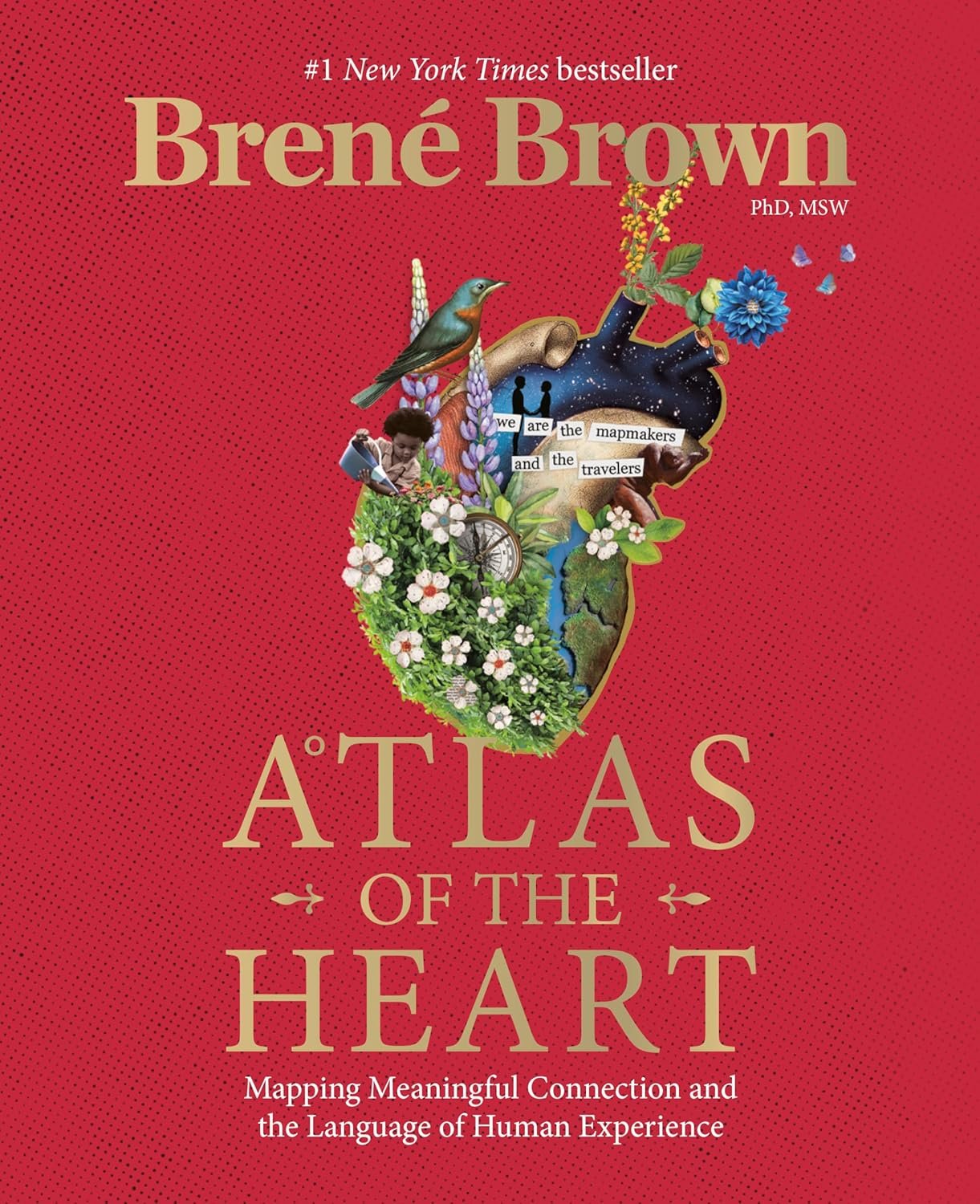
Why it is here:
This is the dictionary of emotions.
Before we can build a thriving community, we must agree on the names of things.
Brown maps 87 distinct emotions and experiences, providing the high-resolution vocabulary required to navigate the human experience.
It sits in the Map Room because it acts as the Language Legend for the entire journey.
It ensures that when we talk about "Anguish" or "Vulnerability," we are all looking at the same coordinates.
It solves the "Tower of Babel" problem, allowing diverse teams to communicate their internal states accurately—a prerequisite for Flourishing.
Why it is included:
This is the diagnostic manual for the "Collective Ego."
Tolle explicitly defines the mechanics of the "Ego" and the "Pain Body"—the repetitive thought loops of grievance, superiority, and fear that drive conflict.
It serves as the essential "Software Patch" for the leader.
It teaches that true intelligence (and the ability to build a regenerative world) only arises when we step out of the stream of compulsive thinking and access "Presence."
It frames the transition to a sustainable future not as a political struggle, but as a shift in consciousness.
Mindful Clarity These books provide the neuroscience and contemplative practices needed to anchor the mind and protect our attention.

Why it is included: Our culture treats the brain like a computer—a processor sealed inside the skull.
Annie Murphy Paul aggregates decades of research to prove this is a "neurocentric" fallacy.
She demonstrates that humans are "looping" creatures: we think with our bodies (gestures/movement), with our surroundings (nature/architecture), and with our relationships (social synchrony).
We include this because it provides the "Cognitive Architecture" for the transition.
It argues that to solve complex problems, we cannot just "use our brains" harder.
We must "offload" cognition into the world. It validates the need for regenerative architecture, walking in nature, and collaborative workspaces not as luxuries, but as essential hardware for human intelligence.
It is the manual for thinking outside the brain.

Why it is included: Modern materialism assumes the brain creates consciousness the way a kidney creates urine.
Barnard, resurrecting the genius of Henri Bergson, argues the opposite: the brain is a "reduction valve." Its job is not to produce awareness, but to limit it—filtering out the overwhelming "élan vital" (vital force) of the universe so we can focus on biological survival.
It moves beyond vague spirituality to articulate the "Filter Theory" of consciousness.
This framework explains why psychedelics, meditation, and "flow states" work: they temporarily relax the brain’s filter, allowing us to access the broader, interconnected field of consciousness that was there all along.
It connects the physics of time with the mysticism of direct experience.

Why it is included: This is a novel, but it reads like a scripture. It tells the story of a man who lives every life—ascetic, merchant, lover, ferryman—in search of enlightenment. He rejects the teachings of the Buddha himself because he realizes that wisdom cannot be communicated in words; it must be lived.
We cannot build a thriving society by memorizing concepts.
We have to go out into the river of life, make mistakes, earn money, lose money, fall in love, and suffer.
Siddhartha validates the winding path of individual experience, assuring us that everything we go through is part of the curriculum of the soul.
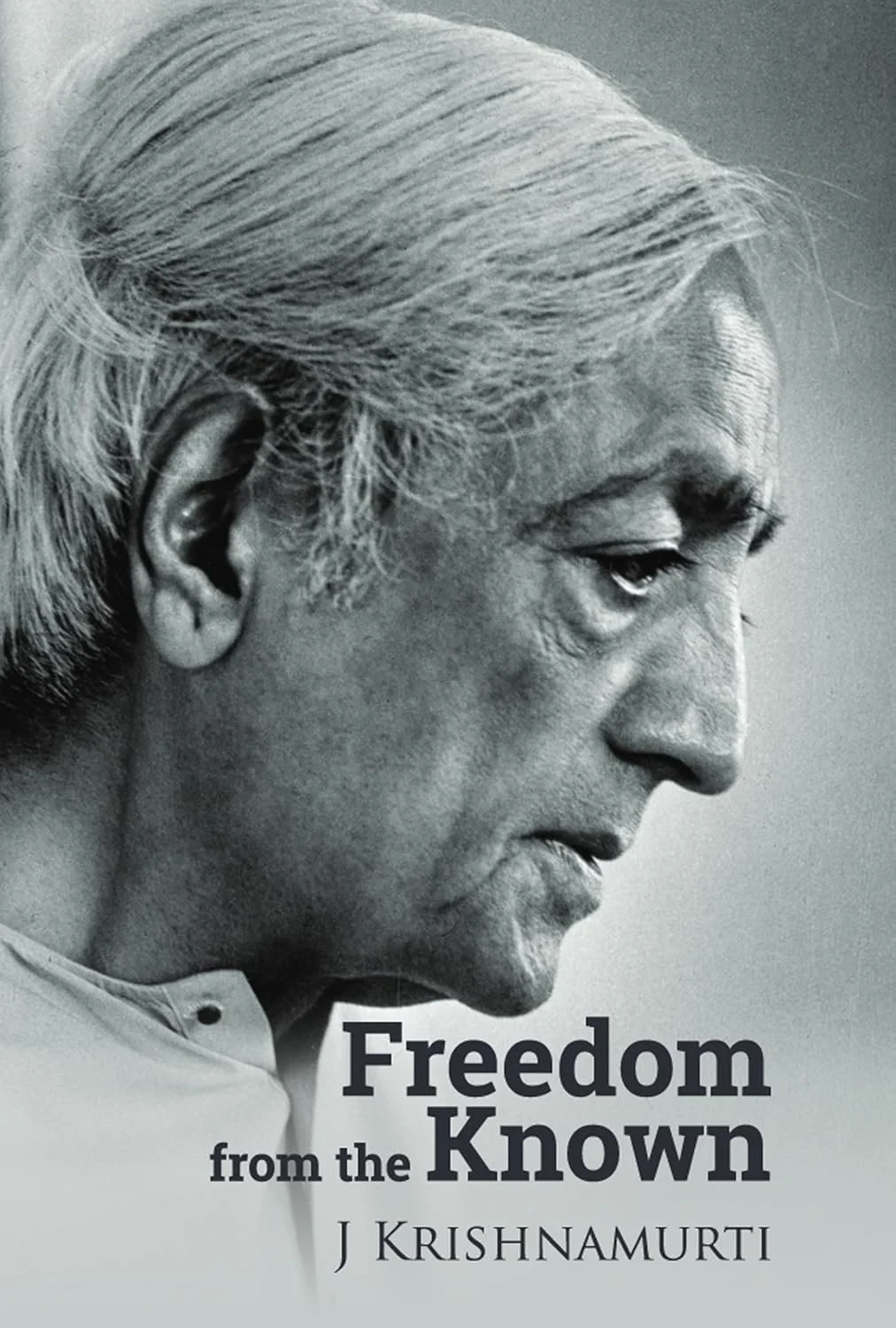
Why it is included: Krishnamurti was a radical teacher who refused to be a guru.
He argued that all authority—religious, political, psychological—corrupts the truth.
To be truly free, we must step out of the stream of human conditioning.
We must stop looking at the world through the screen of our memories, judgments, and knowledge.
True wisdom cannot be "learned" from a book and repeated.
It must be a living, moment-to-moment discovery.
Krishnamurti challenges us to have the courage to stand alone, to reject the "known" (the past ways of being), and to look at the world with eyes that are completely innocent and fresh.
Why it is included: This is the "Step-by-Step Manual" for internal liberation.
Singer walks the reader through the logic of their own mind: "Who is the voice talking in your head?" "Who is the one listening?"
He teaches the practice of remaining the "Witness"—the seat of consciousness that watches emotions and thoughts pass without getting tangled in them.
We include this because it provides a clear mechanism for dealing with "triggers."
When we are triggered, we contract and close our hearts.
Singer teaches us how to relax behind the discomfort and let it pass through us.
This is a critical skill for builders of the future, enabling us to remain open and effective even when faced with criticism, fear, or failure.
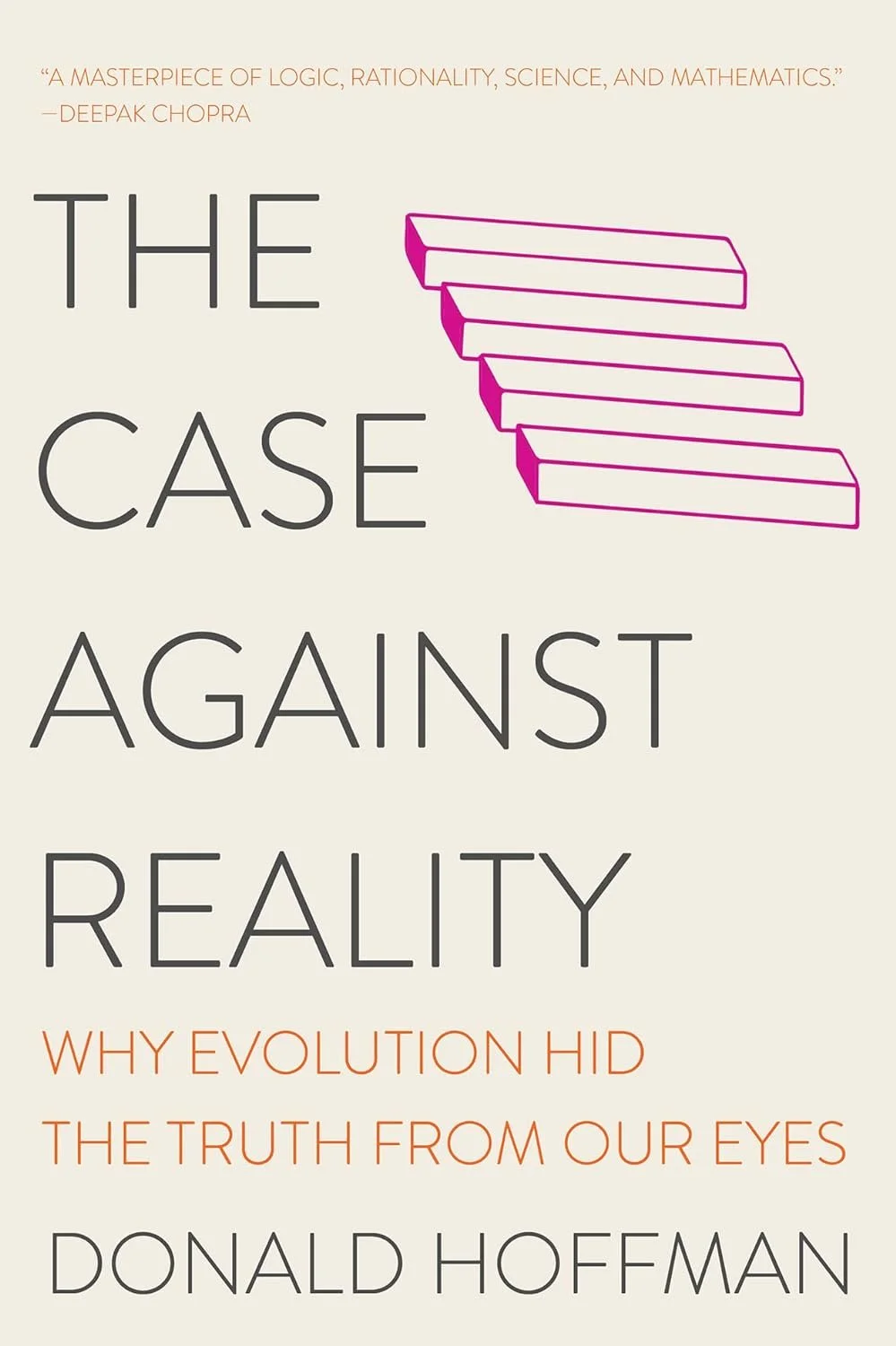
Why it is included: This book challenges our most basic assumption: that we see the world as it is.
Hoffman, a cognitive scientist, uses evolutionary game theory to prove that evolution does not favor truth; it favors survival.
He argues that space, time, and physical objects are just a "desktop interface" (like icons on a screen) designed to help us survive, not to show us the truth.
This is included because it opens the door to a "consciousness-first" view of the universe.
If the material world is just a headset, then consciousness might be the fundamental reality. This aligns with the wisdom traditions but arrives there through math.
It helps break the rigid materialism that traps us in a "dead" universe, making space for a reality that is far more mysterious and malleable.
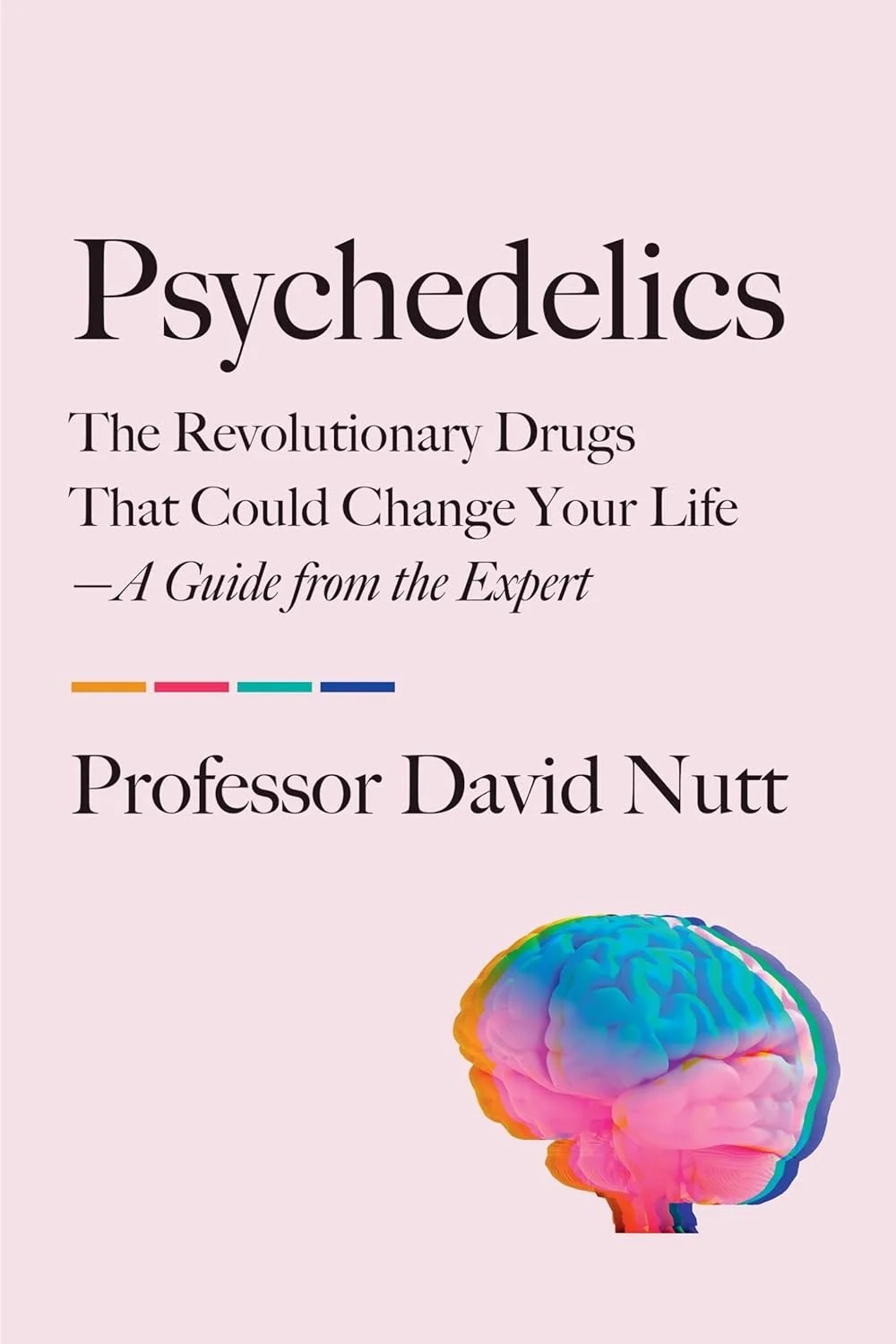
Why it is included: Written by the world’s leading neuropsychopharmacologist, this book represents the definitive, clinical guide to the renaissance of consciousness medicine.
Nutt moves beyond cultural anecdotes to the rigorous science of neuroplasticity, explaining the precise biological mechanisms by which these compounds disrupt the brain's "Default Mode Network"—the rigid neural highway responsible for our ego, depressive loops, and ingrained habits.
We include this because the transition to a new way of living requires more than just new ideas; it requires a malleable brain capable of integrating them.
Our civilization is currently stuck in patterns of addiction, polarization, and rigidity.
Nutt demonstrates that psychedelics, when used therapeutically, act as a "hard reboot" for the nervous system, temporarily dissolving old boundaries to allow for the formation of new, healthier cognitive connections.
It is the essential user manual for the chemical architecture of consciousness change, validating that the tools for expanding our empathy and perspective are now grounded in hard science

Why it is included: Many rational, scientifically-minded people are turned off by the dogma and mythology of religion.
Sam Harris bridges this gap.
As a neuroscientist and philosopher, he argues that "spirituality" is simply the project of inspecting the nature of consciousness.
He deconstructs the illusion of the "Self" without asking you to believe in anything supernatural.
It provides a rigorous, secular path to the same insights found in Buddhism and Advaita Vedanta: that the ego is an illusion and that consciousness itself is the ground of being.
It is essential for ensuring that the flourishing worldview is accessible to everyone, regardless of their religious background.
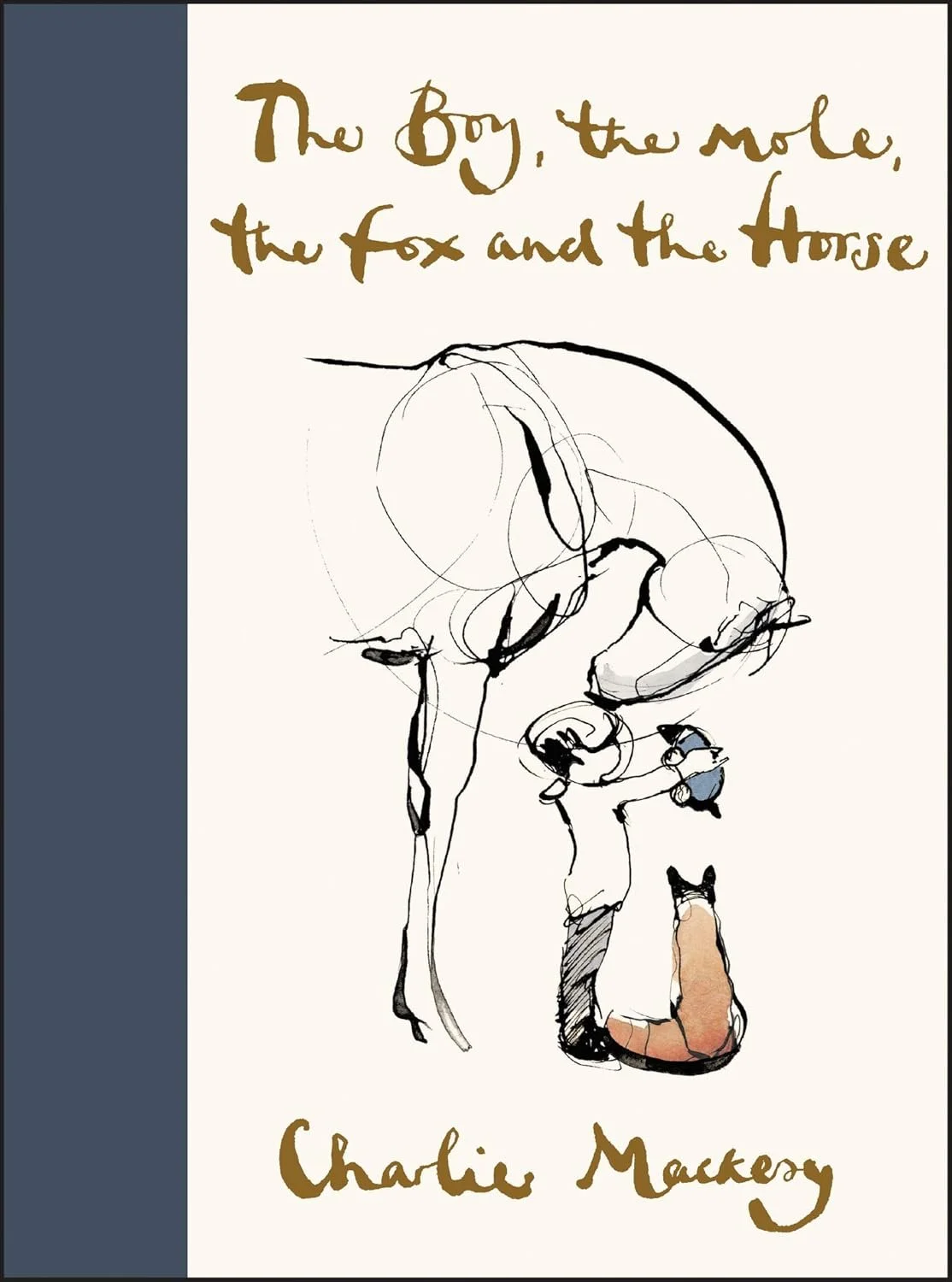
Why it is included: In a library full of heavy philosophy and complex systems, this book is a breath of fresh air.
It uses ink drawings and sparse text to explore the vulnerability of being human.
It asks simple questions like "What is the bravest thing you've ever said?" (Answer: "Help.") and dismantles the illusion that we need to be perfect or strong.
We include this because the transition is scary.
We will feel small. We will get lost.
This book serves as "Gentle Medicine." It reminds us that kindness—to others and to ourselves—is the fuller form of wisdom.
It anchors the M.A.G.I.C.A.L. kit in the heart, ensuring that our quest for a thriving world doesn't become cold or purely intellectual.
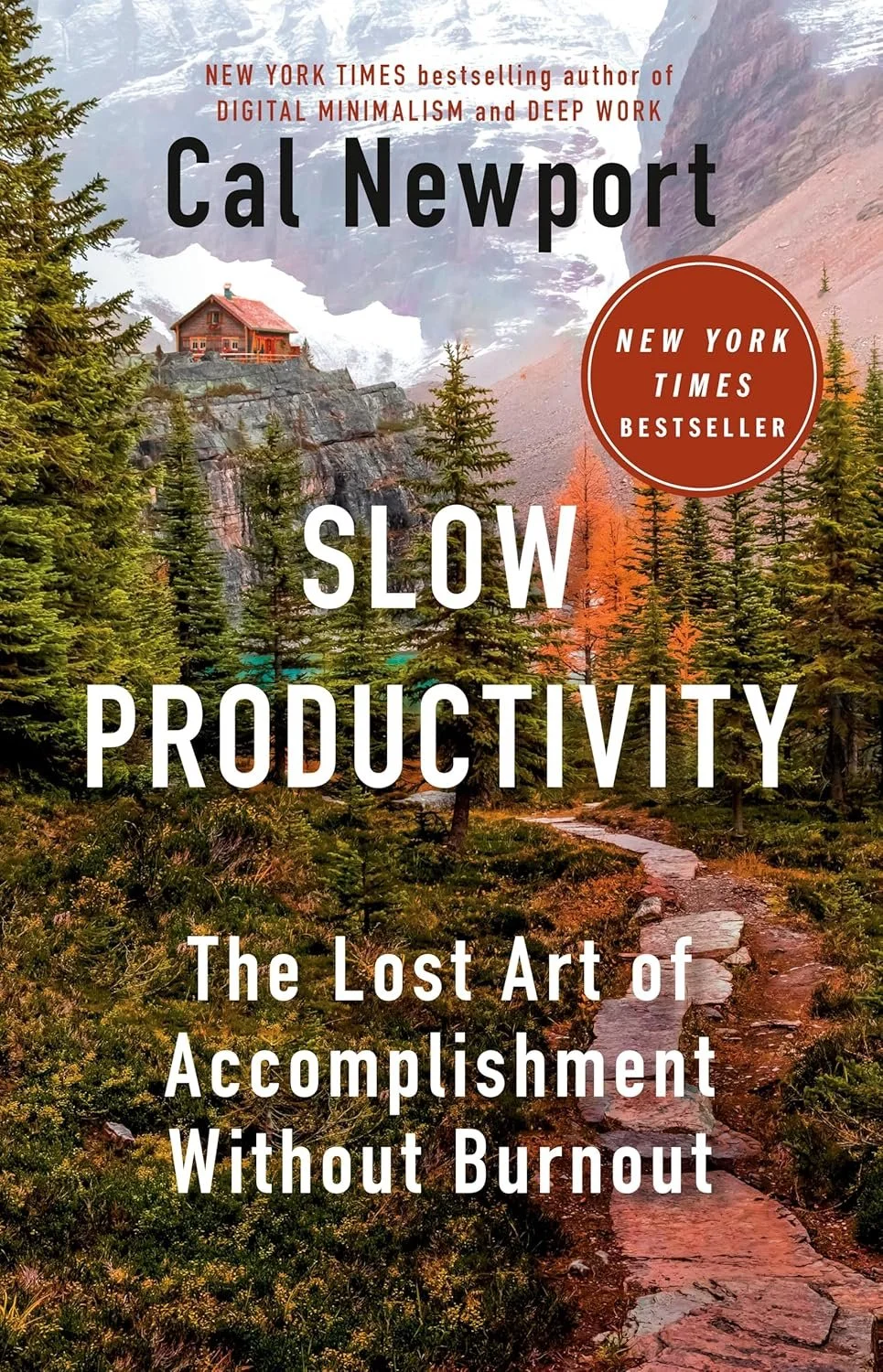
Why it is included: Modern knowledge work is broken. We are trapped in "pseudo-productivity"—the belief that visible busyness (answering emails instantly, constant meetings) equals value.
This frantic approach is burning out our nervous systems without producing meaningful results.
Newport argues that we cannot solve this by simply working harder or becoming more organized; we must fundamentally rewrite the philosophy of work.
We include this because it provides an operating system for a thriving society.
Drawing on the habits of history’s greatest thinkers (from Galileo to Jane Austen), Newport proposes three radical principles: Do fewer things. Work at a natural pace. Obsess over quality.
This book is the permission slip to step off the hamster wheel. It teaches us that "slowness" is not laziness; it is the necessary condition for brilliance, health, and doing work that actually matters in the long run.
Why it is included: Most human suffering is caused by the mind's obsession with time—regretting the past or fearing the future.
Tolle identifies this as the "egoic mind," a false self that feeds on drama and conflict.
He argues that the only place life actually exists is the Present Moment, and stepping into it is the only way to access true power and peace.
This book is included as a "circuit breaker" for the neurotic mind.
The transition to a flourishing society requires us to act, but if our actions are driven by fear or ego, we will just create more chaos.
Tolle teaches us how to act from a place of presence—where our doing flows from our being.
It is the manual for "awakening" from the nightmare of history into the aliveness of the now.
Why it is included: Written by a Roman Emperor while on military campaigns, this was never meant to be published.
It is a private journal of a man trying to remain good in a world that was often bad. Aurelius practices Stoicism not as a way to suppress emotion, but as a mental fortress.
He constantly reminds himself that he cannot control external events, only his response to them.
As we evolve multiple systems, there will be chaos, anger, and disruption.
Meditations teaches us how to stand firm in our own integrity, refusing to be corrupted by the negativity around us.
It is the discipline of maintaining a "citadel within" that no external circumstance can breach.

Why it is included: This book addresses the fundamental schism of the modern world: the split between the "Romantic" view (which loves beauty and hates technology) and the "Classical" view (which loves function and ignores the soul).
Pirsig argues that this split drives us crazy. He introduces the Metaphysics of Quality—a way of living where we bring total care and engagement to even the most mechanical tasks.
It is included because a thriving society will be high-tech. We cannot reject the machine; we must ensoul it.
Pirsig teaches us that the way we fix a motorcycle (or code an app, or build a house) is a spiritual act.
If we approach our technology with "Quality"—with care, presence, and love—we can heal the alienation between the human and the mechanical.
Why it is included: We tend to treat our inability to focus as a personal failure—a lack of willpower.
Hari argues that this is a lie.
After interviewing leading experts in Silicon Valley and neuroscience, he demonstrates that our attention didn't collapse; it was stolen.
We are living in an environment systematically designed by surveillance capitalism to fragment our concentration to extract data.
This book is included as a systemic diagnosis. While books like Deep Work teach personal defense, Stolen Focus teaches collective offense.
It connects the "Attention Crisis" to the "Climate Crisis"—arguing that a species that cannot pay attention cannot solve complex problems. It demands that we treat attention not as a consumer good, but as a human right that requires protection, regulation, and a fundamental redesign of our technology.

Why it is included: In 2017, silence was a luxury; today, it is a survival skill. Zorn and Marz argue that "Noise" is not just loud sounds; it is an interference pattern—auditory, informational, and internal—that disconnects us from reality.
They classify pure silence as "Golden": a state of pristine attention where no person or algorithm is claiming your consciousness.
We include this because it reframes Silence from a "passive absence" to an "active presence."
The authors show that constant noise traps us in the "shallow end" of cognition, making us reactive and polarized.
To access the deep wisdom required for the transition into a flourishing civilization, we must rigorously engineer silence into our days, our meetings, and our digital diets. It is the manual for reclaiming your own mind from the attention economy.
Why it is included: Many change makers burn out because they try to create peace in the world while harboring a war inside themselves. Thich Nhat Hanh argues that this is impossible.
"Peace is not just an end; it is the path." You cannot use angry, fragmented means to achieve a peaceful, whole outcome.
It bridges the gap between the "Inner" and the "Outer."
It teaches that our state of being is our primary contribution to the world. If we are anxious and aggressive, we export anxiety and aggression, no matter how noble our cause.
Being Peace provides the "First Principle" of activism: to transcend the war, we first stop the war in our own hearts, creating a reservoir of calm that stabilizes everyone around us.
Why it is included: As we face unprecedented challenges (AI, climate change), our biggest challenge is the belief that we already know the answers.
"Expert mind" is rigid; it sees only what it expects to see. Suzuki Roshi teaches the concept of Shoshin (Beginner's Mind): "In the beginner's mind, there are many possibilities, but in the expert's, there are few."
This book is included as a tactical manual for mental plasticity.
It teaches us how to drop our preconceptions and meet each moment with fresh curiosity. This stance is essential for the transition because we are entering uncharted territory. We cannot copy-paste the solutions of the past.
We need the humility and openness of the beginner to perceive the new solutions trying to emerge.
Adaptive Flow These books coach us to move with change rather than resist it, cultivating the resilience needed for an unpredictable future.
Dr. Amir Raz, a former professional magician turned neuroscientist, provides a guide to how suggestion shapes our reality.
Raz uses groundbreaking research to show how hypnosis and suggestion can override involuntary biological responses (like the Stroop Effect) and "re-wire" deep-seated patterns.
It shifts us from "Biological Default" to "Neural Architect."
By demonstrating how easily our perceptions—from the taste of wine to the experience of pain—can be altered, Raz helps us realize that the "Self" is a malleable construct.
Why it is here: The hardware of stress.
Stanley (a professor and veteran) explains that you cannot "think" your way out of a survival response.
When stress narrows your "Window of Tolerance," your prefrontal cortex (IQ/Strategy) goes offline, and you revert to the reptilian brain.
We include this to teach Somatic Regulation.
It provides specific protocols to keep the "Thinking Brain" online during chaos.
It shows that "Adaptive Flow" is not just a mindset; it is a physiological state of the nervous system that must be trained like a muscle.
Why it is here: The antidote to rigidity.
David, a Harvard psychologist, argues that we often get "hooked" by our thoughts and feelings (e.g., "I'm a failure," "This is a disaster").
Most of us often try to suppress these feelings ("Toxic Positivity") or brood on them.
She teaches the skill of "Unhooking"—stepping back to view emotions as data points rather than directives.
We include this to ensure the leader can navigate the internal storm of change without shutting down.
It turns emotions from stumbling blocks into signposts for values.
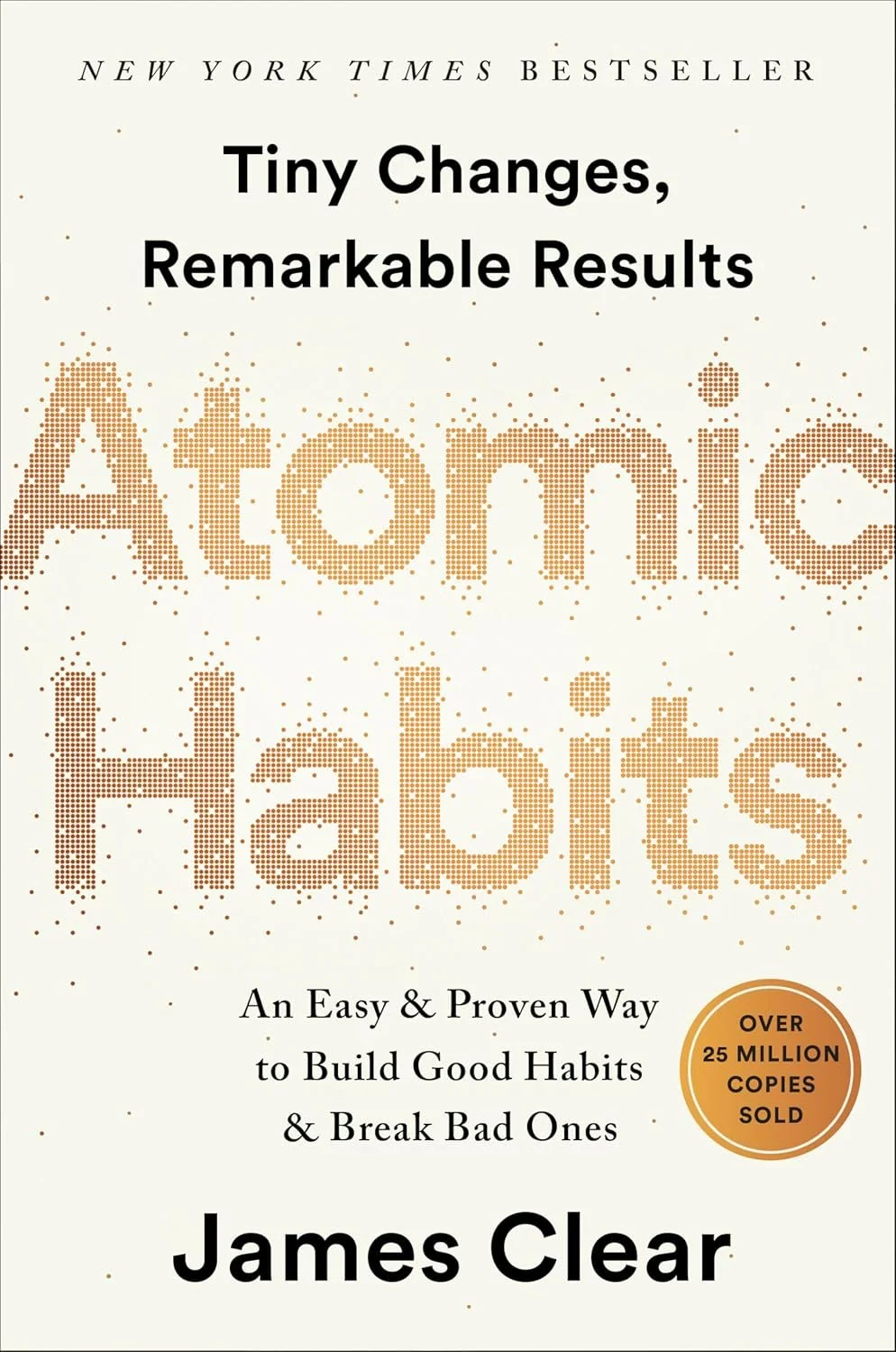
Why it is here: The mechanism of change.
Adaptation isn't a magical leap; it is a compound effect.
Clear explains that you do not rise to the level of your goals; you fall to the level of your systems.
We include this because ideals (Regeneration, Wholeness) are useless without resonating habits.
This book provides the source code for reprogramming the human behavior loop.
It teaches us that the way to steer the ship is not by spinning the wheel wildly, but by adjusting the small rudder of daily action by 1%.
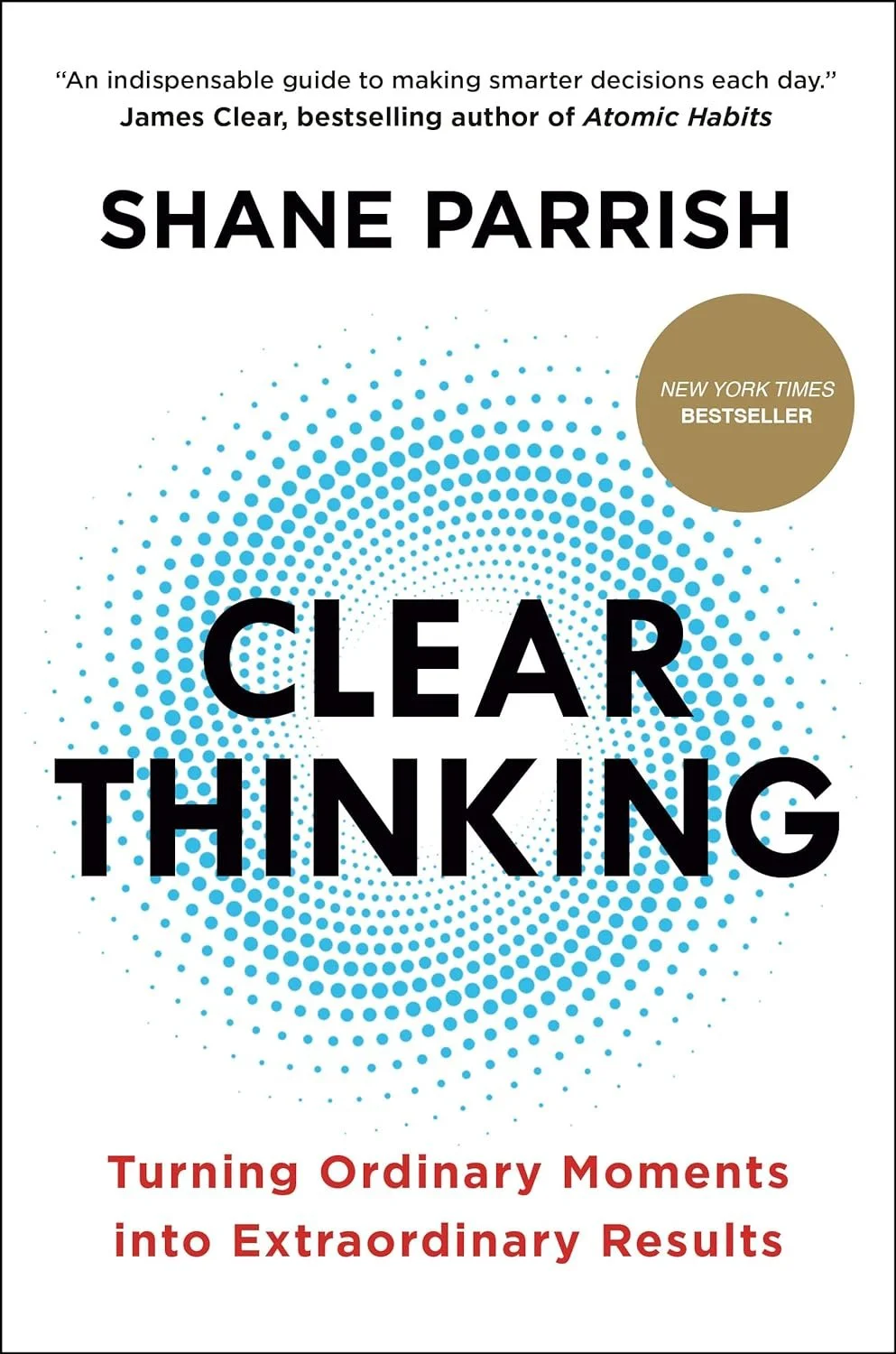
Why it is here: The manual for avoiding catastrophe.
Parrish argues that most results aren't determined by our smart decisions, but by our ability to avoid unforced errors in moments of pressure.
He focuses on "Positioning"—setting up your life so you aren't forced into bad choices by circumstance.
We include this as the "defense" counterpart to Flow.
While Flow is about offense, Clear Thinking is about ensuring you stay in the game long enough to win.
It brings the wisdom of the "Farnam Street" mental models into a practical guide for navigating daily chaos.
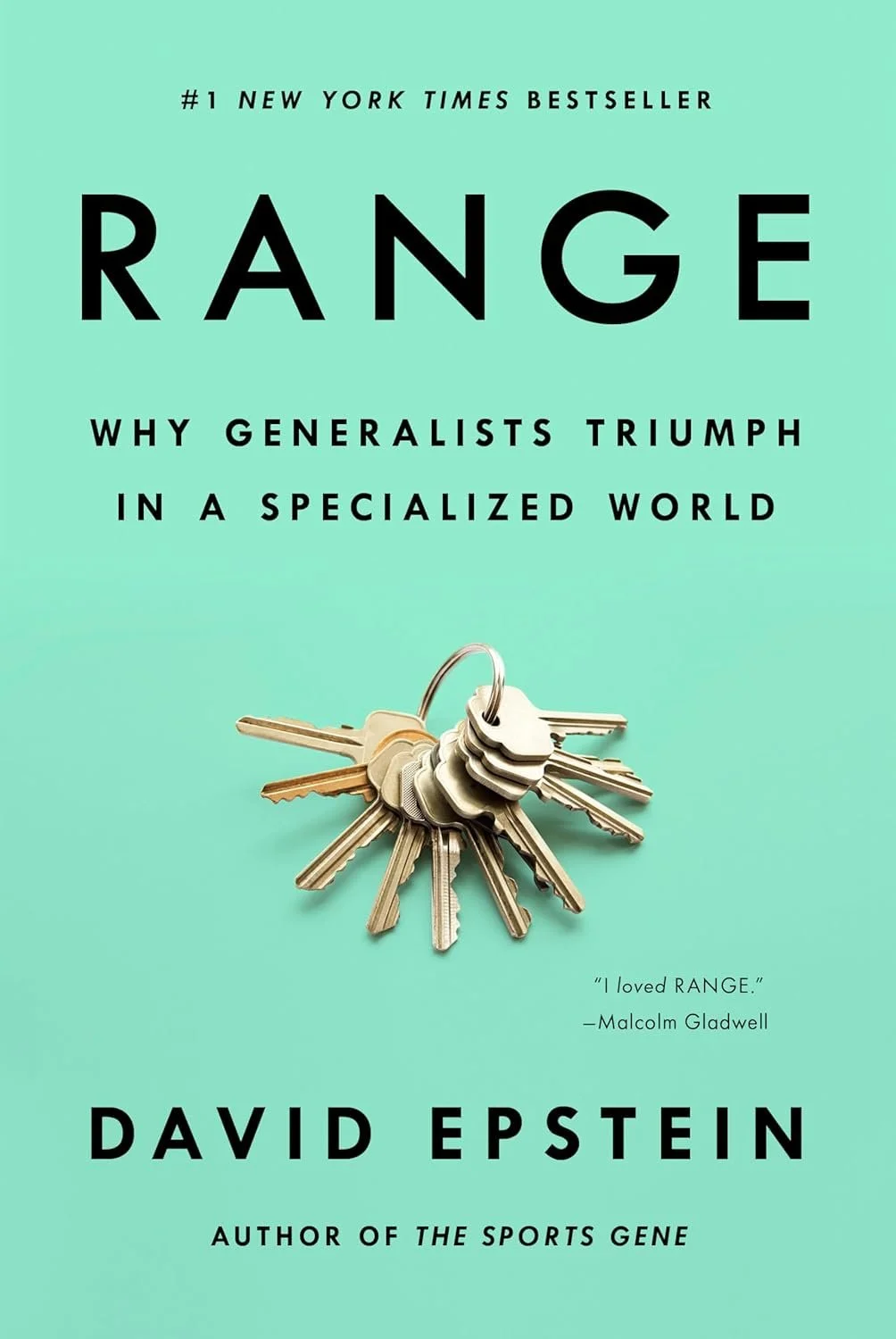
Why it is here: The defense of the "Jack of All Trades."
Epstein uses data to prove that in "Wicked Domains" (messy, unpredictable environments like the future), hyper-specialists fail because they rely on pattern matching from the past.
Generalists thrive because they can draw analogies from different fields.
We include this to validate the "eclectic" leader.
It argues that your "wasted time" in other careers or hobbies is actually your greatest adaptive asset.
It encourages cross-pollination, proving that the most robust solutions come from combining disparate ideas.
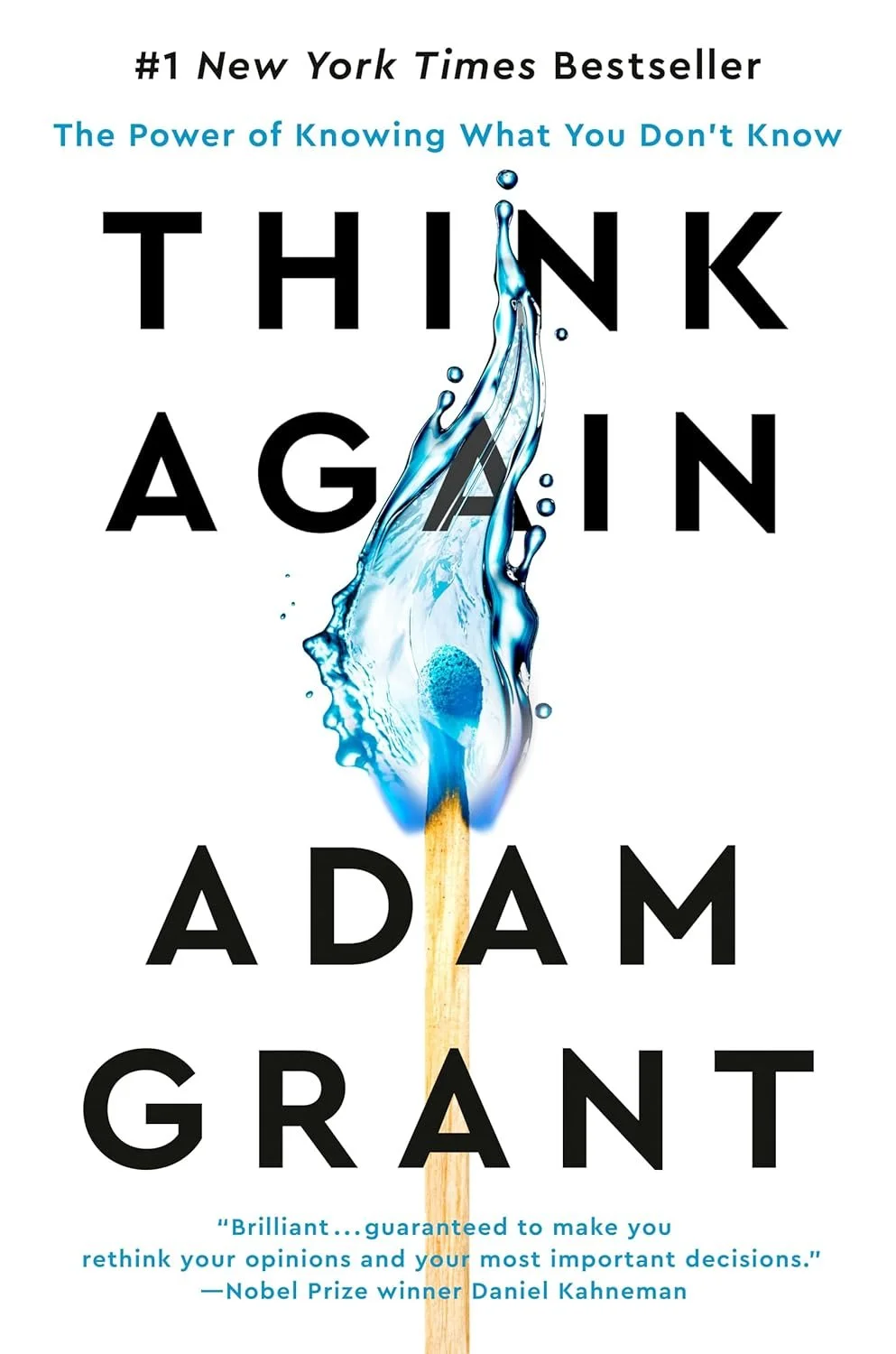
Why it is here: The manual for cognitive agility.
In a rapidly changing world, the most dangerous trait is certainty. Grant categorizes our thinking into modes:
Preacher (defending beliefs),
Prosecutor (attacking others),
Politician (winning favor), and
Scientist (seeking truth).
We include this to train the "Scientist Mode."
It teaches the specific skill of "Rethinking"—actively seeking disconfirming evidence and updating your mental maps.
It transforms "being wrong" from a failure of intelligence into a sign of learning, which is essential for adaptive flow.
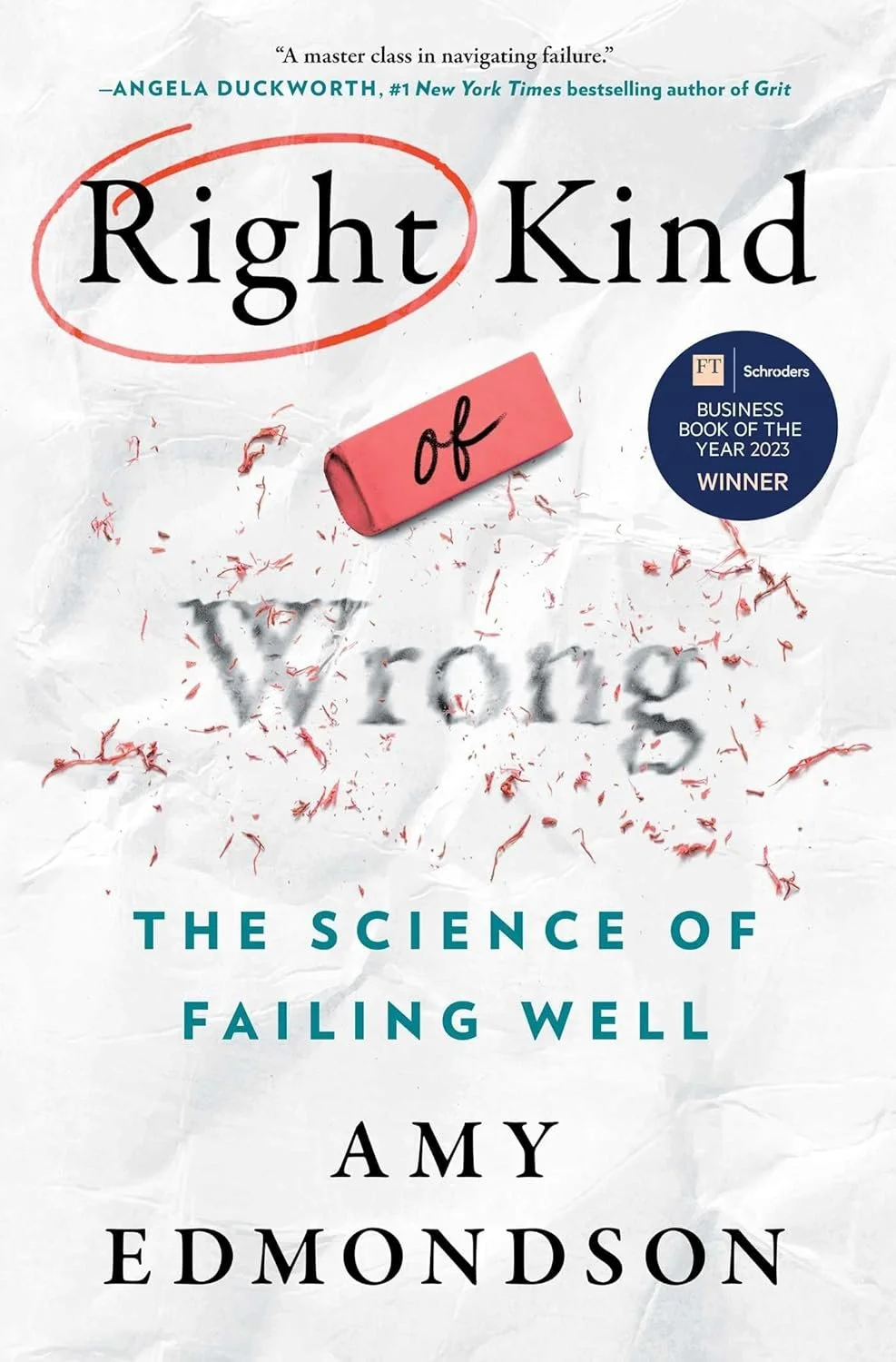
Why it is included: Adaptation is not magic; it is a mechanism.
That mechanism is "Intelligent Failure."
Harvard professor Amy Edmondson replaces the vague notion of "learning from mistakes" with a rigorous scientific framework.
She distinguishes between "Basic Failures" (sloppiness), "Complex Failures" (system breakdowns), and "Intelligent Failures" (necessary experiments).
We include this to replace the "soft" view of adaptation with the "hard" science of iteration.
In a transition where no one has the map, our survival depends on the speed of our learning loops.
Edmondson provides the systemic blueprint for how to run those loops safely, proving that the most adaptive systems are not the ones that never fail, but the ones that fail smartest.
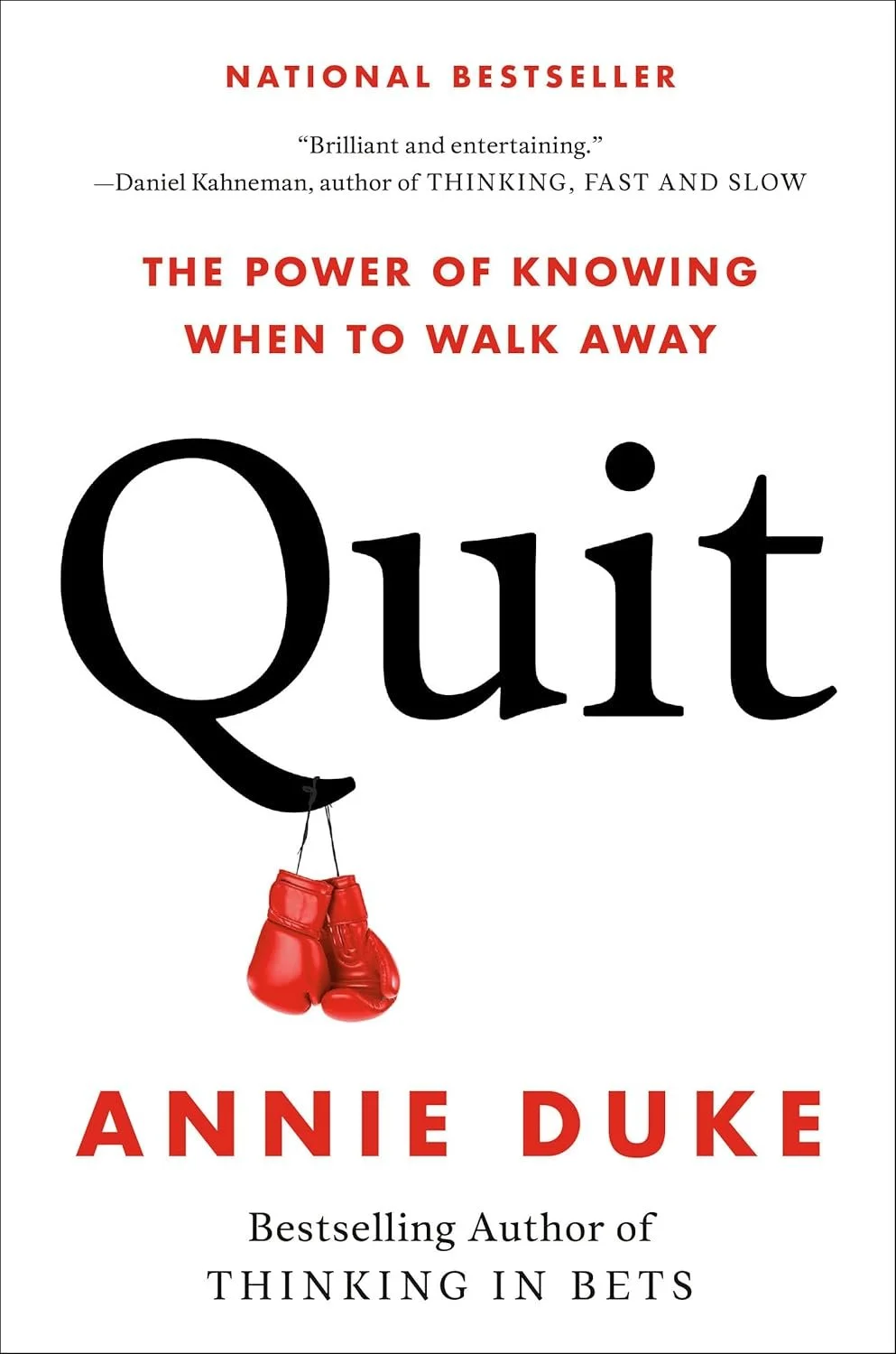
Why it is included: In a stable world, "Grit" is a virtue.
In a volatile world, it can be a death sentence. Annie Duke, a former poker champion and decision scientist, argues that we are biologically wired for the "Sunk Cost Fallacy"—we cling to bad jobs, bad systems, and bad strategies simply because we have already invested in them.
Transition requires Pivoting, not just persistence.
Duke teaches the "Kill Switch" skill: the ability to recognize early when a path is no longer viable and to cut losses fast.
It reframes quitting not as failure, but as a high-speed decision tool essential for preserving resources for the right opportunities.
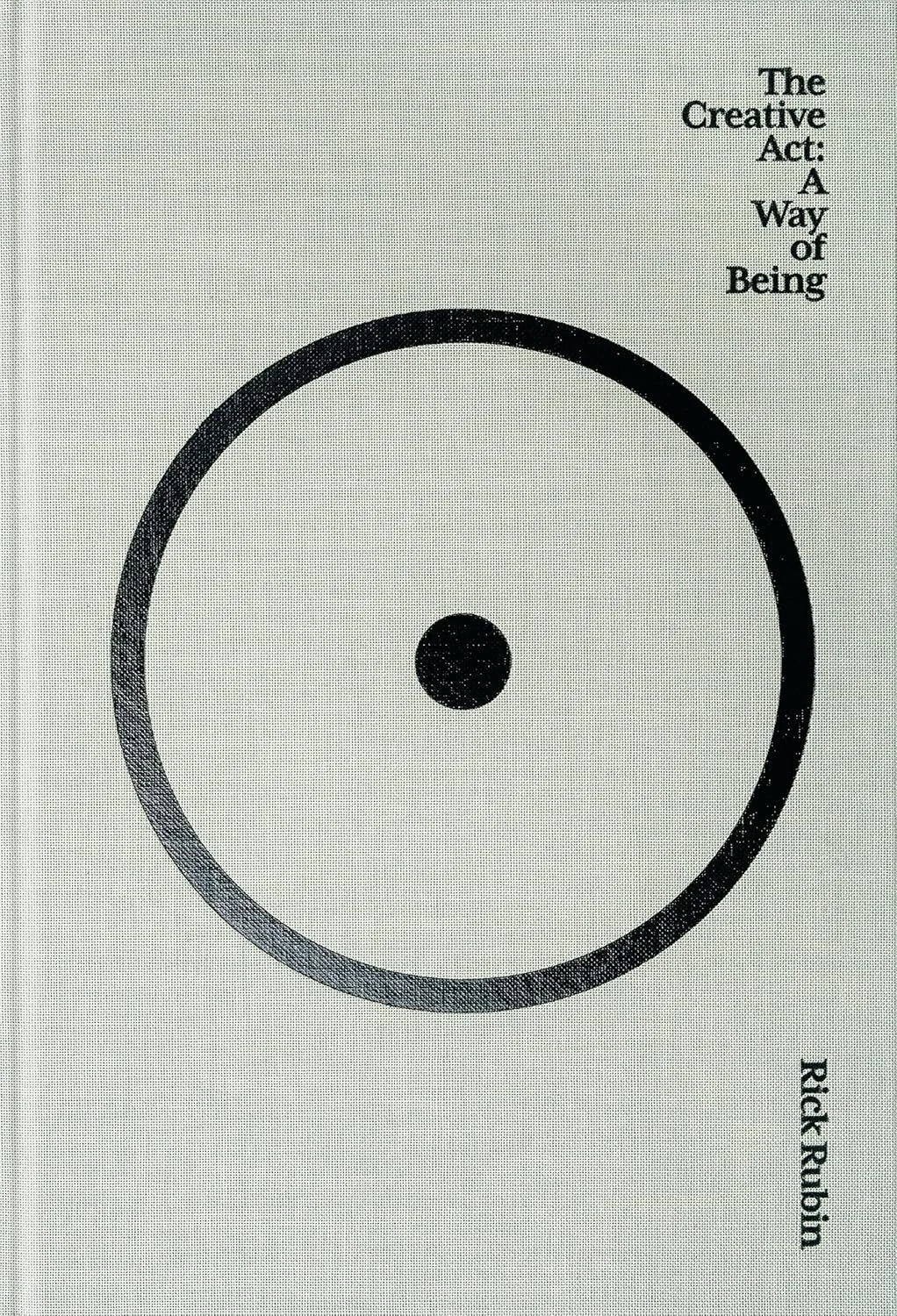
Why it is included: Rick Rubin strips "Creativity" of its elitism and productivity mandates, framing it instead as a fundamental state of listening.
He argues that the universe is a constant flow of signals, and our only job is to lower our interference filters to receive them. This is not about making art; it is about navigating reality.
We include this as the modern Tao Te Ching.
In a noisy, high-friction world, Rubin provides a manual for Adaptive Listening.
He teaches us how to quiet the ego, tune into the subtle data of the environment, and act with "Wu Wei" (effortless action).
It serves as the bridge between the spiritual and the practical, reminding us that the most adaptive move is often to do less and listen more.
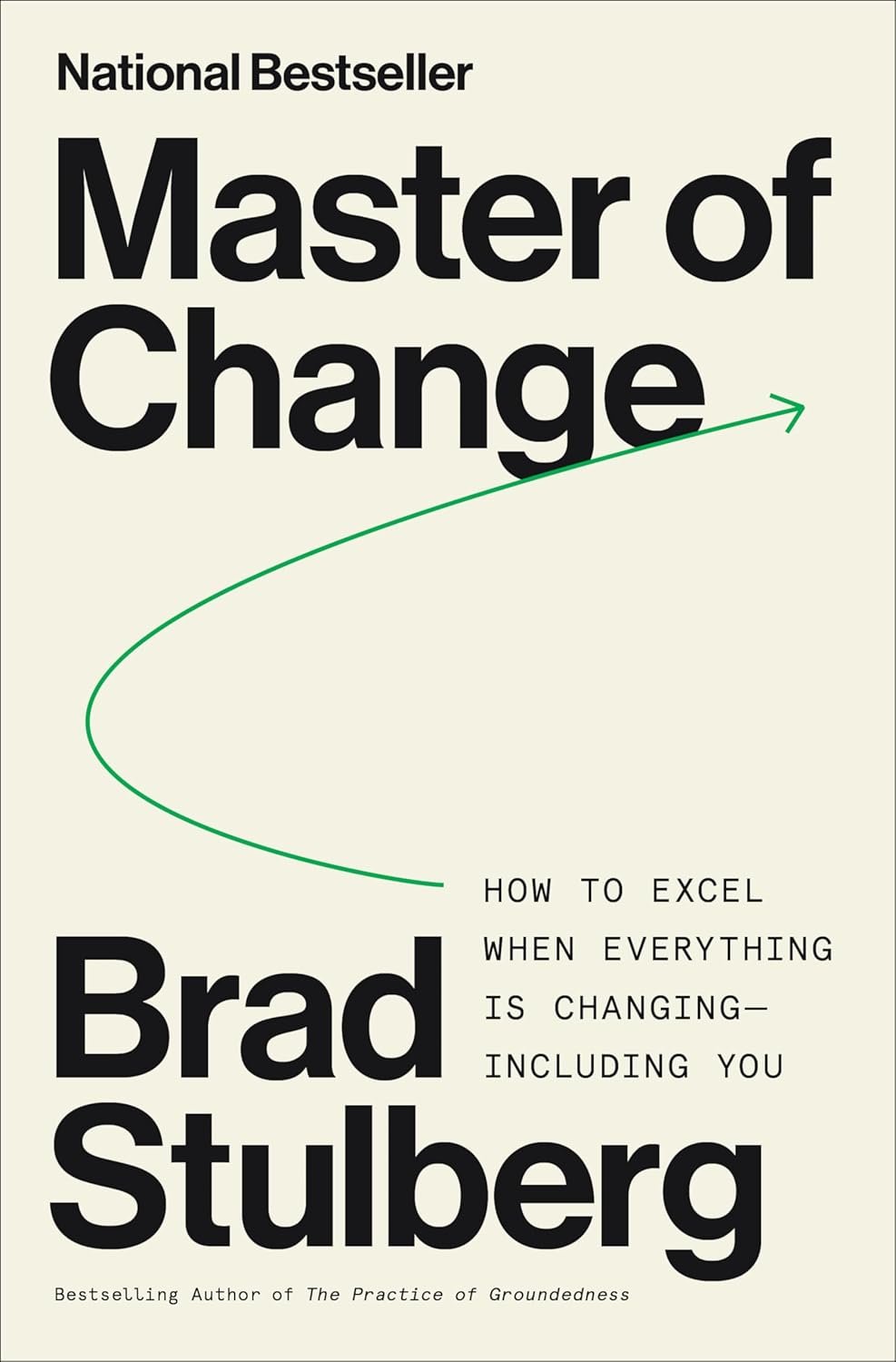
Why it is included: For decades, we defined resilience as "Homeostasis"—the ability to bounce back to exactly who we were before the stressor.
Stulberg argues that in a world of permanent flux, this is biologically impossible.
You cannot go back.
He introduces the updated scientific concept of "Allostasis": achieving stability through change.
We include this because it provides the new operating system for the transition.
Instead of trying to remain rigid, Stulberg combines modern neuroscience with wisdom traditions to teach "Rugged Flexibility."
This framework helps us rearrange our internal identity to match the external chaos, teaching us that thriving happens not by resisting the storm, but by changing our shape to move with it.
Why it is included: Why are we happy? It isn't relaxation.
Csikszentmihalyi’s massive research reveals that humans are happiest when they are stretched to their limits in a voluntary effort to accomplish something difficult and worthwhile.
He calls this state Flow: the point where the "Self" vanishes, time distorts, and action and awareness merge.
It moves the concept of "going with the flow" from a vague spiritual idea to a precise psychological engineering problem.
It provides the 3 Conditions (Clear Goals, Immediate Feedback, and a balance of Challenge and Skill) required to transform any chaotic situation into a structured experience of order and enjoyment.
It is the scientific manual for turning life into a "Unified Field" of experience.
Grounding Resilience These books teach us how to inhabit the body safely, manage energy, and maintain the physiological resilience required for the transition.
Music is not just "entertainment"—it is a foundational economic and social engine.
Shapiro argues that music should be a core consideration in how we build, manage, and govern our cities.
This book provides the toolkit for harnessing culture as a Systems Change lever.
It shifts the Steward from "Music Consumer" to "Cultural Architect."
It teaches you to see "music ecosystems" rather than just "concert venues."
By understanding how music fosters social cohesion, mental well-being, and economic resilience, the individual can help design cities that are not just "efficient," but Harmonically Aligned.

This book serves as the Harmonic Protocol, grounding us in the neuroscientific and biological reality of music as a tool for physiological regulation and social bonding.
It shifts the perspective from seeing art as secondary to recognizing vibration as primary, providing a bridge between the mathematical precision of the universe and the emotional depth of the human experience.

It is included because it bridges the gap between subatomic theory and metabolic reality.
The authors (a physician, a physicist, and an endocrinologist) argue that our physical health is determined at the "Quantum Layer"—a level of reality below our cells and DNA where information and energy are primary.
It provides us with a scientific framework for Radical Longevity and Vitality, treating the body not as a decaying machine, but as a fluctuating field of quantum information that can be "tuned" through awareness and lifestyle.
It shifts our relationship with health from "Maintenance" to "Quantum Coherence."
Why it is here:
This is the manual for physical hygiene.
The Starretts argue that modern life is a "movement famine."
We treat exercise as an optional 30-minute activity, but spend the rest of the day sedentary.
They shift the focus from "Exercise" (fitness) to "Mobilization" (maintaining range of motion and durability).
We include this to ensure the "Vessel" lasts.
It offers simple "Vital Signs" (like the ability to get up off the floor without using your hands) and daily practices to maintain the hip and spine health required to be independent and pain-free into old age.
It is the practical guide to preventing the physical stiffness that usually accompanies aging.
Why it is here:
This is the bridge between Soil and Sanity.
Stuart-Smith, a psychiatrist and gardener, explores the neuroscience of why working with the earth is a natural antidepressant.
She argues that the mind cannot flourish in a sterile vacuum; it requires a relationship with the cycles of growth, decay, and regeneration found in nature.
We include this to expand "Vitality" beyond the skin.
It teaches the leader that "Gardening" is not just a hobby, but a form of "Ecological Attachment."
Tending to a living system creates a reciprocal loop of care that stabilizes the nervous system.
It reminds us that we are not just observers of nature, but participants in it, and that healing the land is often the fastest way to heal ourselves.
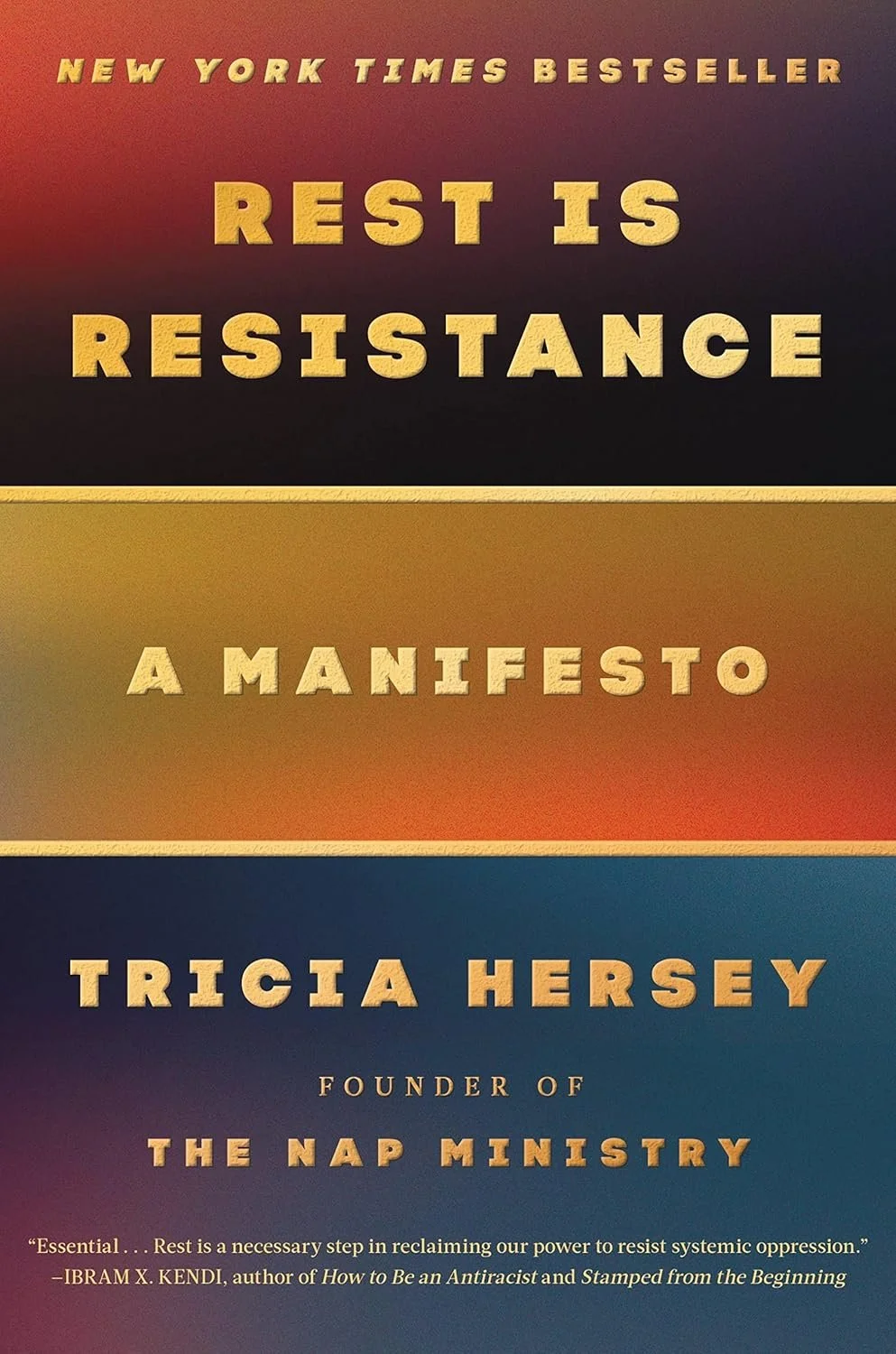
Why it is here:
This is the political reframing of health.
Hersey (known as The Nap Bishop) argues that "Grind Culture" is a legacy of a system that views bodies as machines for extraction.
She frames Rest not merely as a "wellness hack" or a way to recharge for more work, but as a divine human right and a radical act of resistance against an exploitative system.
We include this to stop "Vitality" from becoming just another productivity metric.
It empowers the leader to reclaim their body’s sovereignty.
It teaches that slowing down is not laziness; it is an act of deprogramming.
By refusing to run at the speed of the machine, we create the space for a more human rhythm to emerge.
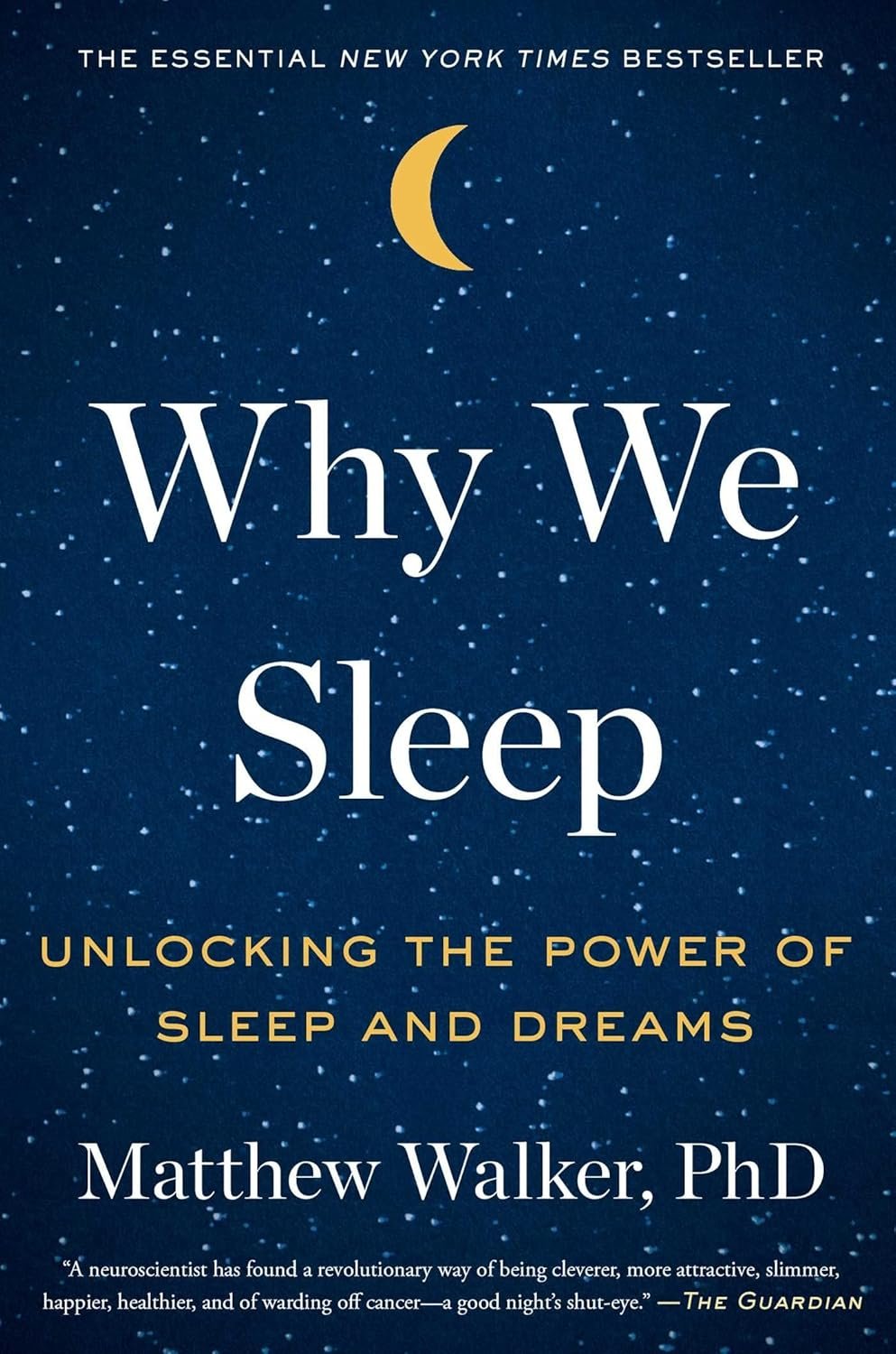
Why it is here:
This book destroys the myth of the "sleepless hustler."
Walker, a neuroscientist, provides the non-negotiable biology of rest.
He reveals that sleep is not a period of dormancy, but an active "cleaning cycle" where the glymphatic system flushes out neurotoxins (like amyloid plaques) and the brain consolidates memory and emotional regulation.
We include this because a thriving culture often treats sleep deprivation as a badge of honor.
Walker provides the scientific ammunition to treat sleep as a Performance Enhancing Drug.
It proves that getting 8 hours is not a luxury or a sign of weakness; it is the biological cost of sanity.
Without it, empathy, creativity, and immune function all collapse.

Why it is here:
This is the definitive manual for "Medicine 3.0." Attia argues that our current healthcare system ("Medicine 2.0") is excellent at saving you from a car crash or an infection, but terrible at preventing the slow-motion decline of aging.
He focuses on delaying the "Four Horsemen" of death:
Heart Disease,
Cancer,
Neurodegeneration, and
Metabolic Dysfunction.
We include this to shift us from a reactive stance ("I'll go to the doctor when I'm sick") to a proactive engineering stance ("I am architecting my healthspan").
Attia provides the rigorous data on exercise (specifically Zone 2 cardio and strength), nutrition, and sleep required to ensure that your final decades are vibrant and active.
It is the "hard hardware" manual for a vessel built to last.
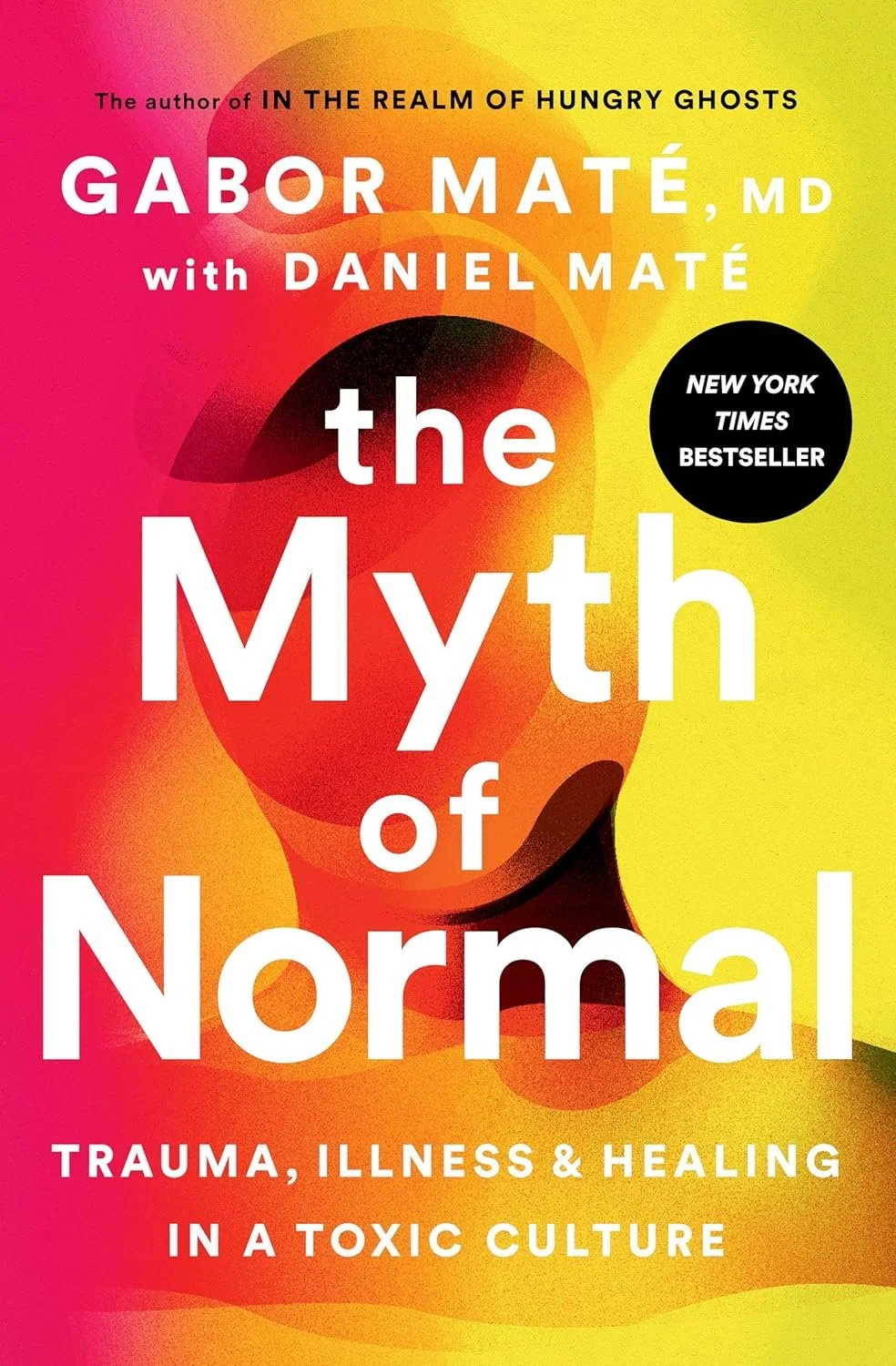
Why it is here:
This is the modern synthesis that connects individual illness to collective dysfunction.
Maté challenges the medical model that views disease as an isolated biological glitch. Instead, he argues that what we consider "normal" in modern society—chronic stress, isolation, competition, and emotional repression—is actually toxic to human biology.
He frames chronic illness not as a random misfortune, but as a natural response to an unnatural culture.
We include this to bridge the gap between the Map Room (Society) and Vitality (Body).
It empowers us to stop blaming ourselves for our burnout or autoimmune issues and start looking at the environment in which we inhabit.
It is a call to design organizations and communities that support our biological needs for connection and authenticity, rather than forcing us to trade our health for success.
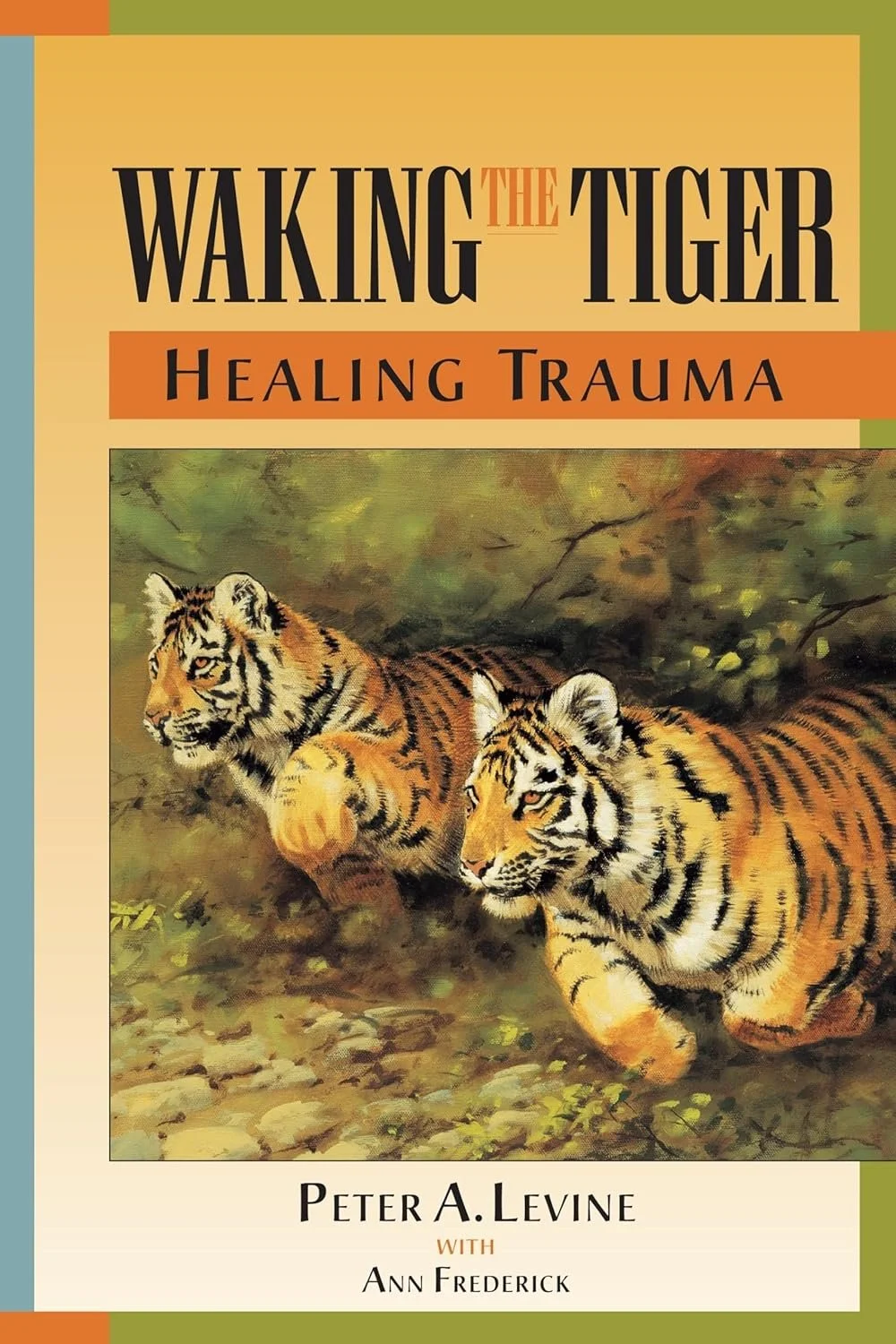
Why it is here:
This is the source code for somatic healing. Levine asked a profound question: Why do wild animals, who are constantly threatened with death, rarely get traumatized? He observed that after escaping a predator, a gazelle will physically shake and tremble, "discharging" the massive mobilization energy of the flight response before returning to grazing.
Humans, conditioned by social norms, often "freeze" and trap that energy inside. We include this book because it teaches the biological necessity of Discharge. It provides the somatic protocols to complete the stress response cycle, preventing the "frozen" state that leads to burnout. It reminds the leader that they are an animal, and sometimes the way to fix the mind is to let the body shake.
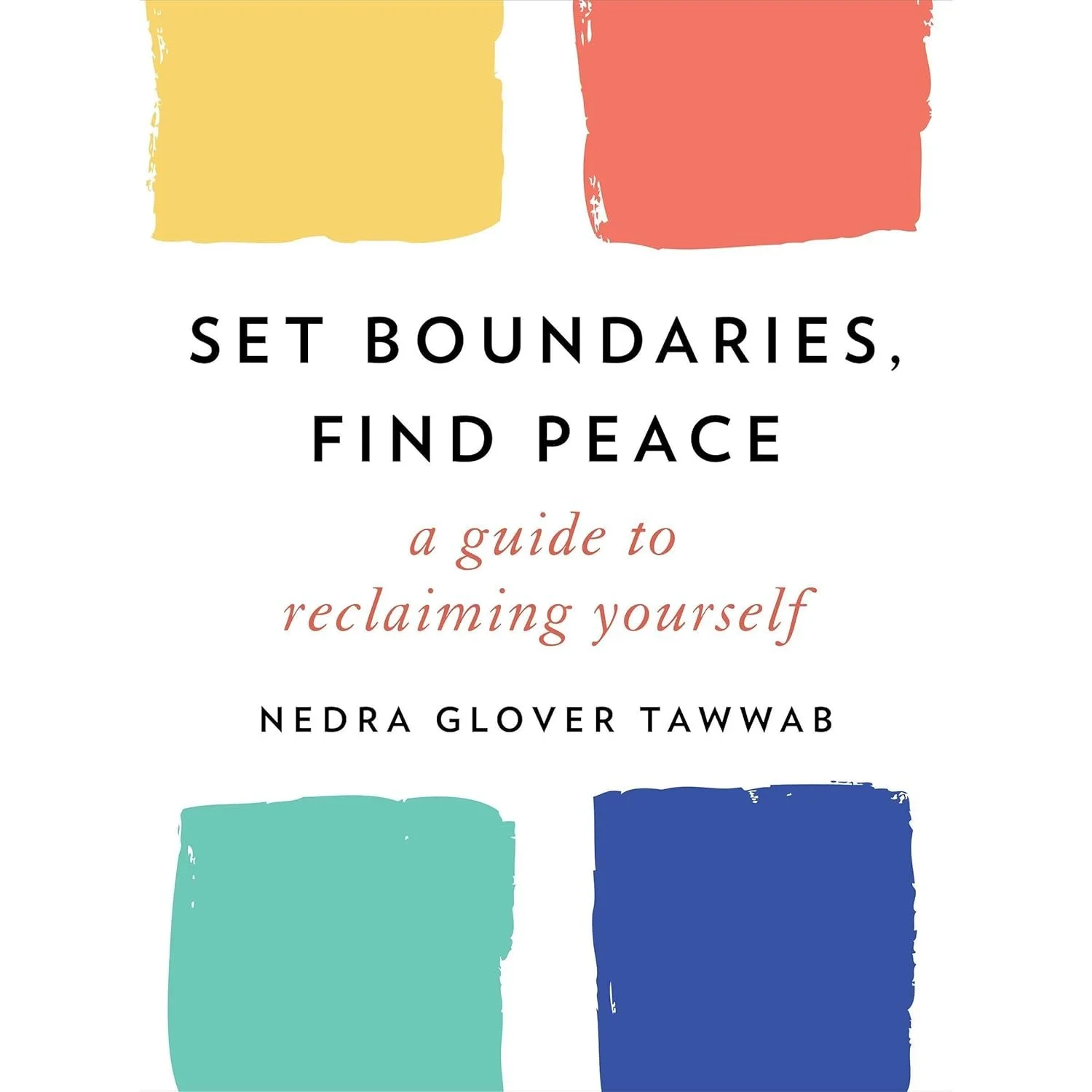
Why it is included: Grounded Vitality leaks without a container.
You can do all the breathwork in the world, but if you cannot say "no," you will be drained.
Nedra Tawwab provides the essential manual for Relational Hygiene.
She defines boundaries not as rejection, but as the prerequisite for healthy connection.
We include this for its tactical Discernment. Tawwab offers specific scripts and strategies for defining where you end and others begin.
It teaches the skill of Emotional Maturity—taking responsibility for your own needs without guilt—ensuring that the energy we cultivate is not siphoned off by the drama or demands of others.
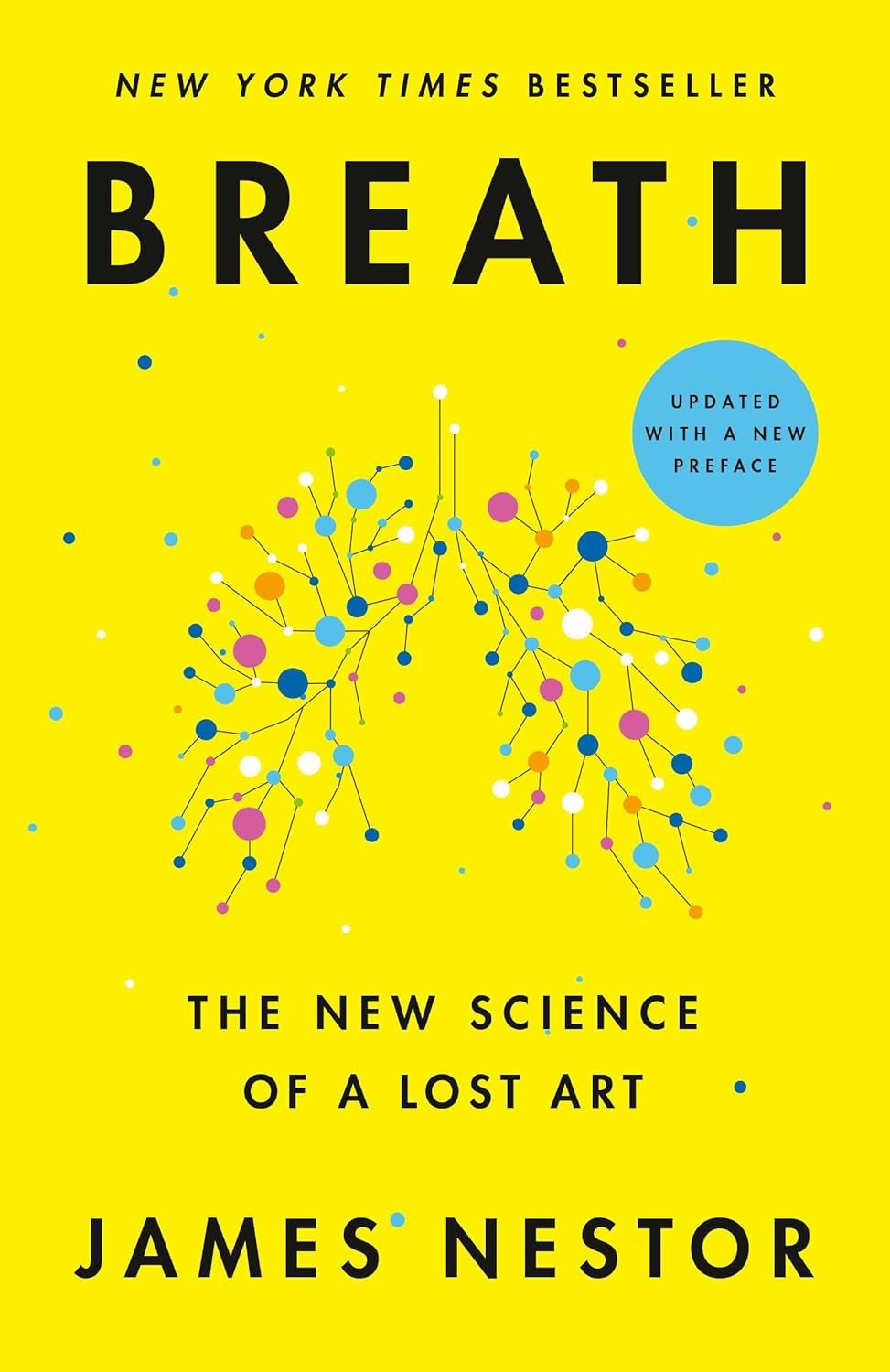
Why it is included: The most immediate lever for controlling the nervous system is the breath.
Modern humans have forgotten how to breathe, leading to chronic stress and structural degeneration.
Nestor retrieves the lost "technologies of breathing" (Nasal Breathing, Slow Breathing) that physically alter the structure of our airways and the chemistry of our blood.
We include this as the "First Principle" of stress control.
It moves breathwork from a spiritual luxury to a biological necessity.
By mastering the 5.5-second inhale/exhale rhythm, we can manually hack our vagus nerve, lowering our heart rate and anxiety in minutes.
It is the most accessible tool in the kit for immediate state-shifting.
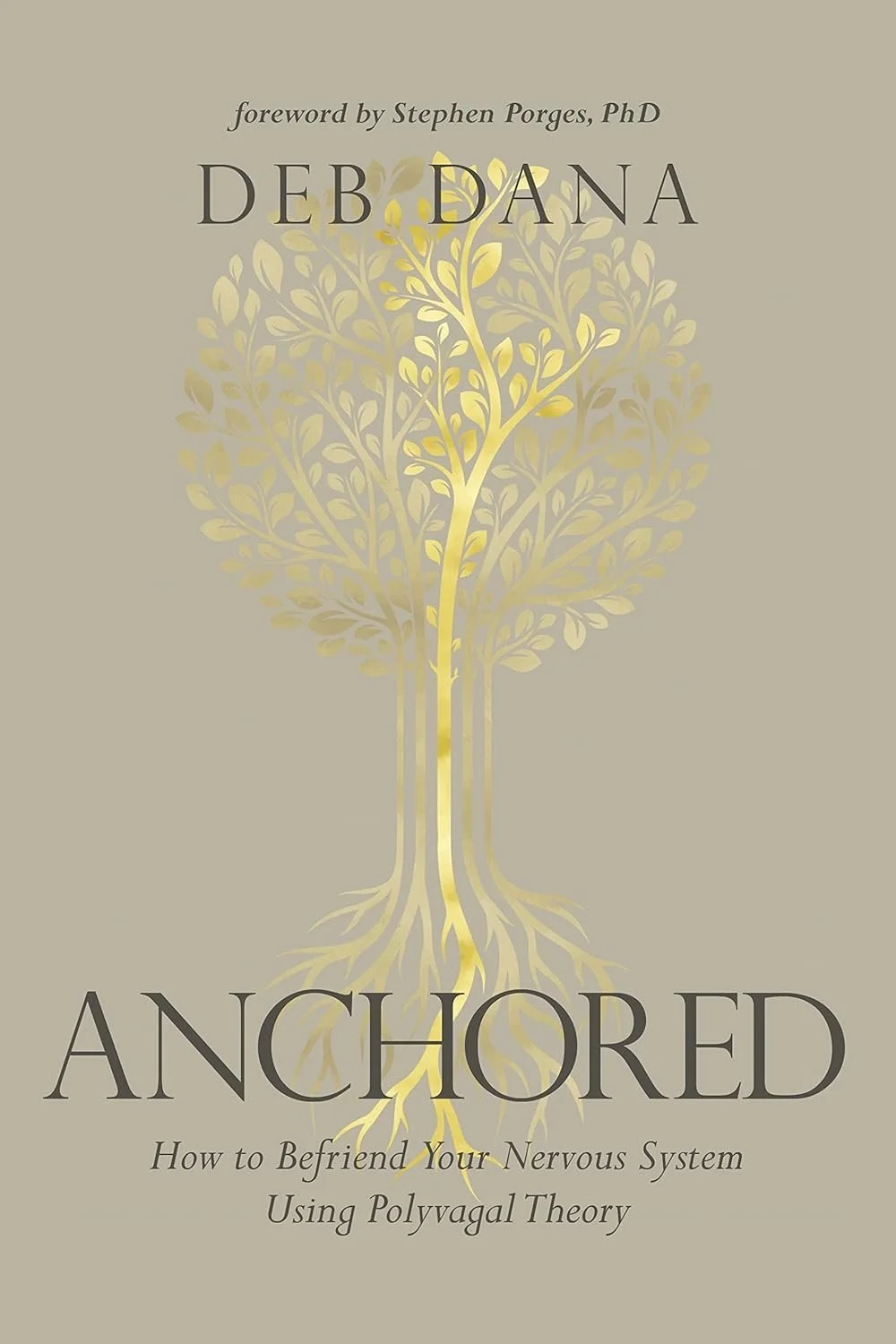
Why it is included: "Staying grounded" is not a metaphor; it is a specific biological skill.
Deb Dana translates the complex science of Polyvagal Theory into a practical user manual.
She teaches us to identify which "neural platform" we are standing on: Ventral Vagal (Safety/Connection), Sympathetic (Fight/Flight), or Dorsal Vagal (Shutdown).
We include this for the skill of Vibrational Anchoring.
Dana provides micro-tools ("glimmers") to steer the nervous system back to safety.
This book teaches you how to become an "Anchor"—a person who can hold a regulated frequency so strong that it calms the people around them, rather than being swept away by the collective chaos.
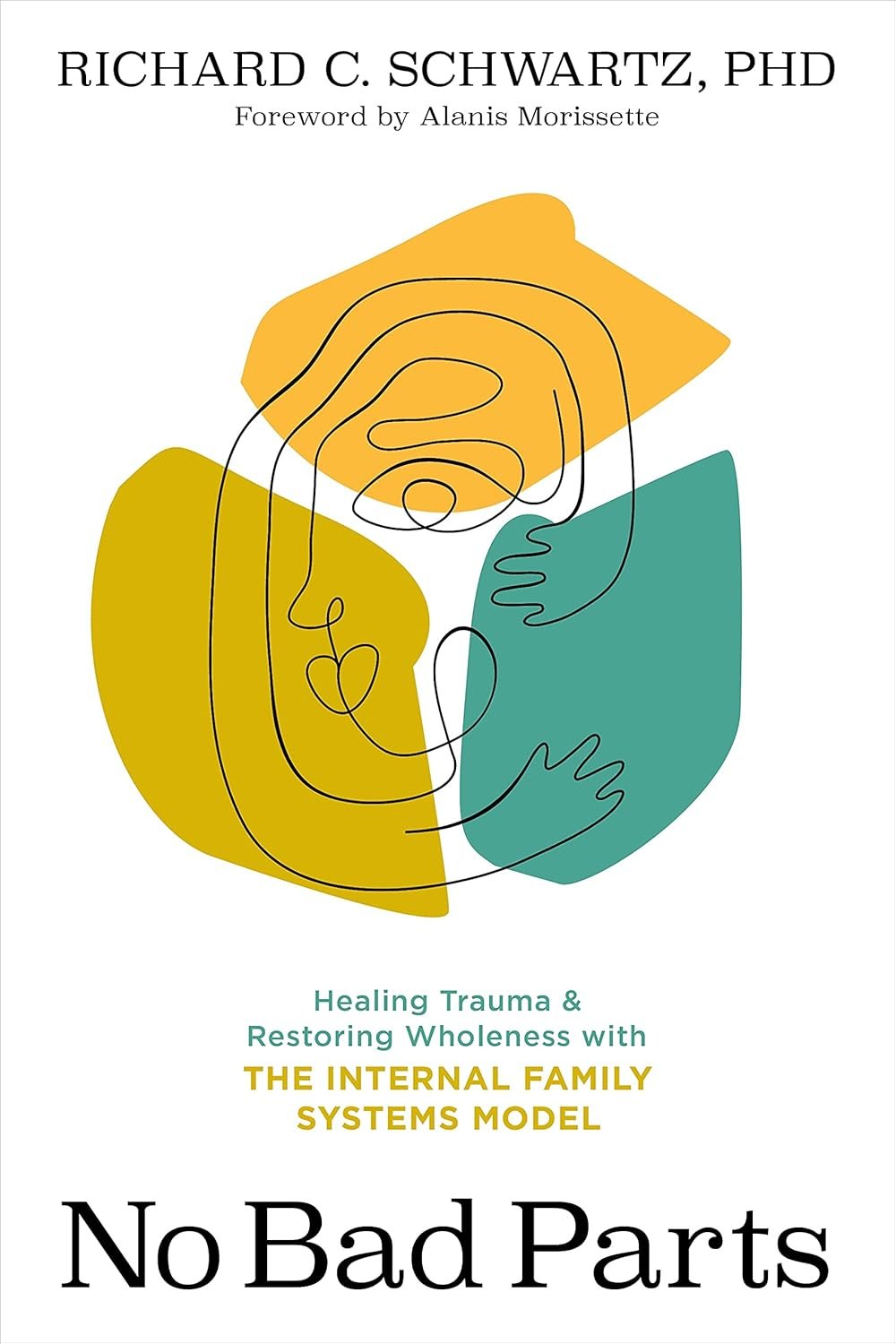
Why it is included: We often try to exile the parts of ourselves we don't like—the angry part, the addicted part, the fearful part.
Richard Schwartz’s Internal Family Systems (IFS) model argues that this internal war is what makes us sick.
He reframes the psyche not as a monolith, but as a "village" of parts (Exiles, Managers, Firefighters), all of which have good intentions.
We include this because it is the manual for Self-Leadership.
It teaches us to lead our internal village with curiosity rather than shame.
By befriending our "shadow" parts rather than fighting them, we unlock massive amounts of trapped energy, integrating the fragmented self into a cohesive, grounded whole.
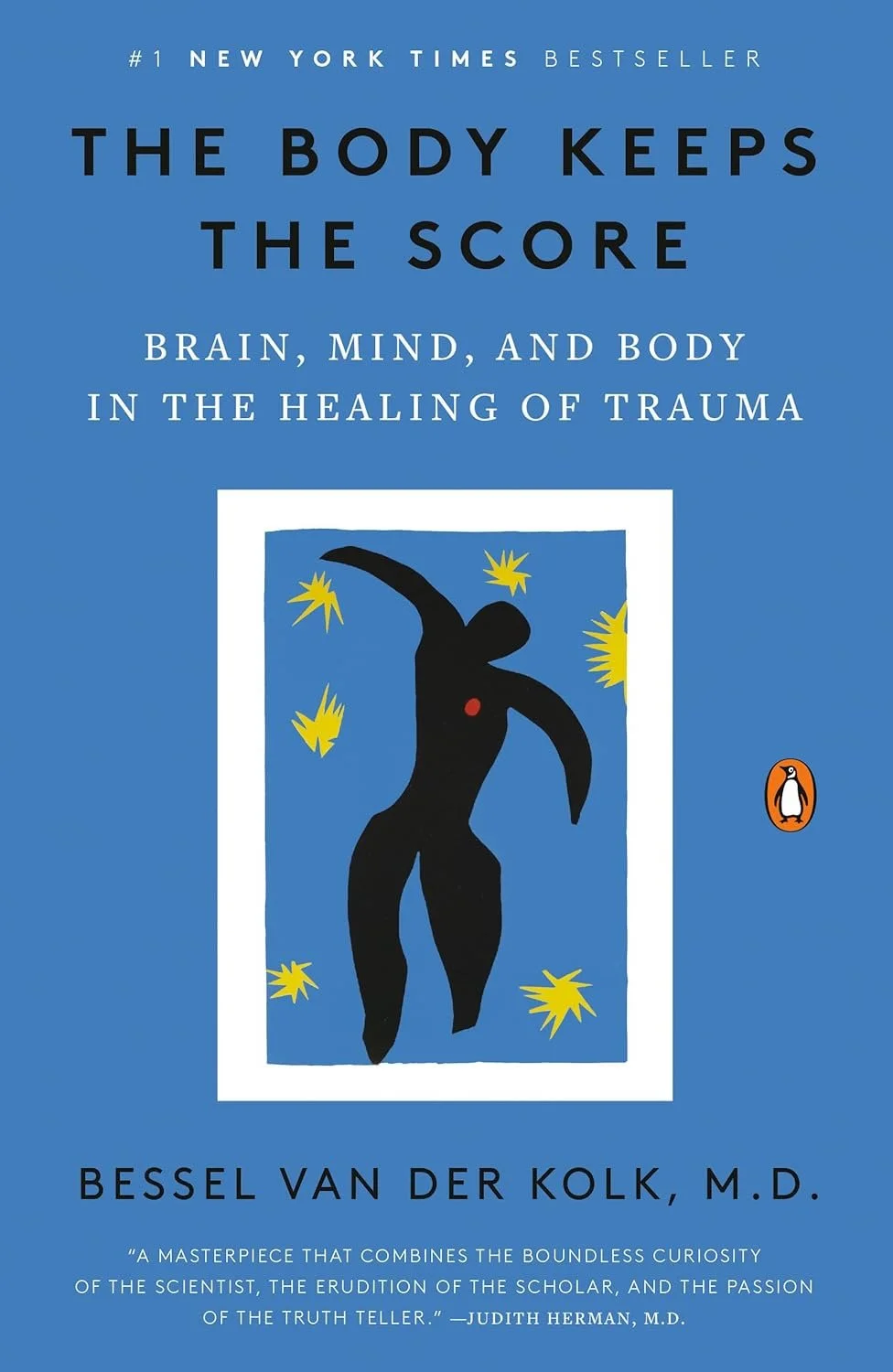
Why it is included: This is the undisputed definitive text on trauma.
Van der Kolk uses decades of neuroscience to prove that trauma is not just a "bad memory" stored in the mind; it is a physiological rewiring stored in the brainstem, muscles, and gut.
You cannot "talk" your way out of it; you must move through it.
We include this because it validates the physical reality of our emotional history.
It explains why we get stuck in loops of reaction and rigidity.
By understanding that the body holds the score, we stop fighting our own symptoms and start using somatic tools (like yoga, theater, and movement) to release the stuck energy, clearing the path for genuine recovery.
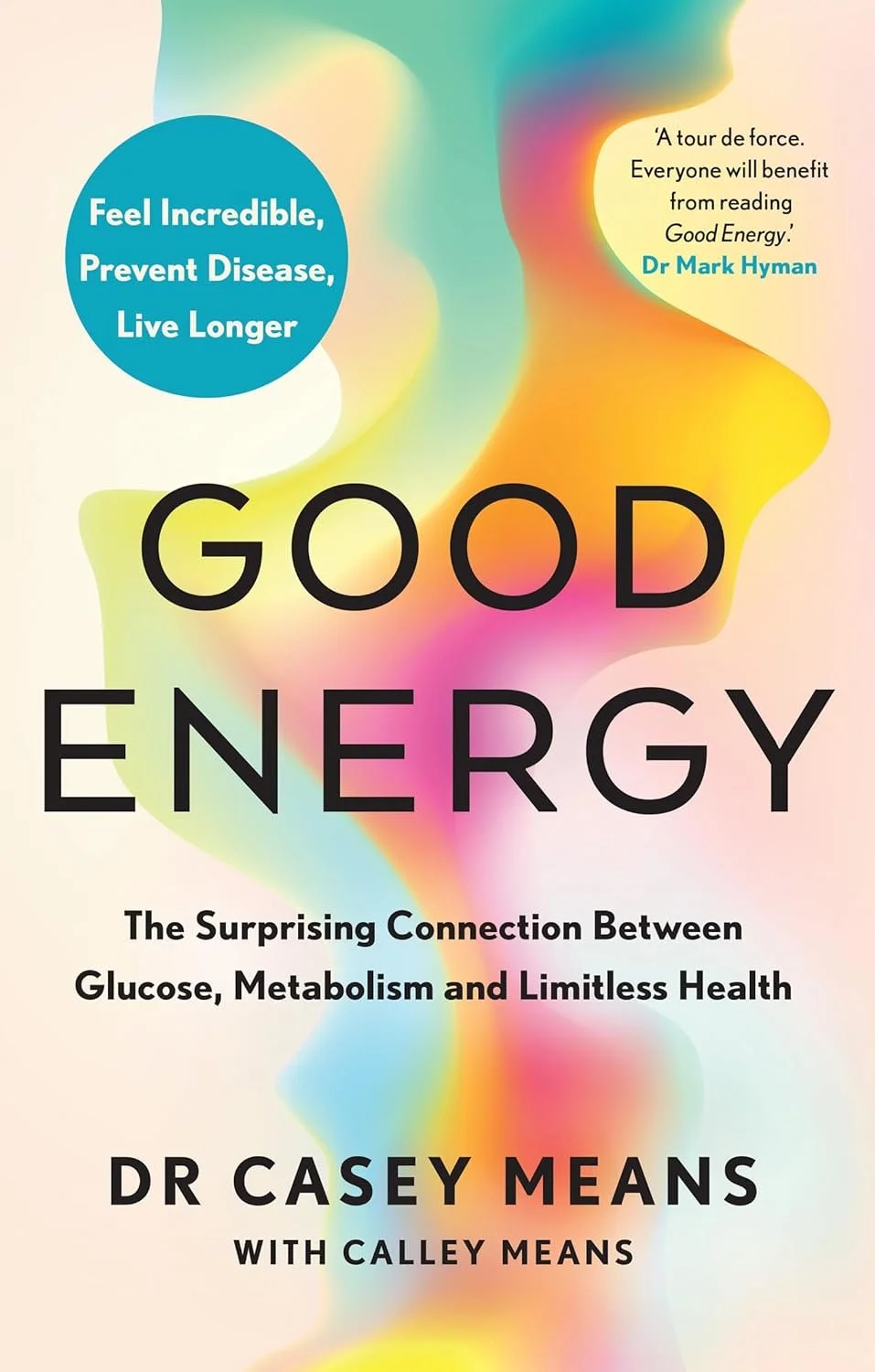
Why it is included: Dr. Casey Means, a Stanford-trained surgeon, argues that nearly all modern symptoms—anxiety, depression, fatigue, and brain fog—stem from a single root: Metabolic Dysfunction. She connects the biology of the cell directly to the state of the soul.
We include this because it replaces standard "diet culture" with systems biology.
Means explains how to optimize your Mitochondria, the power plants of the cell.
By stabilizing your blood sugar and reducing inflammation, you stabilize your mood and perception.
This book provides the biological hardware update required for healthy consciousness, proving that "spiritual groundedness" begins with the physical capacity to generate clean energy.
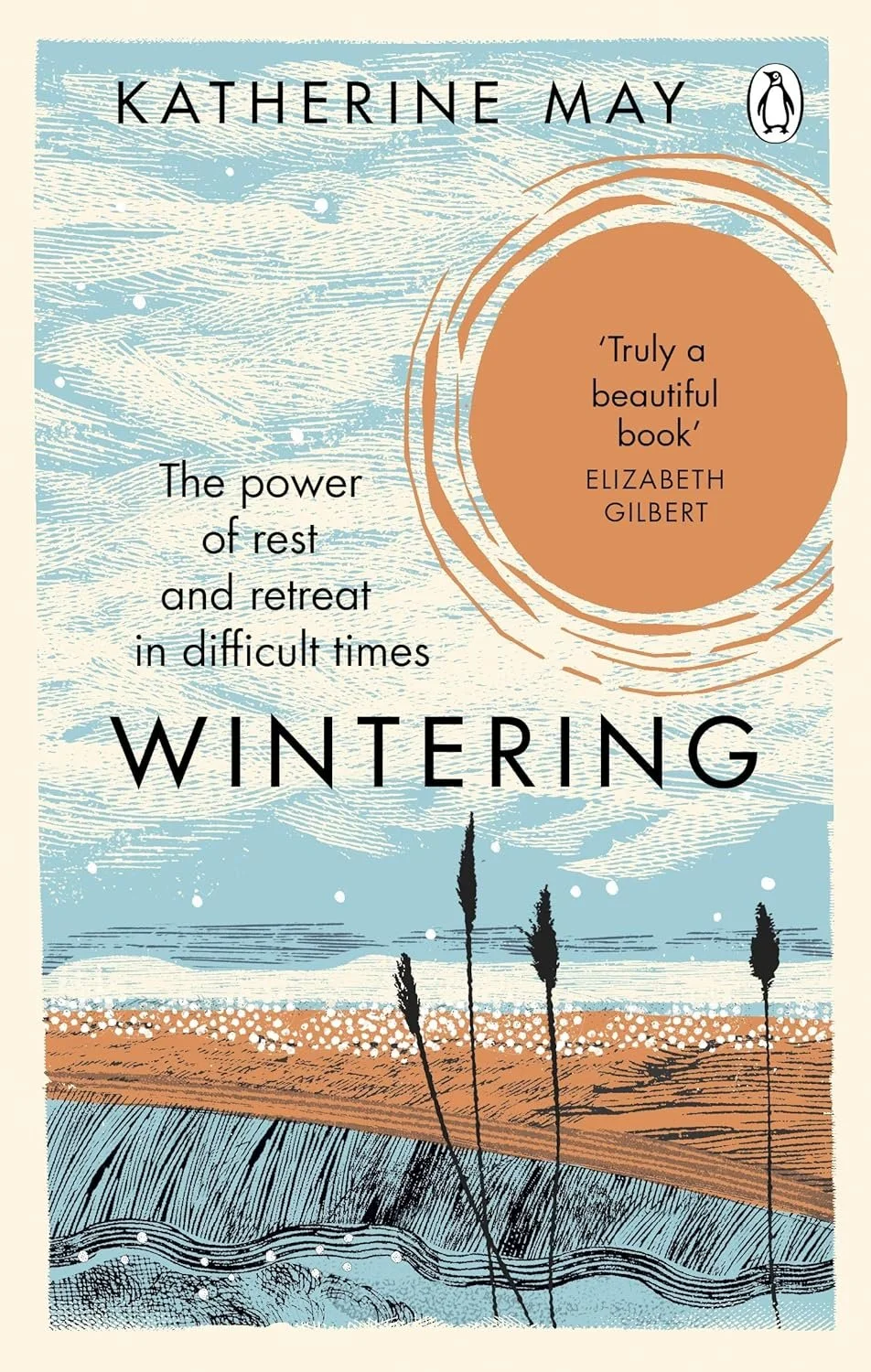
Why it is included: We live in a culture that demands eternal summer—endless growth, happiness, and visibility.
Katherine May argues that this is biologically impossible. Drawing on the natural world, she reframes periods of depression, failure, and isolation not as errors, but as a necessary season: Winter.
We include this because it provides a "Naturalist's Strategy" for crisis.
Instead of urging us to "fight" the darkness (resilience), May teaches us the active skill of "Wintering"—how to retreat, shed what is dead (like trees shedding leaves), and conserve energy for the inevitable return of the light.
It is a compassionate manual for surviving the dormant phases of life without shame, reminding us that rest is not the death of work, but the sustenance of it.
Why it is included: We often think of the heart as a simple pump or a poetic metaphor.
The researchers at the HeartMath Institute prove it is neither: it is an organ of intelligence.
They detail the science of Neurocardiology, showing that the heart has its own nervous system that dictates our cognitive function and emotional stability via the vagus nerve.
We include this because it completes the "Somatic Triad" (Breath, Sound, Heart). It provides the linear, step-by-step Coherence Techniques needed to consciously shift your heart rhythm pattern from jagged (stress) to smooth (coherence).
This isn't just relaxation; it is a physiological state that optimizes cortical function, allowing us to access "Heart Intelligence"—a high-speed, intuitive guidance system essential for navigating the complex choices of the transition.
Why it is included: When we are triggered, our higher brain goes offline. We don't need philosophy; we need a checklist. Pete Walker provides the definitive tactical manual for "reparenting" the nervous system.
He maps the 4F responses (Fight, Flight, Freeze, and Fawn), helping us instantly identify which "survival program" is running.
We include this because it balances the abstract "systems" view of No Bad Parts with a rigorous, linear "How-To."
Walker’s "13 Steps for Managing Emotional Flashbacks" is an essential emergency protocol for the transition.
It teaches us exactly how to shrink the "Inner Critic" and provide the safety our inner child needs, moving us from reactive survival to proactive thriving.
Why it is included: "Woo" becomes science when we have the tools to measure it.
Dr. Chaudhary is a neurologist who bridges two worlds: the rigorous, data-driven world of Western brain science and the ancient, vibrational world of Siddha medicine (Ayurveda).
She explains the physics of how sound affects the cellular structure of the body, moving beyond metaphor to mechanism.
We include this because it legitimizes "Vibration" as a medical intervention.
Chaudhary explains how mantra and frequency can reduce inflammation and alter neural pathways (neuroplasticity).
In a transition where traditional healthcare systems are straining, this empowers individuals to use the most accessible tool they have—their own voice and listening—to regulate their nervous systems and heal deep-seated trauma.
Why it is included:
The "Mental Health Infrastructure."
Lee, a former design director at IDEO, proves that "Joy" is not an abstract vibe; it is a tangible resource triggered by specific environmental cues (color, light, symmetry).
We include this to remind the leader that they are an architect of experience.
It teaches us to build "Joyful Infrastructure"—environments that physically recharge the soul—proving that beauty is not a luxury, but a functional requirement for human thriving.

Why it is here:
The accessible wisdom of the beginner.
Dr. Merali argues that toddlers are actually the world’s best learners, risk-takers, and sleepers, and that we "unlearned" their natural genius.
We include this to lighten the shelf. It provides a scientifically backed but playful path to Regaining flourishing Naturalism.
It reminds the leader that "Authenticity" isn't something you have to build; it's something you simply have to remember. It balances the heavy philosophy with practical, joyful simplicity.
Imaginative Courage The future is built twice: first in the mind, then in the world. This section fuels the moral imagination needed to prototype a society that works for all.
Dr. Gilligan was a protégé of Milton Erickson (the father of modern hypnosis) and has spent decades moving hypnosis from "compliance" to "Generative Change."
It treats the subconscious not as a dark basement of repressed trauma, but as a creative partner.
This is where the conscious and unconscious minds work together to solve problems that the analytical mind cannot touch, welcoming all parts of your experience, even the difficult ones, and transforming them into creative energy.
It shifts us from "Trying to Control the Mind" to "Conversing with the Mind," becoming more awake to our own potential.
This book is a synthesis of Neuroscience and Mysticism.
Miskovic and Lynn explore what dreaming is: a high-fidelity state of consciousness that operates as a "Reality Simulator."
It provides us with a map for understanding that the dream state is not a "disconnection" from reality, but a different mode of processing it—one that allows for the non-linear, quantum-like problem solving required in the Age of Resilience.
It harmonizes the conflicting duality of "Objective Science" and "Subjective Experience." It shifts us from "Passive Sleeper" to "Conscious Voyager."

Why it is included:
The "Cognitive Corrective." Grandin argues that society—and our definition of "genius"—is biased toward Verbal Thinkers (linear, word-based).
But a flourishing civilization cannot be built on words alone; it requires Visual Thinkers (object and spatial processors) who can simulate complex systems, bridges, and code in their mind's eye.
We include this to ensure the kit honors the Engineers and Builders.
It reminds leaders that true "Imaginative Courage" requires diverse cognitive teams—blending the poets (who dream the future) with the visualizers (who can see the nuts and bolts required to hold it up).

Why it is included:
This novella offers something that technical blueprints cannot: the sensory experience of a healed world.
While other books in this section focus on the struggle to save the planet, this story takes place after the victory.
It describes a "Solarpunk" future where humanity has solved its environmental crises and lives in a high-tech society that feels as gentle and organic as a forest.
We include it to provide an emotional "North Star."
It proves that a flourishing civilization doesn't have to be cold, sterile, or purely digital.
It gives the reader a tangible feeling of what we are working toward—a life where advanced technology and the natural world support each other in quiet, meaningful harmony.
Why it is included:
The "Synthetic Engine." We cannot talk about the future of creativity without addressing the alien intelligence in the room: Generative AI.
Mollick, a pragmatic Wharton professor, argues that we must treat AI not as a replacement, but as a "Co-Intelligence"—an infinite intern, a sparring partner, and a multiplier of human potential.
This book is the manual for the "Centaur" model of work (Human + Machine).
We include it to ensure the user is equipped with the most powerful creative tool of our time, learning to direct this new intelligence to solve problems that were previously unsolvable by biological brains alone.
Why it is included:
The "Reality Check." In a world drowning in "Doomerism," Hannah Ritchie provides the data to prove that we are already winning.
As the lead researcher at Our World in Data, she presents rigorous evidence that we have decoupled economic growth from carbon emissions and are approaching peak pollution.
We include this to provide the Factual Bedrock for our optimism. It proves that "Imaginative Courage" is not a delusion, but a statistically supported stance.
It transforms sustainability from a moral sacrifice into a solvable engineering problem, giving us the confidence to push through the final mile of the transition.
Why it is included:
The "Blueprint." This is the most important novel of our decade.
It moves us from "Apocalypse Anxiety" to "Solution Architecture." It invites us to imagine how a flourishing civilization actually governs itself, creates new money (the Carbon Coin), and creates a legal truce with the biosphere.
It is not a utopia; it is a gritty, realistic manual for the transition.
We include it because it restores Agency, proving that the future is not something that happens to us, but something we can actively engineer through bureaucracy, technology, and courage.

Why it is included:
The "Dream Architecture." In this surrealist masterpiece, Marco Polo describes 55 imaginary cities to Kublai Khan—cities made of webs, memories, and desires.
We include this to ensure our imagination doesn't become purely utilitarian.
A flourishing civilization isn't just about efficient solar grids; it is about creating habitats for the human spirit.
Calvino trains our "Aesthetic Intelligence," teaching us to see cities not just as infrastructure, but as living repositories of human culture and dreams.
It expands the boundaries of what we believe is possible to build.
Why it is included:
The mother of the modern environmental movement argues that for the child—and the adult—"feeling is more important than knowing."
She provides the "Biophilic Anchor," reminding us that we cannot save a world we do not love.
This lyrical manifesto ensures that our "Imaginative Courage" is rooted in a primal, sensory connection to the living Earth.
It is the antidote to the "disenchantment" of the digital age, grounding our future visions in the smell of wet soil and the sound of the ocean.

Why it is included:
This book provides the biological key to unlocking flourishing thinking.
Keltner, a founding director of the Greater Good Science Center, presents the hard science proving that Awe is not just a fleeting emotion, but a fundamental survival mechanism.
He demonstrates that experiencing awe—whether through nature, music, or moral beauty—physically quiets the brain's "default mode network" (the seat of the ego and self-criticism) and activates the systems responsible for collaboration and openness.
We include it because building a new world requires a cognitive shift from "Me" to "We."
This book teaches that we do not need to wait for a grand epiphany to access this state; we can cultivate it as a daily practice. It is the essential fuel that prevents cynicism and keeps the mind open to the vast, interconnected possibilities of the future.

Why it is included:
This book bridges the gap between hard science and daily experience.
Magsamen and Ross introduce the field of Neuroaesthetics, proving that the arts are not merely "nice to have" luxuries, but biological necessities that physically rewire our brains for health, learning, and longevity.
It is the manual for a thriving culture.
It reminds us that the environments we build—our cities, schools, and homes—shall be designed to optimize human biology through sensory richness.
It transforms "Art" from a leisure activity into a public health strategy, validating the intuition that beauty is a functional requirement for a thriving civilization.

Why it is included:
This is the scientific anchor of the entire section.
We include it to debunk the dangerous myth that creativity is a mystical gift bestowed upon a chosen few. This comprehensive volume aggregates decades of research from neuroscience, psychology, and sociology to prove that creativity is a measurable, trainable cognitive process—a mix of divergent thinking, pattern recognition, and domain knowledge.
In a flourishing civilization, innovation cannot be sporadic; it must be systemic.
This handbook provides the "Physics of Imagination," offering the rigorous data required to move us from "waiting for inspiration" to "engineering innovation."
It validates that imaginative courage is not a hobby, but a fundamental function of the healthy human mind.

Why it is included:
Based on interviews with 91 visionaries (Nobel laureates, artists, leaders), Csikszentmihalyi maps the "Systems Model of Creativity."
He proves that genius is not found inside a single skull, but in the interaction between the Person, the Field (the gatekeepers), and the Domain (the culture).
This is crucial for "Co-Creative Collaboration."
It teaches us that to co-evolve with the world, aside from a bright idea, we shall learn how to navigate the social systems that validate and spread that idea.

Why it is included:
The "Validation."
If the Handbook is the hardware, this is the user experience.
It explores the messy, paradoxical habits of the creative mind—imaginative play, solitude, sensitivity, and daydreaming.
We include it to reassure the user that their "scattered" or "sensitive" nature is not a bug, but a feature of the innovation engine.
It validates the Creative Lifestyle, proving that behaviors often dismissed as "unproductive" (like staring out a window) are actually essential phases of the cognitive process.

What happens in our brains when we compose a melody, write a poem, paint a picture, or choreograph a dance sequence? How is this different from what occurs in the brain when we generate a new theory or a scientific hypothesis?
In this book, Anna Abraham reveals how the tools of neuroscience can be employed to uncover the answers to these and other vital questions. She explores the intricate workings of our creative minds to explain what happens in our brains when we operate in a creative mode versus an uncreative mode. The vast and complex field that is the neuroscience of creativity is disentangled and described in an accessible manner, balancing what is known so far with critical issues that are as yet unresolved. Clear guidelines are also provided for researchers who pursue the big questions in their bid to discover the creative mind.
Why it is included:
While "Creativity" is about producing external results, "Imagination" is about the internal simulation of new realities.
This volume serves as the necessary companion to the first handbook, focusing on the neuroscience of the "Default Mode Network" and counterfactual thinking—the brain's ability to ask "What if?"
Before we can terraform a planet or redesign an economy, we must be able to run high-fidelity simulations in the mind's eye.
This book explains the cognitive machinery that allows humans to decouple from the present moment and inhabit the future, providing the scientific basis for all visionary leadership.

Why it is included:
It challenges the popular Romantic myth that children are "creative geniuses" and adults are "blocked."
Shtulman uses cognitive science to prove the opposite: Knowledge expands Imagination.
He demonstrates that children’s imagination is actually limited by their lack of understanding of how the world works, while deep study and expertise provide the raw materials for true innovation.
We include this to encourage the rigorous acquisition of knowledge.
It teaches us that "Imaginative Courage" is not about abandoning logic, but about using a deep understanding of the laws of physics and nature to bend them into new possibilities.

Why it is included:
In a library full of complex science and heavy policy, this simple picture book serves as the emotional heart.
We include it because new ideas—especially the ones that can change the world—are not born strong; they are born fragile. They can feel strange, silly, or lonely, and it is easy to let them go when others laugh.
This story reminds us that innovation doesn't start with a grand master plan; it starts with a tiny spark that needs protection.
It teaches even the most sophisticated leader to treat their own "baby ideas" (and the ideas of their team) with kindness and patience, trusting that if you give a strange little notion enough room to grow, it might eventually become everything.

Abundance explains that our problems today are not the results of yesteryear’s villains. Rather, one generation’s solutions have become the next generation’s problems. Rules and regulations designed to solve the problems of the 1970s often prevent urban-density and green-energy projects that would help solve the problems of the 2020s. Laws meant to ensure that government considers the consequences of its actions have made it too difficult for government to act consequentially. In the last few decades, our capacity to see problems has sharpened while our ability to solve them has diminished.
Progress requires facing up to the institutions in life that are not working as they need to. It means, for liberals, recognizing when the government is failing. It means, for conservatives, recognizing when the government is needed. In a book exploring how we can move from a liberalism that not only protects and preserves but also builds, Klein and Thompson trace the political, economic, and cultural barriers to progress and propose a path toward a politics of abundance. At a time when movements of scarcity are gaining power in country after country, this is an answer that meets the challenges of the moment while grappling honestly with the fury so many rightfully feel.


Why it is included:
We include this to reframe the Metaverse from an "Escape" to a "Solution."
As we face physical limits (climate, resources), Graylin and Rosenberg argue that the "AI-Powered Metaverse" offers a necessary path to Abundance without Extraction.
They envision a future where high-fidelity virtual worlds decouple human satisfaction from material consumption.
In this "Parallel Reality," we can provide universal access to elite education, travel, and culture—essentially a "Universal Basic Experience"—at near-zero carbon cost.
Crucially, the book is structured as a debate between an optimist and a realist.
It forces us to confront the fact that this technology is coming, whether we like it or not. The question is not if we will build it, but how.
This book is the manual for ensuring these worlds become training grounds for empathy and potential in a thriving world.
Co-Creative Resonance We cannot transition alone. These books explore how we govern ourselves, communicate across divides, and create deep belonging without coercion.
Governable Spaces is the Digital Sovereignty Protocol.
It challenges the "implicit feudalism" of our current online platforms and offers a blueprint for Modular Politics.
Schneider argues that for online life to flourish, we must move beyond the "dictatorship of the developer" and design spaces that allow communities to self-govern with the same nuance and agency we expect in the physical world.
This book provides the essential toolkit for building Digital Ecosystems that reflect the values of Dignity, Agency, and Collective Intelligence, ensuring that our online tools become engines for human flourishing rather than instruments of surveillance and polarization.
This book is here to teach us the art of "really seeing" each other.
It is selected because a flourishing world starts with the way we treat the person standing in front of us.
Its role is to build empathy and a deep connection.
It helps us build a society where everyone feels seen, heard, and valued for who they truly are.
Why it is here: The spiritual definition of the Team. "Anam Cara" is Gaelic for "Soul Friend." In a corporate world obsessed with "Networking" (transactional utility), O'Donohue reminds us that true collaboration requires a deep, ancient recognition of the other's essence.
We include this to elevate Section C beyond mere mechanics. It teaches that the highest form of "Co-Creation" isn't just shipping a product; it is the act of awakening one another's interiority. It creates a container where psychological safety transitions into spiritual belonging.
Why it is included:
Most leadership models are based on "Machine Logic"—predict, control, and extract.
Hutchins and Storm argue that the future requires "Living Systems Logic."
This is the definitive manual for applying Biomimicry to leadership.
It goes beyond organizational charts to the internal state of the leader.
It teaches us how to align our own rhythms (Cyclical vs. Linear) with the rhythms of nature.
By treating the organization as a living ecosystem rather than a factory, we unlock "emergent" potential—innovation that grows naturally rather than being forced.
It is the practical guide for being a thriving leader in an emerging paradigm.
Why it is included:
Creating a warm atmosphere is no longer enough; we need to solve impossible problems with people we may not trust.
Adam Kahane, a veteran facilitator of peace treaties, argues that standard collaboration fails because we try to force agreement or politeness.
We include this to replace "gathering" with Transformative Facilitation.
Kahane provides a framework for removing obstacles that keep groups stuck—specifically the challenge of "collaborating with the enemy."
He teaches how to move a group from rigid debate to generative dialogue, leveraging differences rather than smoothing them over.
It is the essential toolkit for co-creating in low-trust, high-stakes environments.
Why it is included:
If Theory U is the process, this is the structural blueprint.
Laloux maps the history of human organization, showing the inevitable evolution toward "Teal Organizations,” which operate like living organisms.
We include this because it proves that "boss-less" companies are not a fantasy; they are a functioning reality.
It details the three breakthroughs of Teal: Self-Management (fluid roles), Wholeness (safe space for the emotional self), and Evolutionary Purpose (listening to where the organization wants to go).
It is the manual for building institutions that are as adaptive as nature itself.
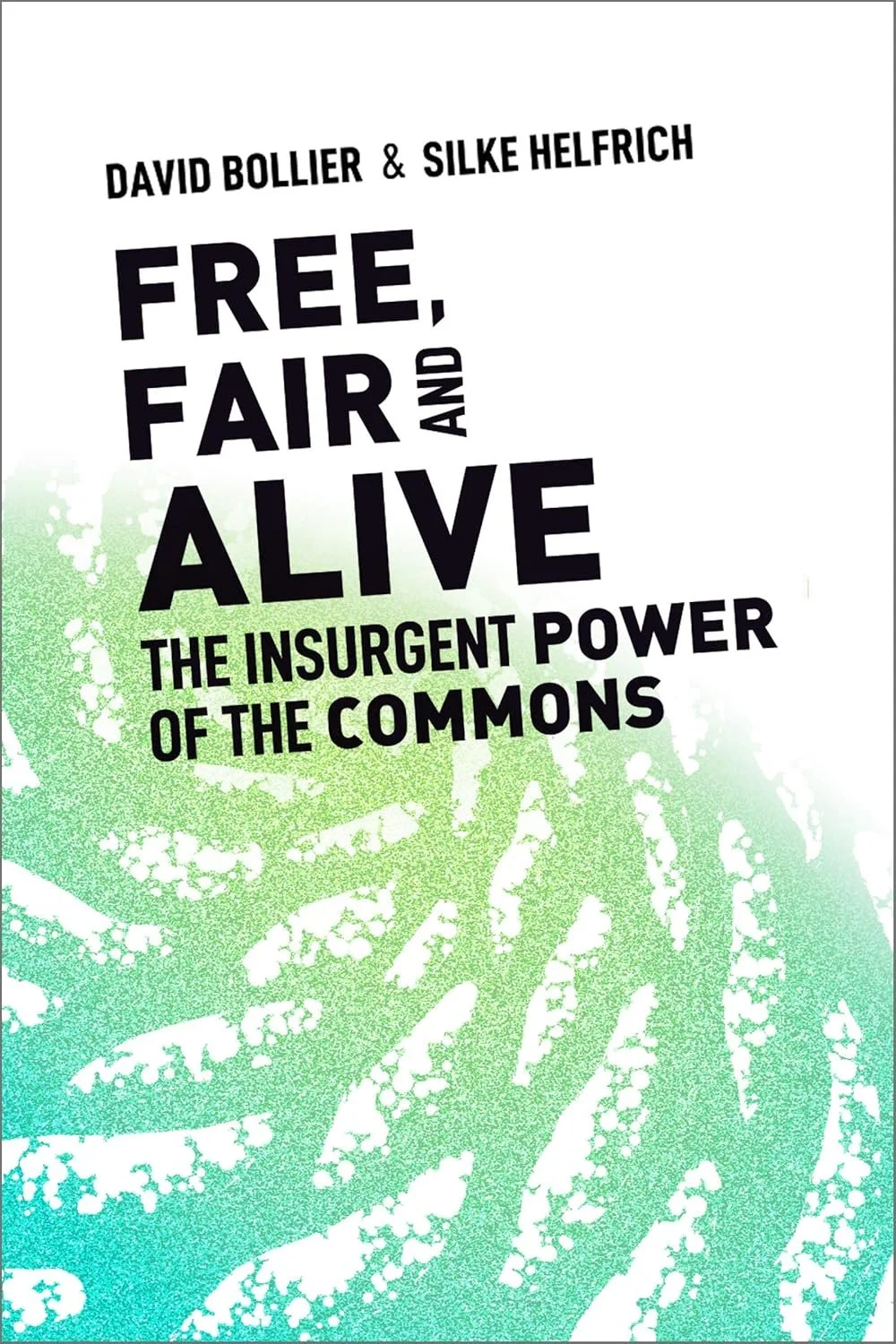
Why it is included:
This is the operating system for a thriving society.
Bollier and Helfrich explain how to build them in the digital age.
They reject the "Market vs. State" binary and introduce the "Triad of Commoning":
Social Life (peer governance),
Peer Governance (rule-making), and
Provisioning (production).
It bridges the gap between the local and the global through "Cosmolocalism" (Design Global, Manufacture Local). It teaches us how to build systems that are distinct and locally rooted, yet connected by a global "knowledge commons," solving the problem of planetary governance without centralization.
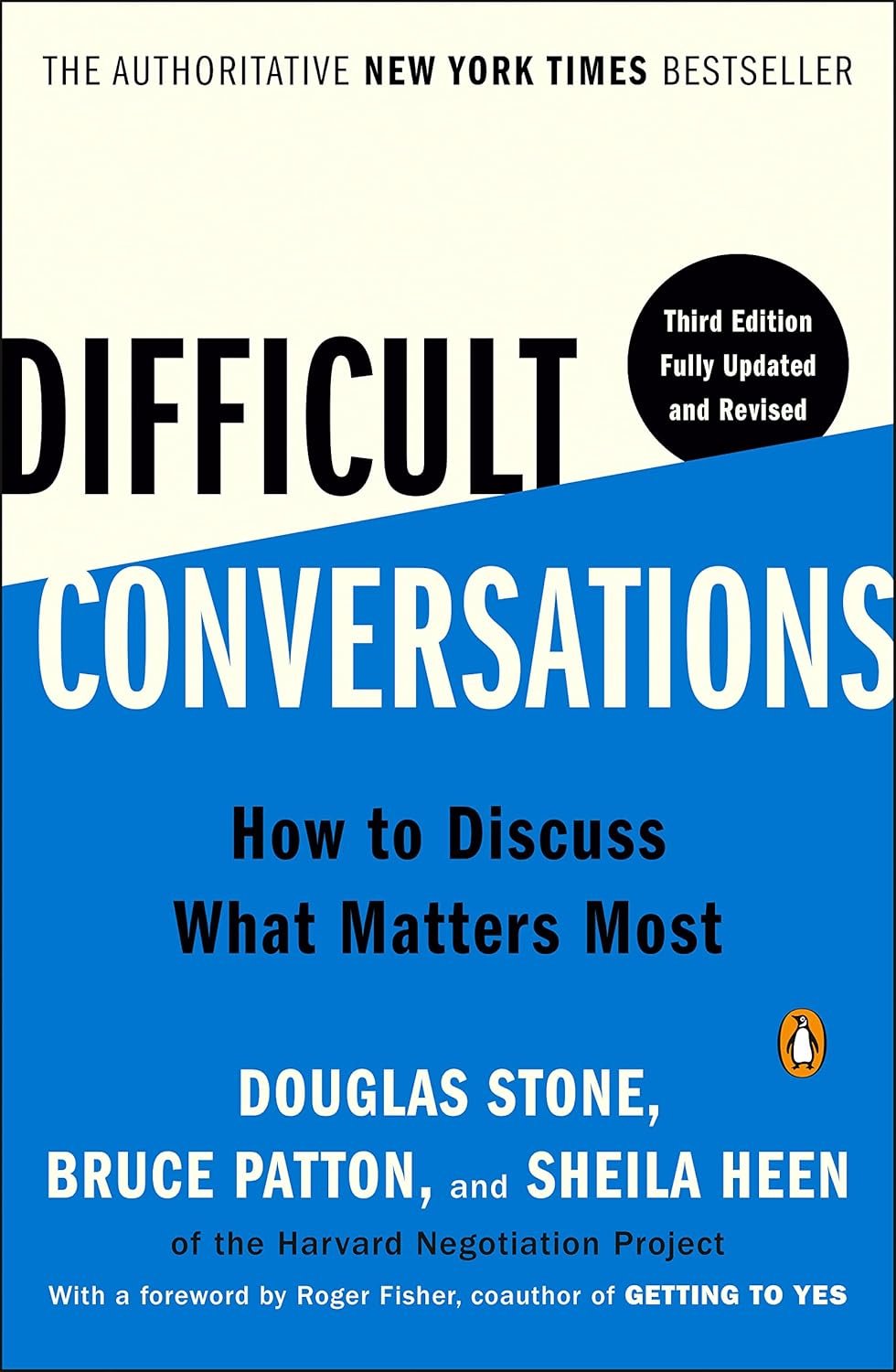
Why it is included:
While High Conflict handles the system, this book handles the interaction.
It reveals that every difficult conversation is actually three simultaneous conversations:
the "What Happened" conversation (facts),
the Feelings conversation (emotions), and
the Identity conversation (what this situation says about me).
We include this because it identifies the "Identity Quake"—the hidden reason we get defensive.
It provides the tactical framework to stop arguing about "truth" (who is right) and start exploring "perception" (why we see it differently), acting as the essential bridge between conflict and connection.
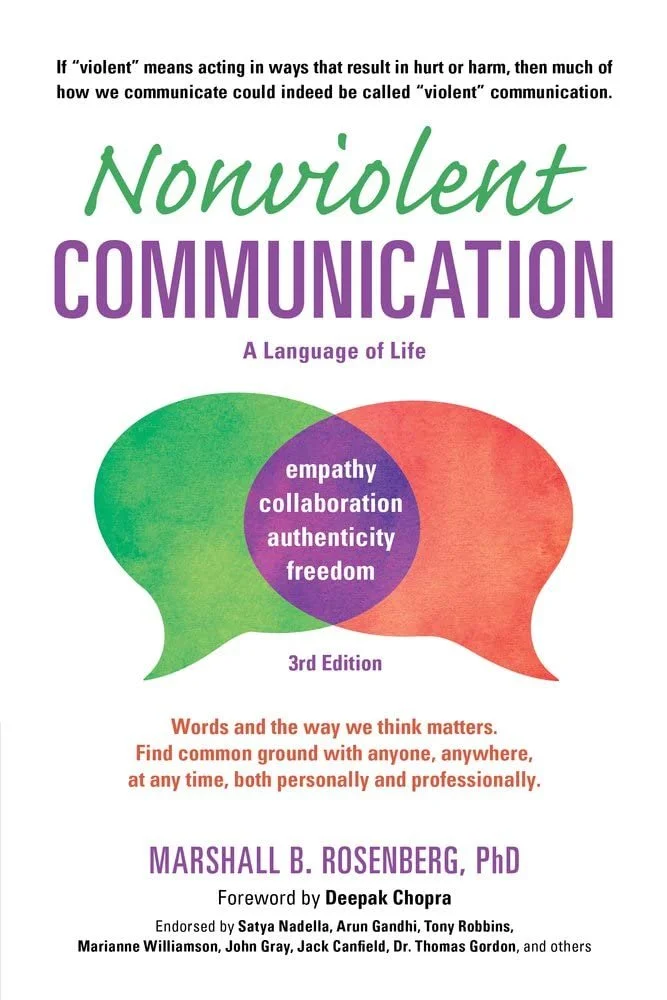
Why it is included:
Conflict is inevitable in co-creation.
Rosenberg provides the global standard for de-escalation.
He exposes how our language (judgment/blame) creates violence and offers a replacement protocol based on Needs and Requests.
It teaches Needs-Based Consciousness—the ability to look past an attack and see the universal human need driving it.
This is the essential tool for keeping the collaboration running when egos flare, turning "enemies" into partners.
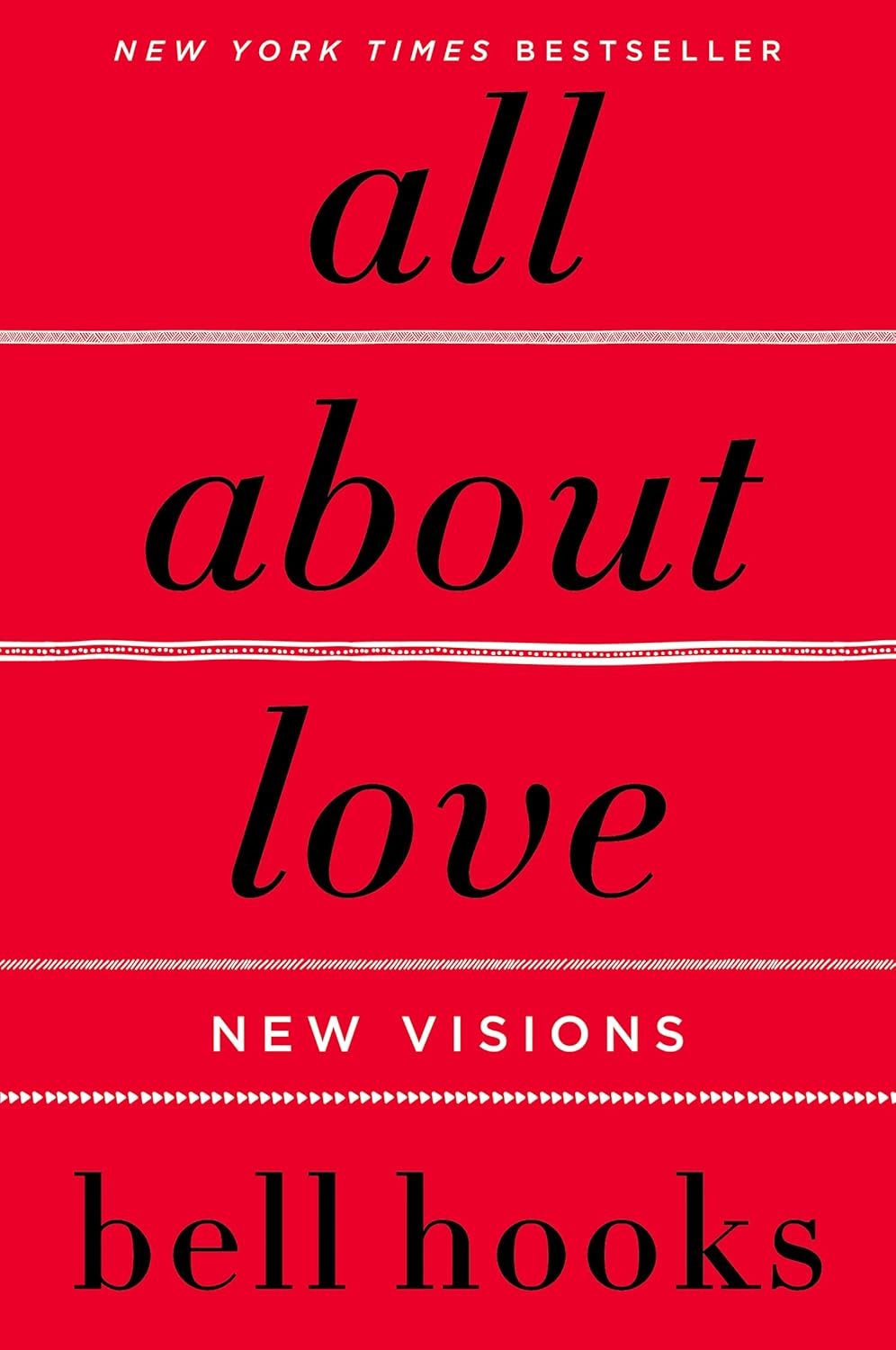
Why it is included:
We often treat love as a sentiment we "fall" into.
bell hooks reclaims it as a rigorous Ethic—an act of will that implies "care, commitment, knowledge, responsibility, respect, and trust."
She argues that there can be no love without justice.
This book provides the moral backbone of the section.
It teaches that "Co-Creation" is impossible in a hierarchy of domination.
To truly collaborate, we must dismantle the power structures inside our own relationships and replace them with a love that is an active, transformative force for social change.
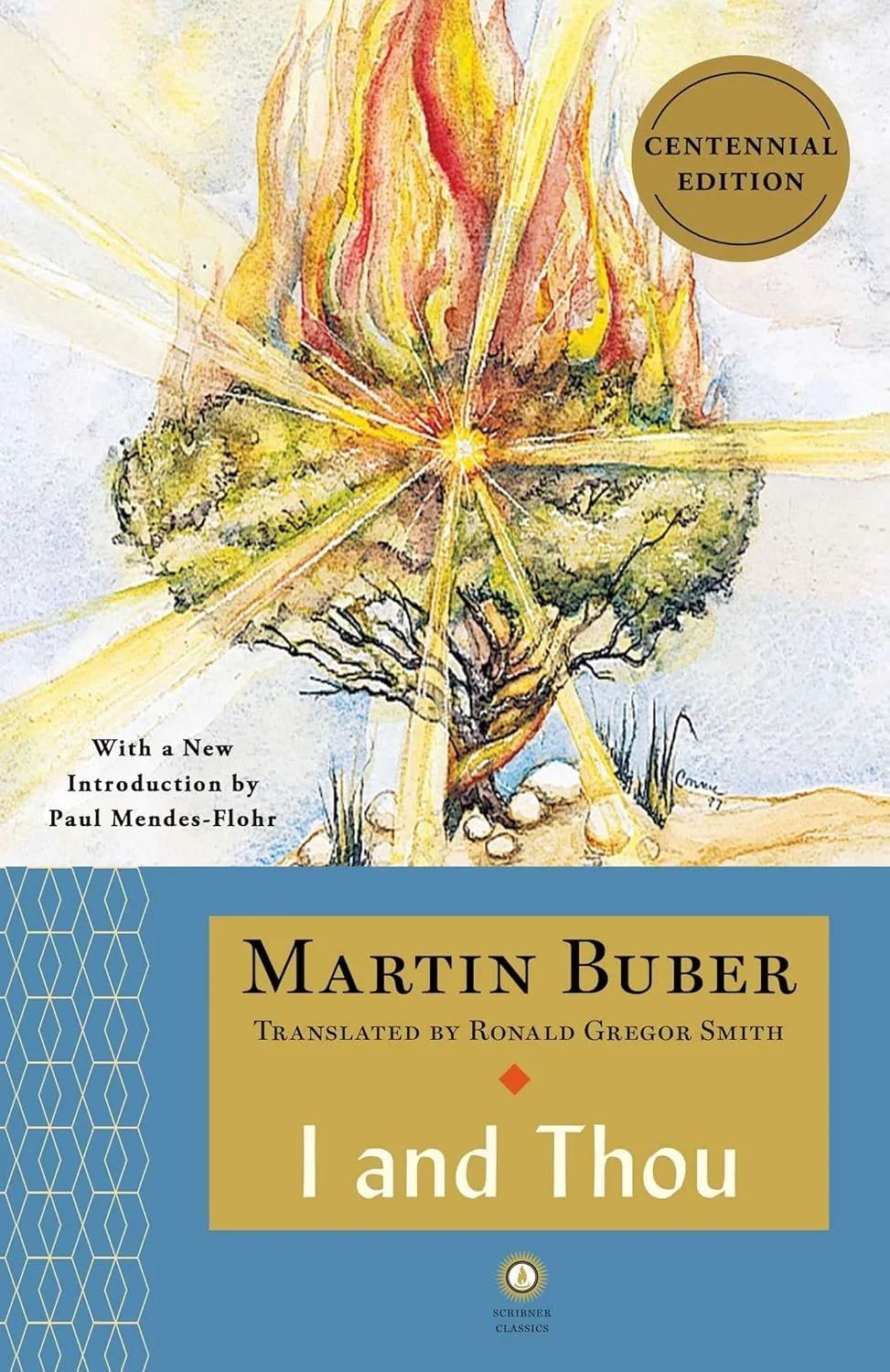
Why it is included:
Written in 1923, this is the philosophical cornerstone of connection.
Buber distinguishes between two ways of relating: I-It (experiencing the other as an object to be used, measured, or analyzed) and I-Thou (encountering the other as a whole, sacred being).
We include this because a thriving civilization cannot be built on "I-It" transactions.
Buber argues that true reality only exists in the "Space Between" subjects.
This book reminds us that we cannot "hack" connection; we must enter into it with total presence, recognizing the divinity in the other.
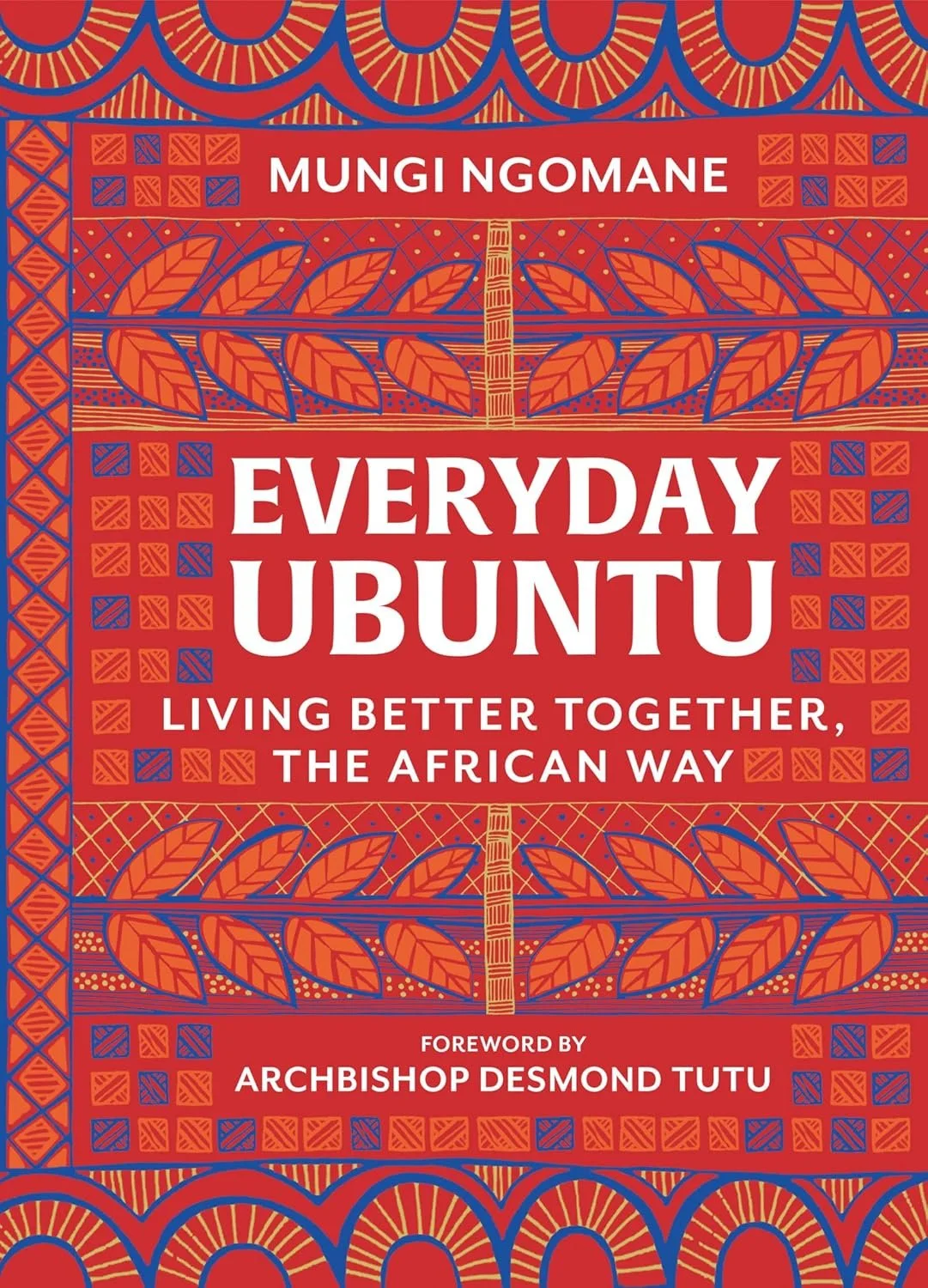
Why it is included:
"Ubuntu" is the Xhosa philosophy often translated as: "I am because we are."
It argues that a person is a person only through other people.
We include this manual to replace the Western myth of the "Self-Made Man."
It teaches that our humanity is inextricably bound up in others.
If you are humiliated, I am humiliated. If you are diminished, I am diminished.
This is the metaphysical "Source Code" for Co-Creative Collaboration, reminding us that there is no such thing as solitary survival.
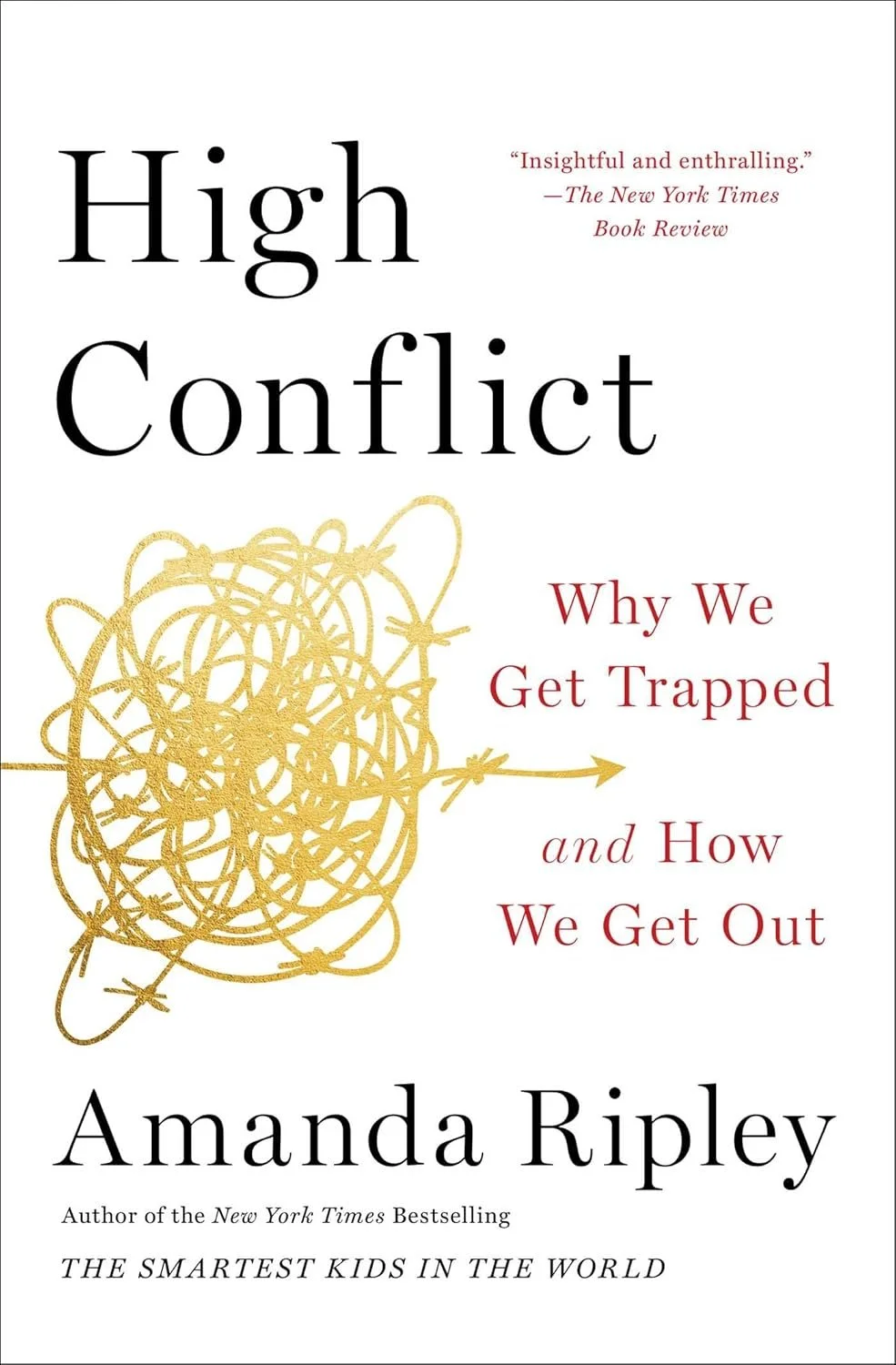
Why it is included: Conflict is normal and healthy. "High Conflict" is a trap.
Ripley, an investigative journalist, explains the mechanics of how we get stuck in "us vs. them" feuds where the goal shifts from "solving the problem" to "hurting the other side."
She identifies the "conflict entrepreneurs"—pundits, algorithms, and leaders—who profit from keeping us inflamed.
This book is the tactical manual for de-escalation.
Unlike general books on polarization, Ripley provides specific tools for "looping" (active listening) and disrupting the binary narratives that fuel hatred.
It is essential reading for anyone trying to build community in a polarized era, teaching us how to escape the "tar pit" of toxic division and return to "Good Conflict"—the kind that actually moves society forward.

Why it is included:
This is the hard science of inclusion.
Cohen, a Stanford psychologist, aggregates decades of research to prove that "Belonging" is not just a feeling, but a biological driver of human behavior.
He identifies "Identity Threat"—the subtle fear of being judged or excluded—as the primary blocker to collaboration.
Most importantly, he offers "Wise Interventions": small, low-cost actions that shift the narrative from threat to safety, unlocking the intelligence and empathy of the group.
It is the scientific manual for creating the soil where "Co-Creative Culture" can actually grow.
Aligned Integrity These books help us realign our economy, technology, and energy systems to respect laws of life and ethics.
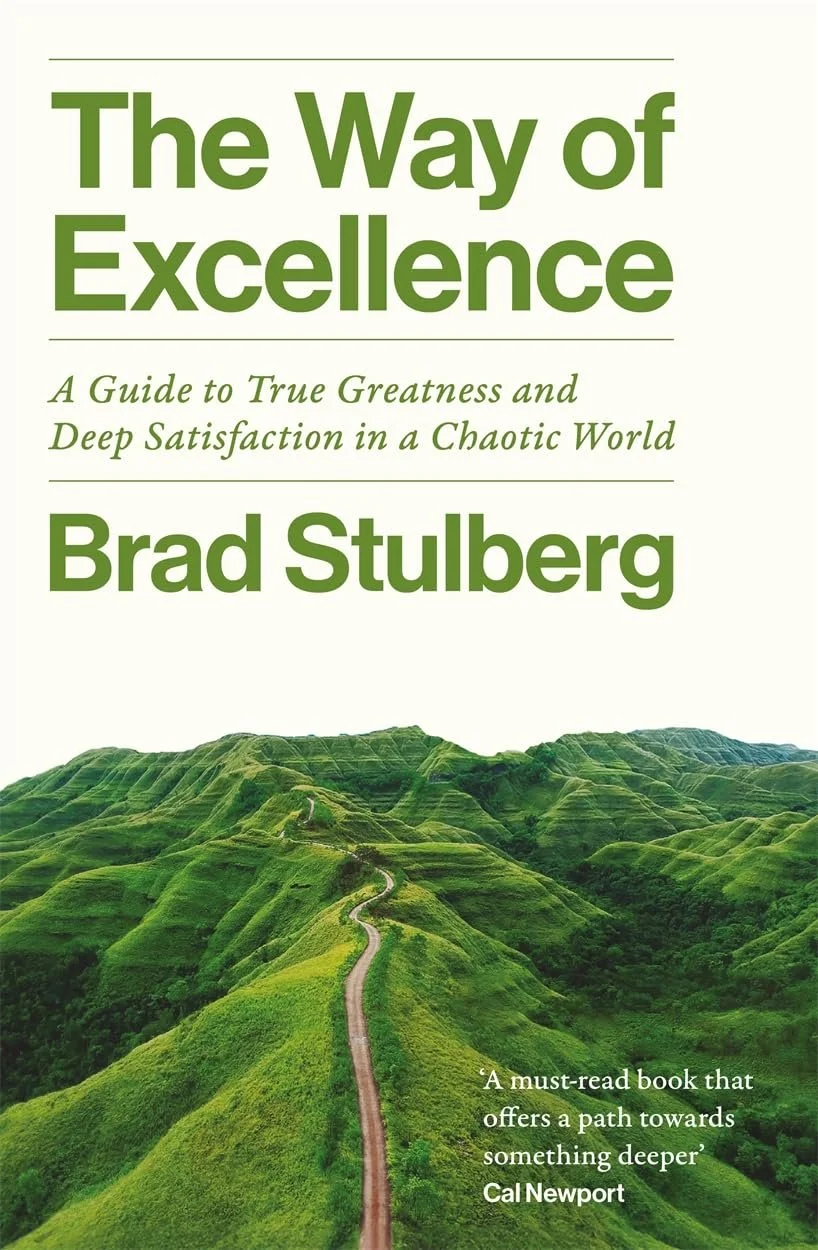
The Way of Excellence is the Character-Architecture Protocol because it defines "Greatness" not as external status or technological power, but as the relentless pursuit of virtue, skill, and integrity amidst global instability.
It is included because a flourishing civilization cannot be sustained by brilliant tech alone; it requires individuals who have mastered the "Internal Excellence" necessary to handle that power without corruption.
This book ensures that as the world moves toward "Superabundance," the person at the helm remains anchored in deep satisfaction and moral clarity rather than being swept away by the chaos of a rapidly shifting world.
Bednar’s framework formally ends the era of "Market-First" governance and replaces it with "Flourishing-First" architecture.
It is the essential bridge between our internal integrity and global policy, arguing that we must rebuild our institutions on the four pillars of Dignity, Sustainability, Community, and Beauty.
This isn't just an article; it’s a legislative mandate to stop optimizing for "Efficiency" and start optimizing for Agency and Resonance, ensuring that the external structures of the world finally match the internal evolution of the human spirit.
We currently live "half-lives." We spend 8 hours a day in a state of "unconscious blackout."
If our awareness only works when the sun is up and the coffee/tea is hot, we are easily manipulated by our subconscious fears and shadows.
Dream Yoga turns sleep from "wasted time" into a Training Simulator.
In the dream state, the brain is highly plastic and creative; Andrew teaches us to use that time for Systemic Problem Solving and Emotional Calibration.
Most of us make decisions from a segmented space, where the "Daytime Ego" is disconnected from their "Nighttime Shadow."
Dream Yoga bridges that gap, creating a Coherent Human who is the same person in the boardroom as we are in the deepest dream.
Greene provides the "Shadow Map" of the human psyche.
It invites us to see natural forces that potentially (subconsciously) drive most human behavior: envy, narcissism, grandiosity, and tribalism.
Greene provides the 18 laws that govern human interaction, giving us the ability to "see through" the masks people wear—including our own.
It shifts us from "Idealistic Naivety" to "Strategic Empathy."
By understanding the darker aspects of human nature, we can better protect our work and ourselves from potential sabotage and manipulation.
It harmonizes the conflicting duality of "High Idealism" and "Grounded Realism" (Human Nature).
Pirson sees the current global crises as a result of a management paradigm that ignores human dignity.
He replaces this with a framework based on Protecting Dignity and Promoting Well-Being.
This book provides the practical "Governance" compass for any project, company, or community to align with the fundamental sanctity of life.
It shifts us from "Utility Maximizer" to "Dignity Protector," viewing every professional interaction as an opportunity to foster well-being rather than just "output." It harmonizes the conflicting duality of "Efficiency" and "Empathy."
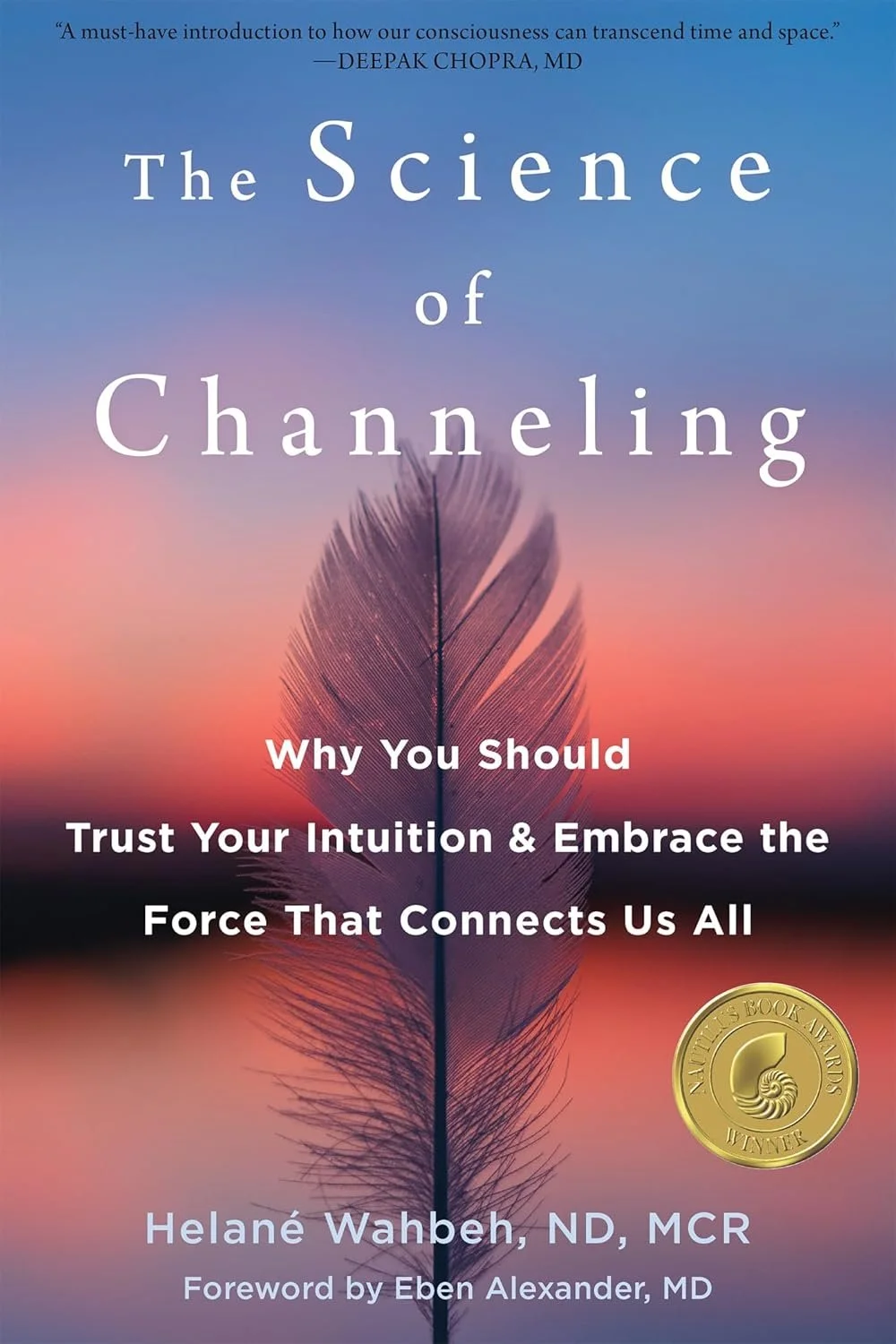
This book is the Intuitive Protocol. While other manuals focus on logic or systems, Wahbeh provides the Empirical Bridge to our non-local capabilities.
We will integrate Intuitive Intelligence as a rigorous data stream.
Wahbeh uses a scientific lens to validate that accessing information beyond the ordinary senses is a universal human trait.
It provides the protocol to trust "noetic" hits as valid input for high-stakes decision-making.
It shifts us from "Analytical Isolation" to "Universal Interconnectedness."
By providing a scientific framework for intuition, it replaces stigma with a Quantum Information skill set.
It teaches how to discern between egoic noise and true intuitive signal, making everything an expression of universal intelligence.
This book provides the Structural Protocol for a leader in a flourishing society, for it introduces the concept of "Zero Distance"—the elimination of the gaps between the leader and the led, the company and the customer, and the "Self" and the "Field."
Zohar explores the possibility to evolve the bureaucratic, "Newtonian" model of leadership (command and control) to a model of "Quantum Entanglement" where every part of the system is instantly connected to every other part.
It shifts us from a "Controller" to a "Co-Creator" that dissolves ego-boundaries and leads through Spiritual Intelligence (SQ).
It harmonizes the conflicting duality of "The Leader" and "The System," showing that they are actually a single, entangled process.
It is included because it transforms "Systems Thinking" from a cold, academic concept into a daily individual discipline.
It provides the specific "Gateways" for us to recognize that they are not a separate observer of a problem, but an active participant within the system's structure.
It shifts our mindset from "Problem Solver" to "Systemic Participant."
The book provides two critical protocols:
Mental Models (the ladder of inference) and
Harmonizing Advocacy and Inquiry.
These ensure that we can hold our own perspective while remaining radically open to others. It is a tactical guide for "Thinking about Thinking," allowing us to calibrate our internal logic to match the complexity of the 21st century.
It provides the blueprint for navigating the "Great In-Between"—the friction where legacy systems meet emerging realities.
While traditional leadership focuses on internal efficiency, Siegel argues that a modern Steward must become a "Systems Orchestrator."
This means mastering the art of managing cross-pressures: the tension between private profit and public good, technological speed and human ethics, and short-term execution and long-term systemic health.
The book provides the tactical language to "zoom in" on rigorous daily operations while simultaneously "zooming out" to ensure those actions harmonize with the broader ecosystem.
By mastering this duality, the individual ensures their integrity is not just a personal virtue but a structural force.

The "Above the Line / Below the Line" check.
This is the simplest and most powerful behavioral mirror in the kit.
At any moment, you ask: "Am I being defensive and closed (Below), or am I being curious and open (Above)?"
It places the responsibility for your experience entirely on you.
By committing to stay "Above the Line," you ensure your integrity isn't dependent on external circumstances.
This manual teaches the individual how to speak the truth without being an aggressor and how to care for people without being a "ruinous" enabler.
It provides the courage to be clear.
Integrity is often lost in the "mushy middle" of being nice but dishonest.
This protocol ensures that your word is solid and your feedback is a gift, not a weapon.
It allows you to maintain high-fidelity relationships through radical clarity.
Easy Ego State Interventions is the Internal Diplomacy Protocol because it provides a practical, non-pathologizing framework for communicating with the various "parts" of our psyche—such as the inner critic, the protector, or the high-achiever.
It is included because one cannot lead a regenerative world if their own "internal states" are at war.
By treating the mind as a system of "Ego States," this book invites us to quickly identify internal conflicts, negotiate between competing needs, and return to a state of deep Presence.

Why it is included:
The Code of Conduct.
It offers four non-negotiable agreements for the Sovereign Self:
1. Be Impeccable With Your Word,
2. Don't Take Anything Personally,
3. Don't Make Assumptions,
4. Always Do Your Best.
In an age of digital noise and "cancel culture," this is the shield that protects our integrity and psychic energy.
It simplifies the complex ethics of leadership into a daily practice of personal freedom.

Why it is included:
The "Steel." In a library full of gentle wisdom, Musashi provides the necessary martial edge.
Written by Japan's greatest swordsman just weeks before his death, it is a treatise on strategy, timing, and the "Way of the Void."
We include it to remind the leader that "Luminous Authenticity" is not passive.
It requires the relentless discipline to clear the mind of hesitation, seeing reality exactly as it is without distortion.
It is the manual for "Impeccable Action" in the heat of chaos.

Why it is here:
The bridge between the cave and the corporation.
Wadhwa argues that we falsely separate "The Saint" (Inner Purity) from "The Executive" (Outer Results).
A leader in a flourishing society is both.
He codifies the "Five Core Energies" (Purpose, Wisdom, Growth, Love, Self-Realization).
We include this because it is the operational manual for the section.
It stops "Authenticity" from being a vague buzzword and turns it into a discipline.
It teaches the leader how to activate their "Inner Core" in high-stakes moments to drive "Outer Impact" without selling their soul.
Luminous Authenticity These books address the deepest questions of existence and reality, providing the spiritual anchor required to weather the transition.
The Fifth Agreement is the Sovereignty-of-Mind Protocol because it demands we hold our internal "agreements" (the stories we tell ourselves) lightly, while remaining profoundly open to the truth.
Be skeptical, but learn to listen.
This is the ultimate safeguard against dogma.
It ensures that even as you integrate high-level systems like Relationality or Governance for Flourishing, you never stop questioning your own assumptions.
It turns the "Self" from a fixed identity into a dynamic, learning entity capable of navigating the chaos of the modern world with radical clarit
Dr. Sam Parnia is the leading medical authority on the "Lucid Dying" phenomenon—the remarkably clear, structured, and vivid experience people have at the threshold of clinical death.
It encourages us to embody a fearless perspective on mortality.
Parnia’s research suggests that consciousness does not simply "shut off" when the heart stops, but rather enters a state of heightened lucidity.
By understanding that the end of biological life is not the end of consciousness, we are freed from the scarcity mindset that drives frantic, short-term survivalism.
It shifts us from "Terminal Fear" to "Continuity of Purpose."
Why it is included:
The liturgy for the secular age.
A flourishing civilization needs ceremony.
O'Donohue restores the power of language to consecrate the thresholds of life—new beginnings, failures, conflicts, and grief.
We include this to give the leader the words when policy fails.
It transforms the "Manager" into the "Elder," capable of holding space for the spiritual transitions of their team and community.
Why it is included:
The advice to "live the questions."
In a world demanding instant answers and hot takes, Rilke teaches us to tolerate uncertainty.
He urges us to have patience with all that is unsolved in our hearts and to love the questions themselves.
We include it as a companion for the lonely nights of leadership, reassuring us that confusion is not a failure, but a necessary gestation period for a new truth.
Why it is included:
The ultimate proof of human freedom. Frankl, a Holocaust survivor and psychiatrist, argues that humans are driven not by pleasure or power, but by Meaning.
He defines the "last of the human freedoms"—the ability to choose one's attitude in any given set of circumstances.
It anchors the entire library in Responsibility.
It reminds the leader that even if the world collapses around them, they retain the sovereign power to create meaning and serve others.
Why it is included:
The Archetype for Integration.
The traditional "Hero's Journey" (Campbell) is about outward conquest—killing the dragon and bringing back the treasure.
The "Heroine's Journey" is about the inward descent to reclaim the parts of ourselves we discarded to "make it" in the world.
We include this because we are often stuck in the "exhaustion of success."
This map provides the route home: validating the need to stop conquering and start integrating, moving from "Success" to "Wholeness."
Why it is included:
The manual for "Ecological Leadership." Palmer argues that "Burnout" is not just a result of working too hard; it is a result of working in a way that violates your nature.
He distinguishes between a "job" (an economic role) and a "vocation" (a calling that emerges from one's identity).
We include this to teach the user to listen to their life rather than force it.
It is the guide to leading in a way that is regenerative—where your service to the world actually replenishes your own energy reserves.
Why it is here:
The physics of influence. Hawkins distinguishes between
Force (trying to control outcomes through effort, coercion, and adrenaline) and
Power (aligning with truth, courage, and attractor fields).
It provides a logarithmic scale for leadership, helping the user diagnose their own operating state.
It teaches that "burnout" is usually a symptom of using Force (pushing against reality) rather than Power (aligning with it). It is the essential diagnostic tool for conserving the leader's energy.
Why it is included: For too long, science and spirituality have been treated as enemies.
Dr. Lisa Miller ends that war with data. Using MRI scans and longitudinal clinical studies, she demonstrates that the human brain has a natural, innate capacity for spiritual awareness.
When this capacity is developed, the cortex actually thickens, and the brain becomes significantly more resilient to depression and anxiety.
This book is included because it moves spirituality from a "nice-to-have" hobby to a "must-have" biological asset.
It validates that "seeing the world as alive and connected" is not a delusion, but a sign of high cognitive health. For an emerging civilization, this provides the medical justification for integrating spiritual practice into education, healthcare, and daily life.
Why it is here:
The upgrade to Maslow.
Kaufman uses modern psychology and Maslow’s unpublished journals to retire the famous "Pyramid" of needs.
He replaces it with the "Sailboat."
The hull represents Security (Safety, Connection, Self-Esteem)—you need a leak-proof hull to stay afloat.
The sail represents Growth (Exploration, Love, Purpose)—you need to open the sail to move.
We include this because it integrates the "Safety" needs of Grounded Vitality with the "Growth" needs of Luminous Authenticity.
It provides a rigorous, secular framework for becoming a whole person.

Why it is included:
The practical application of "Flow" to high-stakes reality.
Singer (a CEO who built a billion-dollar public company) describes his 40-year experiment of simply saying "Yes" to whatever life put in front of him, dropping his personal preferences and ego.
We include this to prove that "surrender" is not a passive act, but a high-performance strategy.
It shifts the leader from "Controller" to "Participant," allowing them to leverage the chaotic intelligence of life rather than fighting it.

Why it is here:
The core metaphor of the Soul. Brach tells the story of the heavy clay statue that, when cracked, revealed solid gold underneath.
The clay represents our defenses, fears, and ego; the gold represents our innate goodness and awareness. We include this to shift the leader's internal work from "Fixing" to "Revealing."
It teaches the leader that they do not need to "become" a better person; they simply need to learn to trust the luminous intelligence that is already there, beneath the armoring of the role.
Why it is included:
The Antidote to the Grind. While O'Donohue covers the major life thresholds,
Wiest covers the Tuesday morning coffee.
She argues that the way we survive the chaos of modern life is by turning "routines" into "ceremonies."
We include it to anchor the "Luminous" state in the actual minutes of the day.
It teaches the leader to stop waiting for the "Big Win" to feel alive and instead to consecrate the mundane, finding the sacred in the ordinary workflow.

Why it is included:
The manual for "Wholehearted Living."
While Brach focuses on the internal feeling, Brown focuses on the daily behavior.
She moves Authenticity from a buzzword to a disciplined practice. Based on thousands of data points, she identifies the specific blocks to connection—perfectionism, numbing, and exhaustion-as-status.
This book is included as a practical guide to resilience.
It teaches the leader that vulnerability is not weakness; it is the accurate measurement of courage. It provides the "10 Guideposts" to help high-performers let go of who they think they should be and embrace who they actually are, preventing the burnout that comes from "hustling" for worthiness.

Why it is here:
The bridge to ancestral technology.
While David Nutt (Section M) explains the chemistry of psychedelics, Eastman explains the ceremony.
She frames plant medicine not as a biohack, but as a "Dieta"—a relationship with a living intelligence.
We include this to honor the indigenous roots of the psychedelic renaissance.
It teaches us that true "expansion" requires Reciprocity—we don't just "take" wisdom from the earth; we must give back reverence and stewardship.
It acts as the guide for the "Modern Elder" navigating altered states.

Why it is included: The most critical safety mechanism in the entire library.
Johnson, a renowned Jungian analyst, explains that the "Shadow" is not evil; it is simply the unlived life and traits we repress to fit into society.
The danger arises when a leader denies their shadow, inevitably projecting it onto their enemies or competitors.
We include this to prevent "righteous leadership."
This book teaches us to "eat their own shadow"—to integrate their own capacity for selfishness or aggression—so they do not act it out unconsciously on the world stage.

Why it is included:
The "Ecological Male." A flourishing civilization will not exist with toxic masculinity (dominance/extraction).
Strand offers a radical alternative: she re-reads the ancient myths (Dionysus, Merlin) to find a masculinity that is rooted, fungal, and regenerative.
Instead of the "Warrior" who conquers nature, she offers the "Magician" who collaborates with it.
It serves as the necessary counterpart to Estés, ensuring that our vision of leadership heals both the masculine and feminine energies within the leader.

Why it is included:
The Wisdom.
"It is only with the heart that one can see rightly; what is essential is invisible to the eye."
This book sits on the shelf to remind the sophisticated leader that the metrics (KPIs, GDP, ROI) are not the reality.
It protects the "Inner Child" from the cynicism of the "Grown-Ups," ensuring that our future is built on love, connection, and "taming" (establishing ties), rather than just efficiency.

Why it is included:
The "Wild Soul."
While Murdock provides the map, Estés provides the fire.
She uses ancient myths to help the reader reconnect with the "Wild Woman" archetype—the instinctual, intuitive nature that civilization tries to tame.
We include it to ensure that "Authenticity" isn't just about being polite or "spiritual"; it is about being fierce, protective, and alive.
It reminds the leader to trust their gut instincts and to protect their creative territory with teeth when necessary.