How Music Unlocks Human Potentials | Dr. Lana Israel
The Sound Before Words
Before a child learns a single word, they respond to tone. A hum can calm a body that no argument could reach. When asked what sound she'd use to greet a friendly alien, Dr. Lana Israel didn't hesitate: "I think it would have to be the om." Not because it's clever, but because it's true to something older than language. "There seems to be something very universal and profound about it," she said. "It comes very easily. And there's something about it that seems to be very calming, powerful, and resonant."
That instinct — that sound reaches us before meaning does — turns out to be the quiet thesis underneath everything Dr. Lana has invested her career building.
-
Lana (00:00)
So music as a...
totality as a holistic experience
activates almost every single neural system and subsystem identified by neuroscientists. That's wild. That's wild.
MAGICademy Podcast (00:11)
today's conversation we'll focus on why music has this magical power to help humans remember better and how can we harness music to help us learn difficult subjects such as mathematics and tap into our full potentials and as a result fine tune
inner dialogue and shifting the conversation from I will never be
able to, I can never do to hmm maybe I'm able to hmm.
maybe I'm actually good at.
MAGICademy Podcast (00:52)
Beep beep beep. In front
Lana (00:54)
You
MAGICademy Podcast (00:54)
of you lands a spaceship. An alt walks a friendly alien, if alien walks. If you were to use one sound, one movement, or one word, what would that be to invite the alien to play?
Lana (01:07)
I think it
would have to be the om. Yeah.
MAGICademy Podcast (01:12)
Why?
Lana (01:13)
There seems to be something very universal and profound about it. I've heard it's like one of the most natural sounds for humans to make.
MAGICademy Podcast (01:25)
and it's very musical.
Lana (01:27)
It
absolutely musical.
MAGICademy Podcast (01:28)
Hahaha
Lana (01:29)
Absolutely musical. You don't need to do a lot to make that sound. It comes very easily. And there's something about it that seems to be very calming, powerful, and resonant. So I would try that. I would try that and see how our alien friend reacted.
MAGICademy Podcast (01:46)
Yeah and also that reminds me of when mother is trying to soothe a baby it's like it's all singing through and it automatically kind of calms people down and switch us out of like fleet flight and coming back to this safety and quietness and stability. I love that.
Lana (02:07)
And
you just hit on something really essential and that is the power of sound and music to affect us in affective and emotional ways. precisely as you said, a certain sound or combinations of sounds can calm you down, relax you, motivate you, inspire you, not based on the words or the lyrical content.
but based solely on the sounds themselves. And there's something really fascinating about that.
MAGICademy Podcast (02:39)
Tell us more about that with your decades of research in how music help our brain to stay active, stay vital and stay neuroplastic. So what are some research talking about in terms of the music's impact in us as human beings? Yeah.
Lana (03:02)
Yeah, so there's an ever
growing body of research in this space. And I think in the last five, 10 years, there's
MAGICademy Podcast (03:10)
Mm.
Lana (03:10)
been this initiative surrounding music as medicine. think this is not such a woo woo idea anymore. It's an idea that's getting serious attention and
traction because of the outcomes. Now, I'll bring up an example. This isn't research
MAGICademy Podcast (03:25)
Mm.
Lana (03:26)
based.
Although I'm sure there's research going on in this space. This is an anecdotal example that a lot of people sadly can relate to in instances of people who have Alzheimer's or dementia and can't remember their children's names or what they had for lunch, but they hear a song that they heard as a child and suddenly all the words come back to them. That's pretty amazing.
The second thing that happens is music tends to light them up. So there's almost like there's a corona of this effect that's not just mnemonic and memory based, but that also acts at the level of emotion and psychology and physiology. taken together, we see these examples.
every day in our lives about the really profound power of music. And yet I think for the majority of us, we experience music as kind of a consumptive entertainment tool or a consumptive entertainment medium, right? That we experience
MAGICademy Podcast (04:28)
Yes, like driving the cars, listening to the music.
Lana (04:31)
music in that context. And we don't often consider that music may be one of the most powerful forms and mediums that exists.
So back to your initial question, there's something very deep and profound here that I think we're starting to unravel or understand more, contemporarily.
Having said that, I'm pretty convinced that in previous cultures and civilizations, music was regarded as something with this type of.
with this type of power and respected as such.
MAGICademy Podcast (05:07)
Yeah,
that reminds me a few things like first when you're talking about the out timer when the music sings or plays they also remember that and I think even for people who don't have a timer as we grow up through like all the way through the
the childhood to adulthood and if we as an adult say we're driving a car or we're doing something and all of sudden a music that we really enjoy listening when we were little kids start to play and we're like all of a sudden like all the memories of people that just start to like come back and then all of sudden for that moment I feel like time stopped and we're like pulled back into that moment and time where the music is being played and all the
all the things as if they're happening again. So I did have that kind of reminiscent experiences and I heard people having that reminiscent experiences as well when they listen to music that they really enjoy listening when they were younger.
Lana (06:07)
Yeah, absolutely. I'm glad you brought up that example because the example I used was perhaps an extreme example that
MAGICademy Podcast (06:15)
Mm.
Lana (06:15)
just unearthed particularly how powerful music is. And
MAGICademy Podcast (06:20)
Mm.
Lana (06:20)
I think that's why that's an interesting example. Your example is fascinating because it underscores the widespread experience of the phenomenon of music being able to activate memory.
in a very robust, holistic manner. So typically, people regard the olfactory sense and smell as so tightly and strongly linked to memory that you've presumably had a similar experience where you smell something and you
MAGICademy Podcast (06:47)
Yes.
Lana (06:48)
go back to like, my gosh, in preschool I smelled that, right? But you can be,
MAGICademy Podcast (06:52)
Yeah.
Lana (06:53)
it could be decades later and you smell something and it takes you back not only to
an earlier experience in time in your life. But for me at least, experience that I didn't think I could access still in any other way.
MAGICademy Podcast (07:07)
and
Lana (07:07)
Having said that, music does a very similar thing. As you were saying, you hear a song and you go, my gosh, this brings me back to junior high school, this night with these people singing this song. And it's it's so.
interesting how music serves as this cue for this type of reminiscence in a very, again, powerful way. And that's something, as you've pointed out, this is not an uncommon experience that you've experienced and I've experienced and very few people experience it. Everyone
MAGICademy Podcast (07:40)
Thank
Lana (07:42)
has had this experience. And this suggests there's something about
music and let's say the architecture of our brains, that's
MAGICademy Podcast (07:48)
Yeah
Lana (07:49)
very, very in, in, in, in intrinsic and, and, and entrenched and fundamental when it comes to the intersection of, of memory, emotion, so on and so forth.
MAGICademy Podcast (08:02)
Yeah, beautiful. Yeah, and also so how
So when we're talking, this word just kind of surfaces. So if music has the ability to help us retrieve memories and things that has happened in the past, almost in a very visceral, like you feel the beat of the play, but like the studio and then you like you feel this sweat maybe on your your body. It's like very deep and very visceral. And so
In terms of neuroplasticity, can music help us since we're constantly being able to remind it and remember and retrieve those memories, can music has the potentiality to help our brain to be
more like neuroplastic and adaptive and just like...
like shift our brand into this like invisible prison that we all put ourselves in like this is
Lana (08:56)
Yeah.
MAGICademy Podcast (08:56)
what it is and it's like very stale and and and just like heavy so how what are some research that talking about that that music can actually kind of make our brand and tap and tap our brand and
Lana (09:12)
There
are a couple of documented cases of people who have lost the inability to speak either through physical trauma or stroke and medical type of trauma and have regained the ability to speak through singing. So a very good example of the question you pose and there absolutely seems to be
a connection between utilizing music and achieving these more plastic effects and outcomes that you're talking about versus, I'm gonna say more traditional means, but maybe more utilized or...
kind of expected means, right? How do you learn to speak again? You think it's through speaking, through
MAGICademy Podcast (09:56)
Yeah.
Lana (09:57)
let's model sounds and let's try to have you say a word. That would seem to be the obvious intuitive normal way to get at something like that. And yet...
what experience shows is it's through this musical avenue that you get more efficient, like quicker, more profound, more robust outcomes. And so that's really interesting because see that forces us to rethink a lot. It forces us to rethink what we've just are accepted.
are accepted ways and norms of getting at a lot of things. we have an educational methodology and system that takes for granted that the primary mode of instruction is the Charlie Brown approach, which is someone getting up in front of a room going wah, wah, wah, wah, wah, right?
And if you look at the commencement of this type of formal education, let's say medieval universities, hundreds of years ago, that's how they taught, right? It was someone standing in front of a few people sitting around them going, wah, wah, wah, wah. And what's remarkable is it's hundreds of years later.
And somehow that's persisted as just
MAGICademy Podcast (11:21)
Yeah.
Lana (11:21)
the de facto way that learning and education is supposed to work. And you would assume that globally and institutionally, if we've adopted just this completely prevalent way of teaching and instruction and learning, it should be after all this time because it's the best. But I would argue it's not. Yeah,
MAGICademy Podcast (11:40)
because it's longest.
Lana (11:43)
would argue, exactly. I would argue that it's not.
I would argue that music is a much more powerful learning medium when it comes to engagement, when it comes to memory, when it comes to motivation, when it comes to emotional involvement in the material. And when you combine all of those things, you have a medium that gives you learning superpowers. And I
MAGICademy Podcast (12:07)
you
Lana (12:08)
don't think our traditional system.
whether it's elementary school, middle school, high school, whatever the equivalents are globally. I'm speaking to the American system, higher education, right? Yeah. I mean,
MAGICademy Podcast (12:18)
them here. think growly like Asia. Yeah, it's a global.
Lana (12:23)
you get the point from a kid just starting formal education to college, graduate school, so on and so forth.
we're not turning people into learning superheroes. We're not giving them learning super powers. We're making it for most people a pretty rigorous, challenging, tough process and not utilizing this medium (music) that makes learning fun, engaging, a lot more efficient, and I would say a lot easier. And so as you said during the...
beginning of our conversation what we set out to do was say, what if we could identify what tends to be a learner's most challenging subject, and that's math, and instantiate
MAGICademy Podcast (13:03)
Yes, that's true.
Lana (13:06)
music as a credible pedagogical tool when it comes to that subject, and by extension suggest that music can be used to help anyone learn anything.
more efficiently and effectively.
MAGICademy Podcast (13:19)
say I'm learning math and Jiani maybe that's rewiring me back to maybe high school and I'm learning math and I'm struggling and does that mean that...
in order for Jiani to learn math more efficiently and remember it deeper and make it ready to be retrieved more easily. I just need to play a music and then maybe like learn math and just play the music and dance about it.
your research was sponsored and supported by the National Science Foundation. what is that recipe maybe? What's that dosage or sequence or protocol or something
Lana (13:58)
Yeah.
MAGICademy Podcast (13:59)
like that that helps?
amplify the magic of music as we learn difficult subjects like math.
Lana (14:04)
Yeah, I
love that. That's a great question. I'm so happy you asked that question because I kind of take for granted that the approach we're using is evident when I talk about it, and it's really not. So first of all, I do want to acknowledge the National Science Foundation and the Institute of Educational Sciences at the US Department of Education because we've received support from both of them.
And we have an outstanding program in the United States where small businesses that are doing technically risky research that could have significant societal impact can have an avenue to apply to receive support from these governmental institutions. And it's really an amazing program.
that supports innovation in our country. So I thank you for bringing that up. I wanted to acknowledge that. To answer your question, certainly that is an approach you can take. You're talking about an approach that in cognitive psychology may be called context dependent memory, you learn something in or state dependent memory, learn something within a certain context or state and then
it when you're put back into that context. mean, this is kind of, this is a stretch to apply to the example you gave, but then you can put yourself back into that context and state and more readily retrieve the information than if you weren't in that same context or state. That's not quite what we're doing. What we're doing is very explicit. So a lot of people in America remember Schoolhouse Rock.
I don't know if it ever made it over to Asia. It's a beloved brand in America. And most people in America can sing this song, Conjunction Junction or I'm a Bill on Capitol Hill. And so we are using a similar methodology, but what we do is scientifically optimized. And that was a lot of the research we did via these grants. So what we do is essentially we write songs
that explicitly teach the math. And then we create high production value MTV quality music videos that help convey the information in a music video form with motion graphics that help reinforce the learning. So essentially, we're using a music video as the delivery mechanism that essentially soaks up all of these amazing learning properties and characteristics, which
we've developed in a very deliberate scientific way. And we're always in a process of continuous improvement when it comes to upping our optimization and our science. We're in the process of doing that now, which is super exciting. But that's the way we do this. So you're going to learn the information encoded into a song form, musical form, through
a music video and as you brought up dancing with.
MAGICademy Podcast (17:03)
Dancing
is critical for me.
Lana (17:05)
in the videos doing dance moves that reinforce the information. So this is purely a visual auditory kinesthetic experience. And to the point you just made, this was a really cute example. There was a middle school student who took a and said, I was taking the test. I couldn't remember the information. A math test, a math test. I couldn't remember the information. I did the dance move and the information came back to me.
MAGICademy Podcast (17:31)
So he was dancing.
Lana (17:32)
She was, yeah, she
MAGICademy Podcast (17:33)
to meet you.
Lana (17:34)
was dancing. she, taking the test, she started moving her body to do the dance moves and she remembered the math that way.
You know what's so funny? When you just coughed, I could see more clearly behind you, your word magic. Yeah. And to me, this is like magic. music, work. Yeah, people are really, really great, intelligent, fabulous researchers are working to unpack this more scientifically.
But I'll tell you what, it's kind of like magic. You hear a song.
MAGICademy Podcast (18:07)
you try to remember.
Lana (18:07)
X
number of times, you can remember all the words. It's kind of like magic. You hear a song that you haven't heard for decades, all the words come back to you. It's kind of like magic. You hear a song
MAGICademy Podcast (18:18)
Yeah.
Lana (18:19)
that you haven't heard for decades, and it brings you back to the autobiographical memory, the exact autobiographical place in time instantly. It's kind of like magic.
MAGICademy Podcast (18:31)
I feel like the role of instructors or what we call teachers are are pivoting or evolving into into more of a
a space holder, a guide, a coordinator, a co-explorer, and someone that holds space for fellow explorers or fellow students. I still have a tough time with the word students. feels like it's like you're like...
you're like learning but you're not actively learning and I like the word of Explorer so I feel like there's a lead explorer and then there's like fellow explorer and then
And then all the methodologies are different ways to explore what resonates with different explorers in the cohorts and then help them to connect with their inner genius, inner magic or inner ability to learn in the optimal way that they were naturally built to. yeah, that's kind of like the vibe that I'm getting as I'm listening to you explaining.
and sharing the stories.
Lana (19:44)
Yeah, you
summed it up beautifully and perfectly. that's a nice comment about the word student. You make a very compelling point, which is that we want learners to be active participants and creators in the learning process, not just passive recipients. So nice point, very nice point.
And music is absolutely a way of doing that. And I agree with you. think the role and function of an educator is changing in, excuse me, I don't know if it's one year, five years, 10 years.
I think what an educator does is going to be radically different than what they do in a classroom right now because the methods and approaches, whether it's driven through AI and other mediums such as what we're doing, music-based learning, they're going to demand it. It's starting to happen already in some schools, but I think it will become more and more widespread.
MAGICademy Podcast (20:44)
Yeah, I totally agree
when I was little math is
Lana (20:48)
Go.
MAGICademy Podcast (20:48)
usually a very tough subject for me and I remember myself saying that, Jiani you're just not good at math and you know learn something different. Maybe there's some truth to it like not everybody is super good like super excellent in math.
But I think if there are alternative or a diversity of method for anyone like Jiani to try early on, then the relationship between us and something that we thought was impossible or difficult can be potentially shifted. And that shift is in this deep inner knowing. And instead of putting a blockage,
or putting a separation between us and something that's difficult, we bridge that gap, we dissolve that disconnection and we're connecting.
And that if we're able to do more like that, now we're talking about mathematics, and then we can potentially talk about other things for people,
Lana (21:47)
Absolutely.
MAGICademy Podcast (21:48)
psychology, or for people even like playing music instruments or anything like computer programming, anything in the future. If we're able to bridge this gap, then truly the human potentials are being unlocked.
from I can't to why not and music is just one of many ways in and we haven't been paying attention to the magic of music. Yeah.
Lana (22:19)
Right, right. Look, we're not saying
that everybody has to be an academic mathematician at the PhD level.
MAGICademy Podcast (22:26)
Yeah.
Lana (22:27)
However, however, math is the language of the future. Math teaches you how to think. It's, I don't think we can understate the importance of mathematical fluency and being able to think mathematically. And yet, as you were stating, there's a little bit of this
there's a little bit of this accepted bias where people can go, I'm not a math person or I'm not good at math or, my mom wasn't good at math or my dad wasn't good at math. I'm not good at math. People can
MAGICademy Podcast (22:55)
Yeah, that happens.
Lana (22:57)
say this, I'm not a math person. I'm not good at math. But you don't see people going around going, I'm illiterate. I can't read. My mom can't read. My dad can't read. But when it comes to math, it's almost
MAGICademy Podcast (23:08)
you
Lana (23:09)
okay.
socially, I'm not a math person.
MAGICademy Podcast (23:13)
Mmm.
Lana (23:15)
And it's such an important subject and just having, it's not to say similarly, it's not to say that you have to be a speed reader or you have to be one of the best writers in the world, but you do want to be literate. You do want to have some sort of fundamental proficiency to function effectively in the world and to succeed at
any number of things that you would like to succeed at. And I would state that the same applies to this foundational level of mathematical literacy and understanding. And that in the same way that people might argue that language helps underscore thinking, so does math.
MAGICademy Podcast (23:55)
computational, mathematical thinking.
Lana (23:58)
Yeah, also computational thinking, procedural thinking, problem solving,
MAGICademy Podcast (24:03)
I'd to.
Lana (24:03)
understanding what it means to solve a problem, understanding that there are different ways to solve a problem, understanding how you break down things into logical steps, training your brain to think and function in a certain way.
MAGICademy Podcast (24:19)
true and so as also I know kind of music taps into our non-logical thinking as well so it almost like we're harnessing human intuition even like spiritual spiritual intuition and harnessing that to power us to learn something that
Activates different parts of the brain. So we are as you use the word the holistic so it's like Learning something where we're approaching it as a more complementary and holistic way And that's again coming back to untapping potentials and tapping so it's like whole it's almost like a whole brain learning As I'm processing it. Yeah
Lana (25:01)
That's exactly right. So neuroscientists claim that music, let's say music as a holistic entity. Music is a holistic entity. And by that, what
MAGICademy Podcast (25:09)
End of you.
Lana (25:13)
I mean is listening to music, playing music, creating music, moving to music. So if you think about every way you can experience music, or rather than entity, let's say experience. So music as a...
totality as a holistic experience activates
MAGICademy Podcast (25:26)
Mmm.
Lana (25:27)
activates almost every single neural system and subsystem identified by neuroscientists. That's wild. That's wild.
MAGICademy Podcast (25:35)
This is wow. So no more, no wonder when we're hearing a particular piece of music, we get, at least from my perspective, I get very excited, whether it's like a peaceful music or if it's like an exciting music. I feel like my whole body is entering into this time and space in that moment. And the whole
body, not just my brain, but my whole body is tuning into that rhythm and I just can't help but move. I think it's just like whenever I hear music, even I pretend I'm hearing music in my mind, my body just like moves
Lana (26:15)
Thank
MAGICademy Podcast (26:16)
and waves with that music and it's like a whole visceral experience with music and I just can't help but...
smile and laugh and my energy's popped like up and I try to stay calm but I can't like whenever I think of music it's like
Lana (26:35)
You
MAGICademy Podcast (26:35)
so happy
Lana (26:37)
Yeah, absolutely. Music acts on brain regions that release neurochemicals that make us feel good. It really does.
MAGICademy Podcast (26:43)
I'm feeling it.
Lana (26:45)
It makes you feel good. That's why we like listening to music. That's why if there's a song we like, we listen to it again. It very literally makes us feel good.
MAGICademy Podcast (26:55)
Yeah, yeah and also the lyrics behind the song they just automatically sink in and I May not remember each word of the song, but the message is delivered.
it's a whole brain embodied way of learning complex subjects such as math. And I can.
Lana (27:11)
That's a really
nice way of characterizing it. That's, yeah.
MAGICademy Podcast (27:15)
Yeah. And I feel like maybe that's the future as we move into coexistence and co-thriving with advanced technologies. Our, the magic of our body, the embodied learning, the whole brain approach of learning is probably the direction where,
human development and is moving towards is that embodied and whole-brained way of growth, not just Lauren. Lauren feels so... but growth feels very...
Lana (27:43)
Yeah. Yeah. Yeah. Yeah. Development growth
that optimizing potential. That's a, that's a really, really interesting point
MAGICademy Podcast (27:52)
what did Lana, when you were a little kid, maybe like 11 years old, enjoy creating and playing so much that time disappeared for you?
Lana (28:02)
Well, as you may guess, I love music.
MAGICademy Podcast (28:04)
Yeah.
Lana (28:06)
I started writing music when I was 10 years old. think my mom mentioned that I sang before I spoke. And I remember being a young child and I don't know if you have the equivalent of billboard charts, but I
MAGICademy Podcast (28:20)
Mm-mm.
Lana (28:21)
would pretty much create my own version of it.
and cut things out of the newspaper and the TV guide at the time and make my own billboard charts. so I was absolutely fascinated with, just in love with music from as long as I can remember. And having said that, my other childhood passion, this is all gonna make sense to you, my other childhood passion,
was the mind and memory. So I actually started researching memory as.
think a 10 year old, I think I started doing my elementary school science projects on different elements of learning and memory and continued to do that throughout high school, then throughout college, then at the graduate level. And ultimately combined all of this, it all converged in the founding of museology. So, and I think as a child, I also love sports.
I love being active. I love sports. Yeah, those were the...
Those were the things, and I loved learning. Of course I loved learning. I loved school. I loved
MAGICademy Podcast (29:21)
It's all coming together, my goodness.
Lana (29:23)
school. I loved learning. I loved any outlet and opportunity to be creative. That was always fun and intriguing. And I went to, I grew up in Miami. I went to an amazing public, well,
Again, I'm not sure the equivalent, but I went to public schools, which are essentially what would be the equivalent of government operated schools, free education. I went to public schools from first grade to 12th grade, excuse me, and got just an astoundingly good education growing up in Miami with amazing teachers. And in elementary school, we had a gifted program.
that was just remarkable. And we had the most remarkable teachers who I think helped set me on this trajectory by emphasizing creativity and open-mindedness and teaching us how to think at a very young age. And that was really...
I love that program in elementary school and it was very foundational for me.
MAGICademy Podcast (30:27)
this is beautiful and it's all, it all comes together. It feels like the seed was being planted early on in a very open, solid, yet rigorous environment and this seed
took many years weaving in more elements, more dimensions, and now it blooms into a product, a service, a space where it continues to create more open spaces for more people. So I see this beautiful evolution of your passion, your childhood experiences, grow into this, bloom into this current moment of time.
Lana (31:06)
Absolutely. Now I do have to say it wasn't always that clear to me because it's clear
MAGICademy Podcast (31:10)
What?
Lana (31:12)
now. But after I got my doctorate and I did my graduate work at Oxford in England and I was still over there doing some postdoc work and decided that I was going to leave academia and move to New York and go into the music business.
MAGICademy Podcast (31:29)
Yikes.
Lana (31:29)
And
so I worked in the music business for
a number of years. It was not so obvious, right? It was very peculiar to a lot of people. What are you doing?
MAGICademy Podcast (31:38)
Yeah, it's a big bit.
Lana (31:41)
Yeah. It seemed like a complete departure from everything I had been working in and with and doing.
in the immediate past. And so a lot of people were scratching their heads, including me. There were times when I did ask myself, what am I doing?
But at the same time, was so excited. I was so excited about the prospect of getting to work with music because it was this childhood passion of mine that something just led me to do it. Now it makes sense, but it didn't always make sense.
MAGICademy Podcast (32:15)
Yeah, but your ability to trust, I think at that moment it's probably not logic, but your ability to trust your intuition and be courageous enough to take that pivot and then gradually looking back, weaving that in. What was that?
If for our audiences, right? So if they have something that's deep in their hearts and they're on one path, but sometimes they want to, from time to time, they're like, my body, my intuition is nudging me to do this thing. how, what was that moment of magic that allowed you or create the space for you to actually pivot?
yeah what what was that yeah
Lana (33:02)
Yeah,
it was when through a series of events, it seemed like there could be an opportunity for me in the music industry. And I was still at Oxford doing postdoctoral work. And I remember waking up every morning and almost wanting to pinch myself, going, feeling so much joy and so excited and so happy.
about the prospect of
really getting to work in music
MAGICademy Podcast (33:29)
you
Lana (33:30)
that after, don't know, a couple weeks of that.
I just, it just occurred to me that...
I gotta chase that joy. I,
MAGICademy Podcast (33:40)
you
Lana (33:41)
right? When you just, it was,
MAGICademy Podcast (33:43)
you
Lana (33:44)
you couldn't ignore it. It just felt so exciting and beyond exciting. It's more than exciting. It was just so.
amazing and joyful and so that's what it was. That's what it mean, look, when something like that happens, you can't ignore it. I mean, you can choose to. mean, you can choose to not act. You can't ignore it. You can choose to not act on it, but
MAGICademy Podcast (34:14)
Mmm.
Lana (34:15)
you can't ignore that type of overwhelming feeling. so I didn't.
MAGICademy Podcast (34:23)
That's a choice, yeah. That's beautiful. what, my goodness.
I feel like what you just said is sounds so easy but it's so deep.
It's our ability to respect our own.
or own calling or own desire joy it's like instead of chasing it you're just you're simply just resting into it and following the the signals following the joyful signals and you're like
I wanted to give it a try and so almost it's a sense of like wonder you like wonder and so joyful I wonder if I devote myself in there what how much more joy and how much more magic how much more happiness I would be able to enjoy and so how what role does your what role does wonder
play in your whole life.
Hmm.
Yeah, what role does wonder play in your whole life?
Lana (35:23)
I think it drives almost everything I do. It's what keeps life exciting and stimulating and interesting. so as we were discussing from a young age, I was always intrigued with creating. Creativity
MAGICademy Podcast (35:39)
you
Lana (35:39)
and imagination are two of the most amazing concepts and constructs.
and experiences and capabilities that we have as humans. And so I've always been intrigued with that. And back to your question, what made me, what really got me into that flow state as a child? I think it was anything in which I could be creative and imaginative. And so I think everything I've done.
Even academically, even my, I wrote an undergraduate thesis in psychology, I wrote a graduate thesis in psychology, and those were both motivated by the sense of wonder and asking slightly different questions about things and trying to get at some of these constructs a little bit differently. And think wonder's
is really everything. And as you become older and an adult, it's easier to not. It's easier to not.
be as captivated by this sense of wonder because the world and the educational system tends to do a really good job knocking it out of most of us.
MAGICademy Podcast (36:50)
Yes.
Lana (36:53)
But it's so exciting. And I often think now I really enjoy experiences as an adult that are novel because you get to a point where nothing's really novel anymore.
MAGICademy Podcast (37:04)
Yeah,
you're like that.
Lana (37:05)
And so when you can find those things and you can experience that sense of childlike wonder again as an adult, that's the best. That's amazing.
MAGICademy Podcast (37:15)
That's
the best, yeah, dream life. Well, how would you, for our audiences who's like probably experienced that whole process of having their own wonder being knocked out or being turned out and they are now numbing into a reality where wonder, imagination and creativity is not as...
vibrant and yet they still feel that there's something burgeoning deep down. What would be a simple practice that we can do on a day-to-day, moment-to-moment, minute-to-minute basis that help us untap
and connect with that sense of wonder, imagination and creativity no matter what the world numbers us like 20, 30, 50, 70, 80, 100 like how do we connect to that? How do we on a day to day basis, what can we do?
Lana (38:17)
Yeah, one thing is to your question about what can we do every single day is be present and inquisitive. there's a, I can walk to our office from here, from where I live, and often I do. And one day I was doing the walk and I noticed
there are these gorgeous pink flowers on the way, just stunning. And I stopped and I looked at these flowers and I smelled the flowers. And what struck me more than the beauty of the flowers was that I had just walked past them so many times before without getting into this routine, not being present to like all the beautiful things that surround us on a day-to-day basis that truly are a source of wonder, flowers.
I was in the most part of the most wondrous, beautiful
MAGICademy Podcast (39:02)
Flowers, yeah. So beautiful. And I can't do it.
Lana (39:07)
things that exist. There's so much wonder in nature. I was in New York City and I guess a shout out to JP Morgan because they've built this new building in New York City that I think is just like an architectural wonder. And I was just like walking by and I saw it from so many angles from afar, from
from close around it just happening to walk around in that area. But I remember just walking past one side of it that I didn't even quite realize was the same building. And I just like stopped in awe at the just like wonder of this architecture and creation. And it was the same building. And I bring that up to say,
the sense of wonder is not only in natural things, it's also in synthetic things and things that humans have created that are just really amazing experiences and sights to behold. so one thing is just, it's seeing that, it's experiencing those wondrous moments.
every day because you can experience them every day. And I just flew back, I flew back to Nashville last night and I was on the plane. We were taking off and I was watching a movie on my phone and I looked out the window and we were flying, we were kind of right on top of the clouds but you could still see the lights.
and of Miami and the ocean. And I like kind of looked out the window and I go, that's really cool. And then just went back to watching my movie for another. And it looked out the window and like, that's amazing. Went back to watching my movie and
MAGICademy Podcast (40:37)
Hahaha
Lana (40:38)
then just stopped watching the movie and just purely focused on what was happening outside the window because
It was breathtaking. It was unbelievable. And I thought for a second, wow, for like a massive part in human history, a human wouldn't even have had the opportunity to be above the clouds and observe something like that. And again, what struck me more than how arresting a majestic and beautiful this scene was.
was my little movie on my phone was competing with that. It
MAGICademy Podcast (41:13)
Yeah
Lana (41:13)
was almost like, yeah, okay, this is one of the most beautiful things I've seen, but let me watch this silly movie on my phone when in
MAGICademy Podcast (41:19)
movie which I can watch at any time.
Lana (41:23)
about five minutes, I'm not gonna even be able to see this scene anymore. And who knows if I'll ever see something like that again right in my lifetime, which is.
probably a whole nother conversation on the addictiveness of these devices. But I think that's the challenge for us day to day is that tension between that wonder being right there and it just slipping by us and then are just somehow not
not getting pulled away from the really addictive day-to-day tech-based dopamine hit things right in front of you to just pull back and say, let me take a moment and experience and acknowledge how amazing this thing around me is. So.
MAGICademy Podcast (42:06)
Wow.
feel guilty about. This is so common.
Lana (42:10)
We all are guilty, not all of us.
We're not all guilty. There's some people who are very tuned into that mode of being. And you find that those people are calm and enlightened and radiant. And so, but to your question, I think that's something that we could all strive to do every day and get better and better at it. And part of it, I...
I think is like the example I just gave for me on the plane last night was at least realizing it, right? Going,
MAGICademy Podcast (42:41)
Mm.
Lana (42:41)
wait, I'm in this tug of war, I'm in this tug of war and I almost let the movie win, but I'm not going
MAGICademy Podcast (42:47)
Yeah
Lana (42:47)
to. And then even when I was concentrating out the window, go, I missed the best part of what I could have seen because I was starting, it was breathtaking. It was breathtaking in that view.
I like to do that on play. fly a lot and I do. I like to very few people look out the window. Most people have their windows down. Yeah.
MAGICademy Podcast (43:05)
Close.
Lana (43:06)
Closed the shades. I, I do. like to make a, an effort to, it shouldn't even be an effort, right? That that's what the pool should
MAGICademy Podcast (43:12)
Yeah.
Lana (43:12)
be. But I do. like to, I like to look out the window when we're taking off and when we're landing, cause it's so beautiful and amazing. And, and, and, and you see, you see.
a city very differently when you view it from that vantage point. And it was back to your, sorry, something in my throat too now for a bit. But that's
MAGICademy Podcast (43:29)
you
Lana (43:29)
back to your point about wonder. It's around us all the time.
MAGICademy Podcast (43:32)
Yeah.
And as you're describing that story and that scenery and I almost, I imagine myself coming into that space and then looking through the window down to the space and in my mind I was looking at a night view and I see this like lights and then almost it's like
Every day our life is happening in this dimension almost like when you're on the sky and you're looking at it you're adding another dimension you're kind of like pulling yourself out of the day to day and you're coming
from above and taking a more, taking the whole picture in
Lana (44:17)
yeah.
MAGICademy Podcast (44:17)
with one perception and a mega building will just become this dot of light in there and then the whole city was just a block of light in there and then there's like much more space and you get to see the sky, the clouds and
And all of a sudden, there's almost like a lightness. Everything that we think is so serious and so heavy, when we're in this dimension, it's yes, it's challenging, it's heavy. But once you elevate yourself up there, it's like, it's just something happening in this small dot of light. And so, not a big deal.
Lana (44:59)
absolutely. Absolutely.
Like you're saying there, there's so many, sorry, let's clear my throat now and then. There's so many levels and layers at which something like that is captivating from just the vantage point of what it looks like to then you're saying all the other, all the other levels of thinking.
Like, those dots, there's all people down there, and there are people who are happy right now and sad and dealing with something and celebrating something. But that all disappears from that vantage point. And that's very interesting. And I think the other thing that's interesting about those views is it, back to some of the other examples we were talking about, it's this very beautiful synthesis of human created and natural.
that together make something really beautiful. That's part of what was so cool about it. It wasn't just the clouds and the ocean. It was the city lights and seeing that burst through some of the clouds and then be covered. it was cool. I'll send you the picture if you want to. I took some pictures.
MAGICademy Podcast (46:03)
please please yes yes yes yes yes yes I will
Lana (46:03)
Yeah. Yeah. I don't know if you can, I don't know if you can add the picture to the podcast somewhere so people can see it, but
it was cool.
MAGICademy Podcast (46:11)
Yeah, oh my goodness, it's so beautiful. god. Oh, I think this conversation can go on and on and on and on.
Lana (46:18)
Hahaha
MAGICademy Podcast (46:19)
I would like to finally offer a conclusion to
Lana (46:23)
You
MAGICademy Podcast (46:23)
this beautiful, beautiful conversation. it's just a lot of gratitude and...
And thank you Lana and Dr. Lana and Kid Lana for coming to this space with us and sharing your passion in music, your research and your Dharma, your efforts and your work in the entrepreneurial space and the impact that that are having for for kids who
would also wanted to untap their potential, learn difficult things and rewrite their own inner dialogue about who they are, what they're capable of and hope this send message resonates with adults, us who are
dealing with challenges and in entrepreneurial path, building things and changing things and improving things and working with each other, fellow human beings and in this beautiful nature, on this beautiful planet. And it's just so very beautiful. It's just such a beautiful conversation that.
Lana (47:37)
you
MAGICademy Podcast (47:37)
It will never end. We can always pull our memories back into this moment whenever we want. It's there. We co-created this moment of anchoring, of beauty, of wonder.
Lana (47:51)
Thank you. That
was so beautiful. And this was a lovely experience getting to spend time with you and.
have a conversation like this, which is not a conversation you have on a typical podcast. I really, I want to thank you for having the courage and conviction and the heart to create a podcast in a forum like this for people to be able to discuss things at the level and in the manner that you gave me the opportunity to do so today.
So thank you very much.
MAGICademy Podcast (48:25)
Thank you, Lana. Same for you. And may our audience enjoy our conversation and find our conversation in times of need, in times of wonder. If you would like to connect with Dr. Lana
Her information will be in the show notes below. And we encourage you to build and facilitate and start your conversation and connection and ask Dr. Lana about this joyful, magical, wonderful view that she get to see on the plane and flying.
Lana (48:57)
you
MAGICademy Podcast (48:57)
And thank you very much.
Lana (48:59)
Thank you.
A Case for Something Older Than Method
Funded by the National Science Foundation (NSF), Dr. Lana and her team explores how we can learn complex subjects like math through original songs and music videos. On its surface, it sounds like a clever engagement trick. Underneath, it's something closer to an argument about how human memory actually works — and about capacities we assume are gone that are, in fact, only dormant, waiting to be reached.
Consider the examples Dr. Lana offers almost in passing: people with Alzheimer's who can't recall their children's names but sing every lyric of a song from childhood. Stroke survivors who lose the ability to speak and recover it not through speech therapy alone, but through singing. "What experience shows," she said, "is it's through this musical avenue that you get more efficient, quicker, more profound, more robust outcomes." These aren't examples of learning something new. They're examples of regeneration — dormant function, restored, because the resonating channel was used to reach it.
Ancient Intelligence
Dr. Lana calls music as "ancient intelligence" — a phrase she borrowed from a program officer at the National Science Foundation, distinguishing it from the artificial kind. Long before writing, she points out, "information was passed on generation to generation through lyric poetry, through song." Every religious tradition encodes its most important ideas this way. Song wasn't a decoration on top of knowledge. It was the storage medium. What Dr. Lana and her team is building now, in her words, is "a new idea that's as old as the sun."
The place this gets personal — and where the idea of regeneration stops being abstract — is in the story of a single student finding their way back. Dr. Lana describes kids who've spent years struggling with math and have internalized a quiet, limiting belief: I'm not a math person. That belief becomes self-fulfilling. "If you believe something's impossible," she said, "truly believe it's impossible, well, you don't attempt to do it... And so if you do those things, what happens? They don't do well in math. So they get this confirmatory evidence that they're right." It's a closed loop, feeding on itself, and it's the same shape as any degenerative pattern — belief causes behavior causes evidence causes belief, spiraling down.
Then something interrupts it. A kid logs on, watches a video, takes a quiz, and gets an 80. Then a 90. Then a 100. "At first it confuses them," Dr. Lana said, "because that's disconfirmatory evidence." The old story — I'm dumb, math is impossible — collides with a fact that shouldn't exist if the story were true. One student, mid-test, physically recalled a dance move from the video, and the math came back to her through her body before it came back to her mind. This is the same mechanism as the stroke survivor recovering speech through song — knowledge, or capability, reached through a channel the old method never used.
Noticing What Was Never Gone
What's regenerating in these moments isn't just a test score. It's a self-concept. "Once that flipped," as it was put during the conversation, "everything else feels like it's a byproduct." The loop that was spiraling down begins, instead, to spiral up.
Dr. Lana's closing reflection points at the same idea from another angle entirely: the discipline of noticing. She describes walking past the same flowers for months before actually stopping to see them, and catching herself on a flight, half-watching a movie while one of the most beautiful views of her life passed by the window, unattended. Wonder, she suggests, never disappears in adulthood. It simply rests, unaccessed, beneath routine and distraction.
Regenerative Vitality & Music
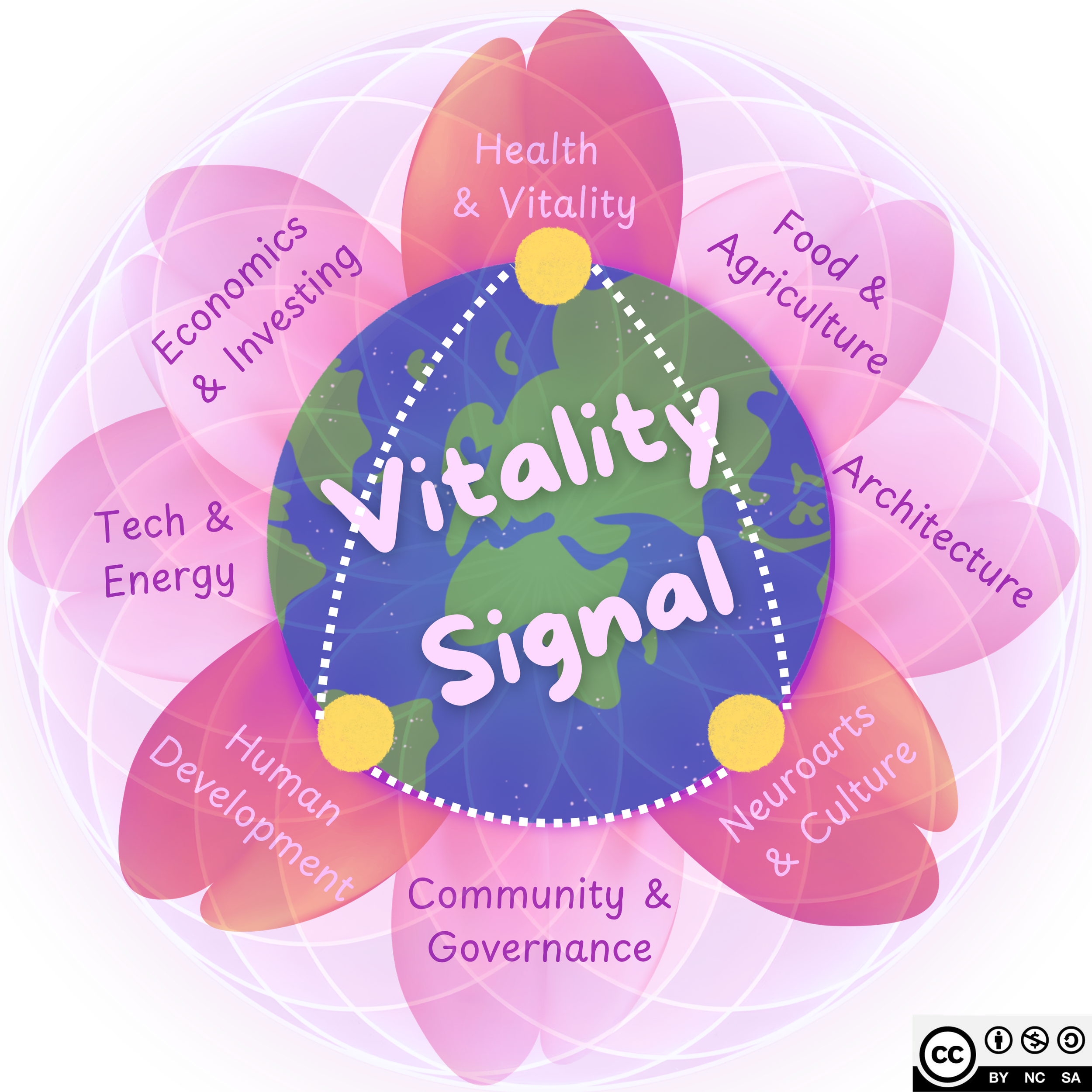
Across domains, the pattern repeats. In human development, a child's confidence and a stroke survivor's speech regenerate the same way — through the right channel reaching what was already there. In health and vitality, capacity often outlasts symptoms; recovery is frequently a matter of access, not repair. And in art and culture, the deeper lesson isn't about inventing something new, but about rediscovering an ancient interface and giving it a modern channel. Regenerative vitality, in this case, looks less like creating something from nothing and more like clearing the static between us and what was never actually absent — memory, finding its way home.
⭐ Dr. Lana & Magic
Dr. Lana's own path circles back rather than departs. She founded Brain Power for Kids while still in junior high, invested years researching Mind Mapping and memory, and was later named the British Brain Trust's "Brain of the Year." Harvard, then Oxford as a Rhodes Scholar, followed — then, unexpectedly, the music industry, working with artists like Garth Brooks and Pink. It wasn't a detour. It was the missing half of the same question, waiting to converge into an adventure. Throughout the conversation, she kept reaching for one word to describe what happened there: magic. Not a dodge from science — just the plainest word for watching something thought dormant resurface. Magic, in her telling, is regeneration seen from the outside, before you understand the mechanism underneath it.
https://www.linkedin.com/in/lanaisrael/
Creative Process (non-linear): Develop + Iterate Outlines & Drafts (Human + ai) ~Guest Alignment Feedback~Final Alignment by MAGICommons
