What is Vitality?
Introduction
Vitality is broadly described as a "positive feeling of aliveness and energy". Different studies have described it using various terms, including a feeling, sense, experience, state, situation, phenomenon, or positive affect. It is considered an "umbrella term" that encompasses energy, physical and psychological healthiness, and overall well-being. At root level, vitality is linked to historical doctrines like vitalism and Eastern traditions (such as Chi, Prana, or Ki) that view it as a fundamental life force or energy that can be enriched or exhausted. This research further proposes a unified description: "Vitality represents a positive subjective concept composed of physiological and psychological energy, which level may vary in accordance with certain influencers and can be regulated and harnessed by a person possessing it" (p.12). Existing literature shows that vitality has significant benefits for somatic health, mental well-being, recovery from disorders, self-control, and creativity.
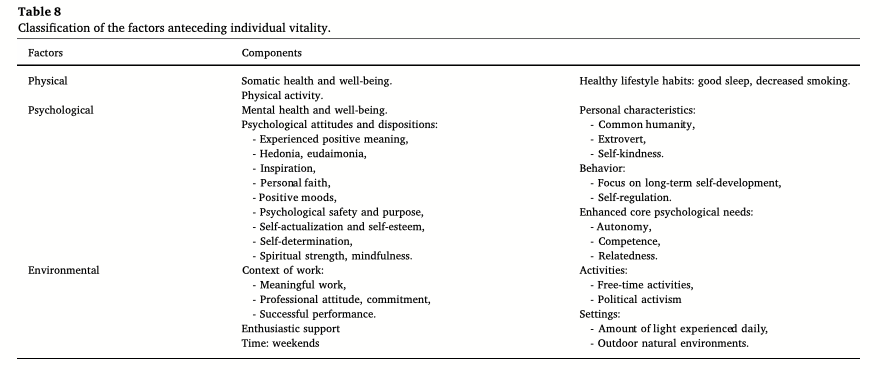
Image credit to: Lavrusheva, O. (2020).
Methods
The researcher used a scoping review method, which is suitable for mapping key concepts and types of evidence in a broad research area. The search was limited to peer-reviewed academic articles in English published between 1991 and 2017. Final selection included 88 studies focusing on vitality as a psychological phenomenon, categorized by bibliographical data, methodology, conceptual framework, and empirical foundations. The reviewing process follows a five-stage methodological framework: defining the aim, searching for literature, selecting studies, charting data, and summarizing results.
Overview of the Vitality-Related Research Domain
Most selected research relies heavily on quantitative empirical studies (77 studies) rather than qualitative or purely conceptual ones. Conceptual and theoretical frameworks include Self-Determination Theory (SDT) as the most common framework (30 studies), emphasizing that autonomy, competence, and relatedness support vitality. Other theories used include Ego Depletion, Flow, and Basic Needs theories.
Empirical Findings on Vitality
Analysis of the research literature reveals five core, concurrent features that characterize vitality:
Subjectivity: Vitality is fundamentally subjective, representing an individual's conscious perception of their own "personal energy" or how alive they feel. Because it is a private experience, it can only be measured through self-report assessments, which may lead to varying interpretations among different people.
Positivity: The construct is entirely positive, composed of favorable components like enthusiasm, happiness, and euphoria. It is triggered by auspicious prerequisites and results in beneficial effects on both psychological + physical health.
Fluctuation (Renewability): Vitality is a renewable resource rather than an exhaustible one. While it can be drained by negative precursors, it can also be restored, revived, or even enhanced beyond its initial level through positive antecedents.
Adaptivity (Controllability): Individuals can actively manage, utilize, and adapt their vitality to boost inner resources for intentional behaviors. For instance, a person can harness their vitality to improve work performance or cope more effectively with difficult life events.
Simultaneous Physical and Psychological Energy: Vitality necessitates the interlinked involvement of both physiological and psychological energy. Although it can be influenced by purely somatic factors like physical pain or disease, it ultimately reflects an individual's psychological perception of those physical states in relation to themselves.
Vitality is influenced by three major factors:
Physiological factors such as somatic health, absence of physical symptoms, and lifestyle habits such as regular exercise ranging from sitting less to intense training, and healthy behaviors like good sleep quality.
Psychological factors such as mental well-being, positive moods, and personality traits like extroversion. Crucially, it involves the fulfillment of three basic psychological needs: autonomy (self-governance), competence (belief in one's effectiveness), and relatedness(feeling interpersonally connected).
Environmental and Situational Contexts: External factors such as engaging in meaningful work, receiving social support, and specific settings like exposure to daily light or spending time in natural outdoor environments further regulate an individual's energy levels.
Possession of vitality leads to wholesome physical health (reduced heart disease risk and mortality), integrated mental health (higher life satisfaction and happiness), and enhanced beingness and doingness as well as coping skills.
How Does it Relate to Regenerative Vitality?
This research is included because it provides a scientifically grounded, multi-disciplinary framework for understanding vitality, which is directly linked to public well-being, somatic health, and mental flourishing. By synthesizing 93 studies, the paper establishes a unified description of vitality as a "positive subjective concept" that individuals can actively regulate and harness to improve their performance and quality of life. Furthermore, the research identifies actionable physical, psychological, and environmental antecedents—such as mindfulness, meaningful work, and exposure to nature—offering a practical roadmap for organizations and practitioners to deliberately promote healthiness and "spirit" in applied settings like workplaces and educational sectors.
It should be noted that this research approaches vitality from a human-perspective, looking through psychological, physiological, and environmental lenses, it would be necessary to further expand the environmental (non-human) factors across societal dimensions, such as economics, governance, agriculture, architecture, technology and energy, and beyond.
Disclaimer: The summary story is co-developed with Gemini and reviewed by human.
