A Blueprint for Regenerative Leadership | Silke von Brockhausen
Regeneration invites us to move from extraction and urgency to creating life-affirming systems—starting with regulating our own nervous systems, reconnecting with heart-centered wisdom, and building communities that mirror nature's cycles of growth and renewal.
In a world racing toward deadlines, metrics, and the next urgent task, we've forgotten something fundamental: life doesn't grow through force. It grows through nourishment. The concept of regeneration offers us a different path—one that mirrors nature's wisdom rather than fighting against it.
The Soil: Creating Conditions for Life
Regeneration begins with understanding a simple truth: before anything can flourish, we must prepare the ground. In agriculture, healthy soil is everything. The same principle applies to our organizations, communities, and lives.
As Silke von Brockhausen, who spent years working within the UN system before founding the Regeneration Collective, observes: "It's about creating life-affirming systems and a worldview that is putting humans back into nature and not seeing nature as outside of us."
-
MAGICommons Podcast (00:00)
If you try to imitate being a man, you will feel like in a wrong suit and in a wrong life. And if you allow yourself to be more vulnerable, to speak your truth from the heart, to emphasize collaboration and not being bigger, better, faster, I think that will be such a beautiful example for other women and men to be themselves too.
Dr. Jiani Wu (00:27)
Today with us is Silke Silke is a long-term UN insider strategist and now pivoting her career from UN into building a future of regeneration.
she established a global think tank called regeneration collective, gathering world leaders, artists,
activists, change makers, system thinkers,
and leaders to figure out is there an alternative way for how societies are being formed, how we carry out our daily lives from more of a maintaining the status quo all the way to regenerating the collective whole.
beep beep beep. In front of you lands a spaceship. Out walks a very friendly alien, if alien walks.
If you were to use one word, one sound or one movement to invite the alien to play, what would that be?
Silke von Brockhausen (01:38)
I think for play you need to build trust. And for trust I think you need connection. And since I'm a hugger, I would start this with just giving them a very long heart on heart hug to welcome them and to connect with them.
you
Dr. Jiani Wu (02:01)
If they perceive hug as friendly.
Silke von Brockhausen (02:04)
Also,
you don't know. I hope it's universal language, but if we don't speak the same language, think energy is tangible. Yeah, that should be across universes.
Dr. Jiani Wu (02:06)
You don't know.
and the intention.
What is regeneration in your dictionary?
Silke von Brockhausen (02:24)
It's been a question I've been exploring now for over three years by reading a lot of books about regenerative leadership, talking to regenerators and experts, reading a lot. And I think that's the core question we are asking ourselves also in my little collective.
in this network because you can come to it from so many different points of views. one that really sticks with me is that it's about creating life-affirming systems and a worldview that is
putting humans back into nature and not seeing nature as outside of us and look at all our systems and engagements as ecosystems that are connected with each other, that need each other to thrive.
and that follow also natural cycles of birth and death and summer and winter and that this worldview that's also a lot is inspired by indigenous wisdom and this deep connection to mother earth.
A lot is inspired from regenerative agriculture, which looks at the soil as the core for any kind of life to thrive. And this soil can be nourished. And then there's the part of personal development, self-development, personal growth, where it's about your own connection back to nature and yourself.
and to understanding what layers have been put on you through conditioning that disconnect you from this life and nature. And then another layer is also then the whole concept of regenerative leadership. It's about you in your life and your family and your community and your teams at work.
providing the conditions for others to thrive and to blossom, to emerge into or to fulfill your highest potential by creating nourishing soil, by nourishing you, by helping you to find your own path and supporting this, your potential, making you...
autonomous and give you agency in an organizational setting. So these are all different layers. I think if you look at the UN as a whole organization that sets international policies and decides on programming in many countries around the world, it is about using these principles to ensure that the policies and programming we're doing
are in support of life and nature and ecosystems and human flourishing through also looking at the soil that helps us to nourish.
And maybe if I may add one thing, it's a little bit also as a counterpoint to a mechanistic worldview that sees us humans as competing for resources where the faster and the more productive human beings win and
Dr. Jiani Wu (05:40)
Yeah.
Silke von Brockhausen (06:01)
succeed, it's against this separation between us and nature and this competitive worldview that has led to us over-stretching planetary boundaries, in my view.
Dr. Jiani Wu (06:16)
So it's refining a harmonized perspective and restoring the dignities of humans and Mother Nature at the same time.
if we were to bringing in or creating the soil for the future of regeneration and flourishing, how can each one of us,
do to make it more likely to be real? What are some of the...
basics that we can do as
Silke von Brockhausen (07:05)
For me, what I found on my journey as one of the hindrances of us to reconnect with life and ourselves is really the stress that we all encounter, the urgency, the pushing for faster and...
and better solutions in your day-to-day work environment but also at home. We are always doing, doing, And it creates a fight and flight response in your body.
And that fight and flight response prevents you from actually using your creative side of your brain and come up with actually better solutions that are good for all of us. so basically one of the practices that all of us could do to be more regenerative is to regulate our nervous system, to calm down, to go back into the parasympathetic
nervous system and there's so many ways to do it like breathing, yoga or a walk in nature, taking care of your health, resting, following cycles. I think that helps all of us to be more calm even if we are under a lot of stress and pressure like in the UN many of my colleagues are. So trying to first look at that how your body is responding.
And when you're feeling relaxed, then maybe the next step could be to be more present, to really listen deeply to each other in one-on-one conversations. But I think in an organizational setting, it's also to truly take feedback into account from others, from external.
stakeholders that we're working with, the UN is really putting that on their programming values to listen to all the stakeholders to come up with solutions. But often because we are so under pressure and time, it And I think in a regenerative organization, people start to listen better to each other.
And if you read by example, by kind of carving out this and prioritizing it,
Because I think we believe that we will be more efficient if we do everything fast and a lot at the same time. But there's so many studies now showing that you have like certain times of the day where you can be productive and then you need rest. And following also these kind of scientific results and embedding them in your daily
management style or work style and thereby lead by example, I think you can start having much better results and come up with much more unique, extraordinary, useful solutions.
Dr. Jiani Wu (10:04)
As you mentioned before, think intention is the starting point. Then time and space follows and within that time and space things can happen. And even we are under a rough, tense schedule. If we're intentional enough, maybe five minutes is long enough.
So maybe our relationship with time can potentially shift too with this level of deep intention and time and space curated for that to take space, whether it's feedback, maybe one minute is enough. And so maybe the feedback is not getting together. Maybe the feedback is.
just very casually and as long as we're intentional, we collect feedback that way. So that could potentially solve the problem too in the flow.
Silke von Brockhausen (10:55)
I love this.
the basis for regenerative behavior or culture or mindset, I think is really this why, like reconnect to the purpose of your work and the intention behind it. And that will also propel energy or help you focus and reconnect to probably your heart and your compassion.
And I have seen over and over again in my career that when people are there, present, they know what they are here for, they're connected to their purpose, and they have this intention and focus and energy, they can move mountains. And for that, you need to be present and take the time to be intentional.
Dr. Jiani Wu (11:54)
can you share with us a story, like an inside story with permission? about a time when a person who is truly present,
with a regenerative mindset does create some sort of change or mend some divides
Silke von Brockhausen (12:17)
When I was in Afghanistan, we had weekly meetings of the whole UN country heads, the senior leaders in the country of about 25 different organizations. And I facilitated those meetings.
And it was always very rational data, facts and figures about the current situation in Afghanistan after the Taliban took over. And one of the side notes was like, oh, 125 children are missing and nobody knew where they are, if they were really lost or if they were taken into some sort of facilities and hold or we didn't know.
And they just, the person who was presenting these figures just continued. And it touched me so much in my heart, being present and fully there with my compassion, imagining how the mothers and fathers of these children must have felt and how horrible it is to just have one child missing. But this number was just also huge.
And I started to have tears in my eyes and I realized that my boss leading this country team, he was seeing that in my eyes that I was so shocked and so touched by these numbers. And he stopped the meeting and he started a task force for these children. it's just out of just a number, it became there became an energy around it.
And I felt this, I mean, for me, it was a very pivotal moment of realizing what it means to lead with compassion and emotions and maybe your feminine side that you usually don't allow in these contexts where you need to function and you need to operate and implement and do things.
When you stop and you show your vulnerabilities and your compassion, it can move mountains.
to emotions, very empathetic and had a big heart, wanted to do his best and in a very complex situation.
Dr. Jiani Wu (14:39)
Yeah,
in our initial conversation we talked about this harmony between what we call feminine energy and masculine energy with this idea of regeneration it does have this feeling of
burdening feminine energy coming because regeneration is kind of feminine energy in that way. So in your life, whether it's personal or professional, how do you perceive this masculine energy and feminine energy? And how do you see those two energy?
relate to each other under the context of regeneration.
Silke von Brockhausen (15:20)
think it's one of the cores, perceived separation between the masculine and the feminine and the dualism and maybe fight against each other on a gender level, men against women and accusing each other of oppression, abuse.
That is how it maybe manifests in our reality at the moment.
But for me, do believe all of us carry these masculine and feminine attributes and energy. It's a balance that we are born with. The masculine maybe is our way of structuring, organizing, taking decisions, building, creating.
in the most positive expression. And on the feminine side, it's about more this listening and collaboration and nurturing and flowing and yeah, these more feminine attributes. And ideally, we have the structure of the masculine to let them the flow of the feminine find its way and guide us in a way through intuition.
and through emotions, through feelings. And I think there's so much wisdom on the feminine side that this connection to nature, knowledge about the healing powers of nature, about the cycles, about...
many things that have been lost over the last couple of hundreds of years in many of our cultures, in others it's still more present. And through regeneration we're trying to identify this, being aware where we are maybe too much in our masculine, too much in our feminine.
in ourselves and we try to balance this through reflection about it, awareness.
feminism that we have seen over the last 50, 100 years has been incredibly important to liberate women from not speaking up and maybe not being so active in societies. But it has also emphasized that we need to become like men and to function like men and be more productive and
Dr. Jiani Wu (17:29)
Yeah.
Silke von Brockhausen (17:38)
work harder and more. And I feel instead it would be beautiful to see how we're coming more into our feminine attributes, men and women, I think, to express that more and maybe not see becoming like man as the goal.
But becoming better women or letting our intuition guide us more and be more sensitive and more vulnerable and show that it's in the story that I just told. I think this would be adding so much value to how we engage as men and women with each other and with the non-human world around us.
nature or we are nature as I mentioned before but with anything that we're here to protect and take care of and steward. We need both.
this and a balance and that's right now the masculine is dominating clearly and how we perceive the world, how we engage in the world and that's why there's so much efforts being done to help the feminine rise and it's beautiful to see also men that embrace that beautifully and where you see this coming together it's very powerful.
Dr. Jiani Wu (19:13)
Are there any successful examples and stories that you have witnessed or heard about people coming into this harmonized energy?
Silke von Brockhausen (19:22)
you know, I see it in
my collective of these 350 regenerated minds that are coming together to imagine a better future for us all. It's a good balance of this masculine drive and explaining everything in technical terms and having definitions. And then the women come in and say, but we also need to breathe and stand.
still and be and dance and we need joy and we need movement, we need to embody it, we need to protect each other, we need to safe spaces for each other. So I see this and I feel like both sides are learning from each other so much by being in an environment where this is welcome, where everybody can express themselves as they want.
and with a joint goal of creating more consciousness on all these issues, topics around regeneration.
Dr. Jiani Wu (20:27)
That's so beautiful. It would be so interesting to join one of the meetings and personally experience that dynamic and not only just for a woman but see that feminine side rising in all the men in the room and see how happy that they are when they embrace their shadow side, I think the society.
Silke von Brockhausen (20:34)
You are.
It's so beautiful to see how we are all mirrors and I had to face some shadows of the immediately assuming that the facts are important and the men are smarter or
Dr. Jiani Wu (20:52)
force that into the shadow.
Silke von Brockhausen (21:06)
more competent and more eloquent and then putting man as authorities and all these things. I went through also establishing this collective and it shows me how important the community is to learn and to identify your shadows. And I feel what we are seeing in this microcosmos of this collective and I'm sure in many other networks, it is the same that then
plays out at a larger place. Like in the UN, we also need to understand these dynamics and in how the UN is creating policies and programs. This also plays out tensions between all these different worldviews and shadows that we all have. And in this collective, we are learning how to transform and transmute these tensions.
into something more beautiful and something creative.
Dr. Jiani Wu (22:07)
Yeah, I love it. think art does play such an important role and we were just talking. think art gives us this ability to speak beyond words, beyond the restrictions and boundaries of culture, of consciousness, of understanding, but tapping more into something more authentic, deeper.
Silke von Brockhausen (22:34)
that's why some stories that exist i was so fascinated to hear that Cinderella there's a Chinese version an Egyptian version a German version a Disney version but it's all the same elements of this story because these touched people and they had to create like these pictures images
out of this.
Dr. Jiani Wu (22:57)
And sometimes when I was looking at like stories like Cinderella, I do tend to see it metaphorically, maybe within one person. ⁓ So by the words, it's like the lady meets
Silke von Brockhausen (23:09)
Thank
Dr. Jiani Wu (23:15)
the prince and then the life changed. I think inside of each metaphorically, maybe one interpretation is that we all come from a space or a state where there is mistreatment in any forms. Like total perfect treatment is really rare. mean, misuse is common. So we come from a space where
misalignment and then we somehow see and welcomes another side of us and then when the two sides of us unite we create this future where there's more peace there's more I wouldn't I wouldn't say glory but like yes more peace and more glory and
calm and joy. And so maybe that is metaphorically talking about divine masculine and divine feminine. I'm just kind of.
Silke von Brockhausen (24:13)
This is the blueprint,
this coming together is an alignment of yourself, like reminding you of who you really are and creates coherence because you're looking for this other part outside of you, but you realize it's inside. So there's nothing you need from outside. helps you be touched, be more at peace, maybe
crave less material belongings and to fill this gap and all of us would live happily ever after.
Dr. Jiani Wu (24:59)
And if some of our audience who would also like an abundant financial life, that's okay too. They're not in contradiction. think so. I feel like an alternative way of interpreting feminine movement is our ability to, for both men and women, embrace, integrate and harmonize.
Silke von Brockhausen (25:08)
Absolutely.
Dr. Jiani Wu (25:24)
fragmented elements of ourselves, the identity our ego creates and return to this original space, a childlike space where it's all integrated, like you said.
Silke von Brockhausen (25:40)
I think this is the inner work that we need to do to create peace in the world. see so much conflict happening because of this misalignment of your identity
What I feel is behind all of this is this conditioning, these belief systems that we get indoctrinated with in childhood and society and schools and religions.
think every time we get triggered by a man because we are a woman or this man is misbehaving or we see somebody who gossips or somebody who is scared of something. think always that means there's also something in us that we still need to understand and integrate as you said, like welcome and not ignore anymore.
And when these shadows come to light, you start to become unstoppable.
Dr. Jiani Wu (26:41)
I think that's just a natural momentum, like a perpetual wheel of a wheel to continue and to evolve without guilt, without shame, always with this mindfulness. And that becomes regenerative because it's not over extracting, it's not severely fragmenting, it is integrating.
Silke von Brockhausen (26:55)
Thank you.
Dr. Jiani Wu (27:02)
And with integration, there is this momentum, much healthier and more sustainable and therefore regenerative.
Silke von Brockhausen (27:12)
I think at the bottom of degenerative behavior is fear. And that stirs so much. And also paired with claimant guilt, but like one of the biggest issues is fear. And if we start just being brave.
Dr. Jiani Wu (27:19)
fear.
Silke von Brockhausen (27:29)
in everything. think bravery is the opposite of fear and that is courage and in French, la coeur is the heart. So if we are more based in our
Dr. Jiani Wu (27:41)
heart.
Silke von Brockhausen (27:44)
talking, acting, living, I think then we automatically are regenerative. I think that's the simplest way of being regenerative is living through your heart.
Dr. Jiani Wu (27:55)
our audiences have the question, like I've always relied so heavily through my head. I'm a great thinker. I'm super strategic. How do I now integrate this part of the heart to help me become more regenerative?
Silke von Brockhausen (28:15)
what has helped me a lot is really gratitude for all I have around me because
Gratitude starts also in the heart. You can even feel it when you're really grateful for a person in your life or a gift you have received. Usually your heart gets warmer or maybe even beats or like faster, stronger, should always beat. But this gratitude is the beginning of...
Dr. Jiani Wu (28:39)
You
Silke von Brockhausen (28:43)
this and a lot of people keep gratitude journals or have gratitude rituals. with gratitude, you're automatically in your heart. one of the next steps is really, for me, it's compassion. Compassion for me is being able to put myself into somebody else's shoes, having empathy, but also wanting to help.
whatever way you can. Compassion can be for anything, for an object, for nature, for a child, for anything. ⁓
Dr. Jiani Wu (29:16)
for bees because sometimes I feel
a bit sad because bees their life I think when it reaches autumn or fall they start to get less active and things get heavier for them so like when I see bees especially in the September October I'm like
Like, you worked so hard. And now it's your time. And I still see like internet.
Silke von Brockhausen (29:40)
And then somebody
takes away their honey that they produced with so much work.
Dr. Jiani Wu (29:50)
Yeah right, they
need to get paid. mean maybe Bitcoin or something.
Silke von Brockhausen (29:58)
The moment you have compassion,
your rational mind is not working anymore, you just want to help.
if we all get to this state of gratitude, love, compassion, it means we're living in our heart. And if we try to make our decisions based on what makes my heart sing, what feels the most loving decision to take now, then we are on a very, very good path.
There are a lot of practices to train that gratitude, confession.
Dr. Jiani Wu (30:31)
Yeah, and I think it definitely in order to feel the
We know gratitude is great, so let me just follow the formula. So today, and I verbalize, I am grateful for, but my heart will not feel anything because it's not in sync. So it does require us to slow down little bit to truly,
Silke von Brockhausen (31:01)
if you are constantly in emergency mode and stress mode, you're just in a reactive mode and you're in a survival mode as well and that's your body just wants to function and...
It doesn't allow for come to surface and you suppress them because now you have to survive.
Dr. Jiani Wu (31:23)
what part in terms of the systems or the societies require most attention when we are thinking of regeneration?
Silke von Brockhausen (31:36)
there are so many areas that I feel are so important but what we mentioned before this giving voice to women.
it's more important than ever and it holds solutions that we cannot even fathom and I
There's this beautiful YouTube clip where suddenly all the world leaders are women and there's a UN meeting and they usually take days to come to a conclusion. But this meeting, they just do a round and everything is just in order in all the countries. Like the nature is thriving, the education system works. There are no wars. Everything is invested back into communities.
and life itself. And I think it's the truth what I saw in this. think if we do let our true inner feminine guide us in the future, then it's a matter of time only until we can
reverse the transgression of planetary boundaries that we've been experiencing and we can reduce the amount of conflict. And I don't think this is just a fantasy or...
ideal scenario, truly think that now it's time for us women to speak up and rise and stand up for our values and reconcile with men and not be competition but add value and take over a lot of the decisions that have to be made.
Dr. Jiani Wu (33:21)
or
help to co-facilitate a lot of decisions. I do observe some woman with power does act more like a man. think that's just resonate back to where we're talking, like being a woman and be able to lead, you don't have to act like a man. You can act like a sexy, beautiful lady and yet still very powerful in your own way.
and you get to decide what is powerful for you. And it's not the power over others, but it's the power from within So you are centered, you are integrated. And just by you being that state, people feel that. And that's where the power comes. It's the example. It's the...
the message that exudes from you being.
Silke von Brockhausen (34:10)
You're becoming
the example, yeah. You radiate this and allow others to also be yourself and to be that woman and not hide and...
and disintegrate from your integrity and authenticity. If you try to imitate being a man, you will feel like in a wrong suit and in a wrong life. And if you allow yourself to...
to be more vulnerable, to speak your truth from the heart, to emphasize collaboration and not being bigger, better, faster. I think that will be such a beautiful example for other women and men to be themselves too. So,
Dr. Jiani Wu (34:58)
Do you think it is possible to have a truly dynamic global citizenship where everyone can hold citizens in any places that they want and they get to travel, work and they don't have to go through so many hoops to get into a visa or just to be legally there to work?
they don't have to compromise and everything just so readily if they really want to and they do good. Do you think it's possible once we have this regenerative future or the flourishing future that a potential global citizenship may be attainable?
Silke von Brockhausen (35:41)
right now the nation state is the foundation for the UN and the passports. And it's something that a lot of countries love to uphold too.
control movements of people. Obviously, it's also a matter of money. I think you can buy this kind of global citizenship from a certain level of income, which is unfair towards those that don't have the means.
Then another aspect is that we do have the laissez-passer once you work for the UN as full-time staff. You do get a second passport that does open this kind of global citizenship for you because you get easier entrance in all countries as long as you have this laissez-passer. But that's also still bound to your national passport.
But the idea of regeneration also on an organizational level is that you look at not nation states as organizing principles, but you look at bio regions, which means where the watersheds flow, where you have rivers or lakes or basins itself, that's the area where
communities organize themselves in. They have a very, very local perspective. And then obviously you need also a larger structure to organize and that can then be again a country or a nation state or other ways of organizing. But technically we're looking at a world that is
defined by where you live, where your place is, where your region, your bio region is. And then the borders won't matter so much anymore and it hopefully will become more open. And I think if we address all these fears and work on being more coherent in ourselves, we will not
see others as foreigners and the need to put up borders to protect each other from it. And I think the European Union is already a beautiful example of how something like that came into being that as a European citizen you can travel freely within, I think, 26 states now. I'm not sure.
Dr. Jiani Wu (38:11)
Such a wonderful conversation.
Silke von Brockhausen (38:13)
how can we practice regeneration more in our daily lives? That was a question that I've been sitting with and I realized that I cannot just think about the global picture and world politics and systems and
online communities. I think it's so important to also walk the talk in your
place where you are and I personally am striving to connect with existing regenerative communities here in Catalonia where I live of cooperatives that work together to create this kind of life and world that regeneration strives to. There's a bio-regional movement in the Mediterranean but also in almost every continent in the world.
permaculture associations that are practicing this. And I also strive to turn my own place that I'm stewarding into a regenerative place of living and be aware of what that means, how I engage with nature and in my place with myself, how I treat myself, I'm part of nature. How do I find rest? How can I connect better?
with nature, how I can be more healthy and take care of this nature-based body, temple.
Dr. Jiani Wu (39:48)
can you visually walk us through a very tangible day where someone is living a truly regenerative life?
Silke von Brockhausen (40:01)
So this person would wake up with the sunrise naturally without an alarm clock. It would start with a self-reflective practice like journaling, meditating.
looking at taking care of your temple, your body, stretching or whatever exercise is good for you, eating nourishing, meals with gratitude for what the soil brought on the table with the help of so many people, contributing to it. And this person would be truly connected to their life purpose and their work.
would be strongly connected with the unique gifts that they have and that they have discovered through this practice of reflection and...
regenerative lifestyle. They truly know what they're here to bring to the world and they pursue it. So work doesn't feel like work, but it's a contribution. I love the word seva in Sanskrit, which means serving humanity through your unique gifts. And I called my place Kanseva, house of seva, because everything you do throughout the day will be
connected to this higher purpose and you live it without preaching it to anyone just as an example and that way you attract this kind of community around you and you focus throughout the day if you really speak through your heart and authentic and
Yeah, that's just the beginning of a regenerator day, but it's maybe going to bed with the sunrise and yeah, I leave it at this.
Dr. Jiani Wu (41:43)
and
Would it matter where this water come from? Can the city or the state or maybe a collective group provide access to water in a new way or it can stay as it is or...
Silke von Brockhausen (42:08)
obviously around you, you've organized that the resources you are using are as gently taken from Mother Earth and possibly using solar energy to power.
natural ways of water harvesting through rainwater collection to be used if you have that space, that opportunity. Many of us don't. But yeah, think being engaged, probably are working in a cooperative in some way, maybe you have a cooperative supermarket or
a farm that produces for the community where you get your food from and you might have a cooperative bank that is creating also local currencies that are based on trust. You might have a trust bank where you can
get some benefits from your community by contributing your volunteering services or your help or your presence, maybe because you're taking care of elderly or children that will be valued in a form of currency.
There might be blockchain based technologies already that will help with that. So technology plays a great role in making this happen, but technology only works so well because everybody has done the inner work to be authentic and not hide their shadows.
that where you establish trust, so also any conflict arising in your environment, you first look at what it's, where it might come from in you and truly reflect with honesty how much you are involved in this and then you look at the other's contribution and through non-violent communication practices you find
a way to solve these issues.
and you're grateful for this opportunity to grow. So you write that in your gratitude journal that accompanies you And you do celebrate the seasons, celebrate winds, you celebrate community, you celebrate each other. Because I think joy is really what makes this way of living so beautiful that it's not stifled through anger,
bitterness, conflict, war. It's steered by community and appreciation and by lightness. And if we paint such a beautiful picture of our emerging future, more people will imagine it. And with this power of intention that we talked about and the energy will flow into this.
We can truly make all of this happen and I've seen beautiful projects like that already happening in many countries in the world and I think they have the potential to grow because people love it.
Dr. Jiani Wu (45:16)
pop-up villages coming in France. think in Northern or Southern France, there's like already a hundred, maybe a thousand of them. For people who are more of a city dwellers, who like high-rise city views and apartments and...
What kind of regenerative futures will they experience? Do they still get to live in their favorite apartment where they can oversee the city skyline? will city be totally transformed with regenerative?
Silke von Brockhausen (45:50)
⁓
If you want to get me started on urban regeneration, there's so many beautiful examples around the world already how you can do like truly live regeneratively also in your cities and their cool living spaces, intergenerational living, there's green living where buildings start to breathe and they collect rainwater and they have plants all around.
And it's beautiful to see what happens in Paris with the mayor there trying to turn as much spaces into green spaces and into traffic free zones where you really can feel an improvement of air quality. think a lot of big cities suffer a lot from air quality and air pollution, not quality. And I think that can be addressed. if I were a regenerative mayor,
clean water, clean air, clean electricity and a lot of nature in the city through plans would be my main agenda because that automatically and there's also studies around it, if you green cities, you make them cooler once which makes it more habitable.
but it also lowers crime rates and it enhances satisfaction among the inhabitants. So there's so many benefits of doing it and sometimes I'm so surprised that it's happening so slowly. But here in Barcelona it's...
It's beautiful to see a lot of these projects taking place supported by the government and the administration. And Singapore is another example. Mexico City has beautiful examples of regenerative buildings and attempts to make the city regenerative. Copenhagen. And yeah, I heard also about this green place in China.
We deserve to live in in livable cities and cities where we don't need to worry about clean water and clean air. It's so So good.
Dr. Jiani Wu (48:07)
Thank you, through my imagination you are helping me to teleport into that space already. I'm like kind of like flying through the cities and see those green cities and green areas and by your description I'm like my goodness can I just be there?
Silke von Brockhausen (48:25)
But we do have the power of what we purchase. And I think being more mindful of supporting cooperatives, ecological stuff, anything that's building community around you, maybe volunteer in the block. Like in every city you have homeless shelters, have refugee programs, you have these kind of things that can
make a little a city more regenerative and just start engaging and you will meet the people who think like you and together we are stronger.
Dr. Jiani Wu (48:58)
what did little Silke enjoy creating or playing so much that time disappeared for her?
Silke von Brockhausen (49:04)
You know, I was such a tomboy when I was 11. I would just run around in nature and build little houses inside like forests and play with other, like actually many boys. I was mainly...
being surrounded by little boys and I would be one of the leaders always and inventing games. love being outside inventing hide and seek games or whatever and creating my house in nature and finding food like foraging already and
Dr. Jiani Wu (49:42)
it's just the true, the most authentic, most aligned, least worried version of us guiding us in terms of our decisions and things that we do. ⁓
Silke von Brockhausen (49:59)
coming back like
embodying this 11 year old, like calling this in because we were so brave and we didn't have insecurities and we weren't like marred by who we should be and we should not be. Yeah, beautiful. What was your thing when you were 11 just to extend this conversation?
Dr. Jiani Wu (50:16)
Yes. Yes. that's so beautiful.
So what do you think is childlike wonder according to your perspective as an adult?
Silke von Brockhausen (50:31)
Child-like
wonder is really seeing things, like not just noticing, naming them, putting them into boxes, but just standing still and see a flower or even a crack in the wall and being aware.
and maybe this mix of gratitude for experiencing this life through your eyes and your senses. I think this is what children really are good at and that's what I learn from them every time I watch them is how present they are and how they get mesmerized by
tiny little things that are just beautiful for them that we don't even notice. A little ant like walking over a stick or a little flower somewhere here and there that we don't even see anymore and then they make us stop.
I really try to cultivate that inside of me again, like this appreciation of moments and little things and generating this gratitude for it.
And living in the moment, that's what it is, right? And we talk a lot about being present and mindful and all of this. But if you do that, if you observe things with presence and joy and gratitude, then you're suddenly in the moment and the future worries don't matter anymore. Your past suffering and pain and grief are not there anymore. You're like living like you're actually
fully alive and that's incredible that feeling of childlike wonder.
Dr. Jiani Wu (52:32)
you
Silke von Brockhausen (52:32)
in the
Dr. Jiani Wu (52:33)
How do people reactivate this sense of wonder in their daily life?
Silke von Brockhausen (52:38)
get rid of your technology for me too. I'm like talking to myself now. It's really something I'm struggling with. you don't have this distraction and maybe nothing else and you get bored and then you start to sense again, like...
Make that a practice, just 10 minutes doing nothing and be still and just observe maybe the sound of birds around you. You don't hear that anymore. You need to really tune into that because there's so many other distractions or the feeling of sand under your feet.
and that amazingness that your body is like really
If you eat, I mean this is my rule, I never look at screens when I eat with food. I appreciate it, I'm present with my food and I taste it and I'm grateful for it. So I think this is something. Being bored, take time, get away from devices and...
observe your senses, all of them, sharpen them. It's such a gift that all of us have been given our some unlimited forms, but I think that makes us so different from many other living beings that we have all these senses and we can articulate them and enjoy them and be aware.
and we all have them, it makes us all the same around the world.
can also be dancing, by the way, because then you sense your body.
Dr. Jiani Wu (54:24)
⁓
Silke von Brockhausen (54:25)
Thank
Dr. Jiani Wu (54:26)
What is your magic?
Silke von Brockhausen (54:27)
My magic is compassion for others. really, I truly feel the moment also I want to. can feel compassion for everything and everyone and that enables me to engage also with people I don't agree with.
and maybe find a common ground and be a bridge. And I hope that people in my surroundings can feel that, that I truly see them and hear them and that can create magic just by being compassionate with another person who doesn't expect compassion.
Dr. Jiani Wu (55:19)
That's beautiful. And I think compassion also give birth to leadership because we trust leaders who truly see us from a very compassionate perspective. And I think in that case, leadership is just a byproduct. It's not something we strive for. But people just listen. Sure.
Silke von Brockhausen (55:42)
It really fuels your impact that you can have if it's guided by compassion because I think everybody can subconsciously feel and see and smell if there's true compassion behind your actions and not self-interest or covering of childhood traumas. Something like that which we all still have and nobody in this lifetime will probably transcend that.
Dr. Jiani Wu (56:05)
Yeah.
Yeah, except that we are all imperfect and yet it doesn't prevent magic from happening. It doesn't prevent us from being empathetic or at least try our best to be empathetic with other person.
and open opportunities to potentially experience the reality from their perspective to truly understand them. That would be the ultimate empathy is to live somebody's life, gain wisdom and come back to.
Silke von Brockhausen (56:35)
you
Dr. Jiani Wu (56:41)
this person and be able to understand the other person fully. I hope our audiences will
enjoy our conversation and gain wisdom, gain a bit of imagination into the future of regeneration and have some very tangible ideas how individuals can implement and practice a regenerative future right now in simple ways.
Thank you, Silke, for sharing your wisdom and your vision with us.
Silke von Brockhausen (57:18)
Thank you so much for giving me this opportunity and I enjoyed it so much. was a beautiful space you created, magical place for this conversation. I could feel it and I'm very grateful for this. And I'm looking forward to more conversations with you, hopefully in person one day.
Dr. Jiani Wu (57:41)
Me too. Hopefully yeah,
This starts with something counterintuitive in our urgency-driven culture: slowing down. When we operate in constant stress, our nervous systems remain in fight-or-flight mode. In this state, we cannot access creativity, compassion, or our deeper wisdom. Von Brockhausen identifies this as a critical barrier: "One of the hindrances for us to reconnect with life and ourselves is really the stress that we all encounter, the urgency, the pushing for faster and better solutions."
Creating regenerative soil means prioritizing practices that regulate our nervous systems—breathing, movement, rest, and following natural cycles rather than artificial deadlines. It means building trust and psychological safety in our teams and communities. Just as healthy soil holds water and nutrients, regenerative cultures hold space for vulnerability, learning, and the inevitable cycles of growth and dormancy.
Perhaps most critically, this foundation requires us to recognize that we are not separate from nature. We are nature. Our bodies follow rhythms—circadian cycles, seasonal energy shifts, periods of productivity, and necessary rest. When we honor these rather than override them, we tap into a more sustainable source of energy and insight.
The Seed: Intention and Presence
Once we've prepared the soil, the next element is the seed—the intention we plant and nurture with our presence.
Intention is more than goal-setting. It's a reconnection to purpose, to the "why" beneath our actions. "The basis for regenerative behavior or culture or mindset, I think, is really this why," Silke explains. "Reconnect to the purpose of your work and the intention behind it. And that will also propel energy or help you focus and reconnect to your heart and your compassion."
But intention without presence is merely wishful thinking. True presence means showing up fully—with our attention, our hearts, our willingness to listen deeply. Silke shares a powerful example from her time in Afghanistan, where UN country heads gathered weekly to review statistics. When figures about 125 missing children were mentioned as just another data point, her genuine emotional response—tears of compassion—stopped the entire meeting. Her boss immediately started a task force for these children.
This moment reveals something profound: "For me, it was a very pivotal moment of realizing what it means to lead with compassion and emotions and maybe the feminine side that you usually don't allow in these contexts where you need to function, and you need to operate."
Living from the heart rather than just the head becomes essential. "Gratitude starts also in the heart," Silke notes. "You can even feel it when you're really grateful for a person in your life or a gift you have received. Usually, your heart gets warmer."
Children naturally live this way. They can be mesmerized by an ant crossing a stick or a crack in the sidewalk. "Child-like wonder is really seeing things, like not just noticing, naming them, putting them into boxes, but just standing still and seeing a flower or even a crack in the wall and being aware." Reclaiming this capacity to be fully present with the small and ordinary may be one of our most radical acts of regeneration.
The Harvest: Living Regeneratively
With nourished soil and intentional seeds planted in presence, what emerges is a regenerative way of living—not as an abstract ideal, but as a daily practice.
A regenerative day might begin with sunrise rather than an alarm clock, with reflection rather than immediately checking devices. Meals become opportunities for gratitude, acknowledging the soil, water, farmers, and countless hands that brought food to the table. Work aligns with purpose, making the boundary between "work" and "life" less about balance and more about integration.
But regeneration extends beyond individual practice into how we organize collectively. Cities worldwide are demonstrating what urban regeneration looks like: buildings that breathe and collect rainwater, traffic-free zones where air quality improves, and green spaces that lower crime rates while increasing community satisfaction. Paris, Barcelona, Singapore, and Copenhagen are already showing us this future.
At the community level, regeneration thrives through cooperatives—food systems, housing, and even alternative currencies based on trust and contribution rather than extraction. These aren't utopian fantasies. They're functioning models proving that a different way is possible.
Perhaps most importantly, regenerative living makes space for joy. When communities celebrate seasons and acknowledge each other's contributions, lightness emerges. As Silke puts it: "If we paint such a beautiful picture of our emerging future, more people will imagine it. And with this power of intention... we can truly make all of this happen."
The Invitation
Regeneration doesn't require us to abandon cities for farms or quit our jobs to join communes. It invites us to start where we are: regulating our nervous systems, making space for presence, listening with compassion, supporting what nourishes life.
The soil is waiting. What will you plant?

⭐ Silke & MAGIC
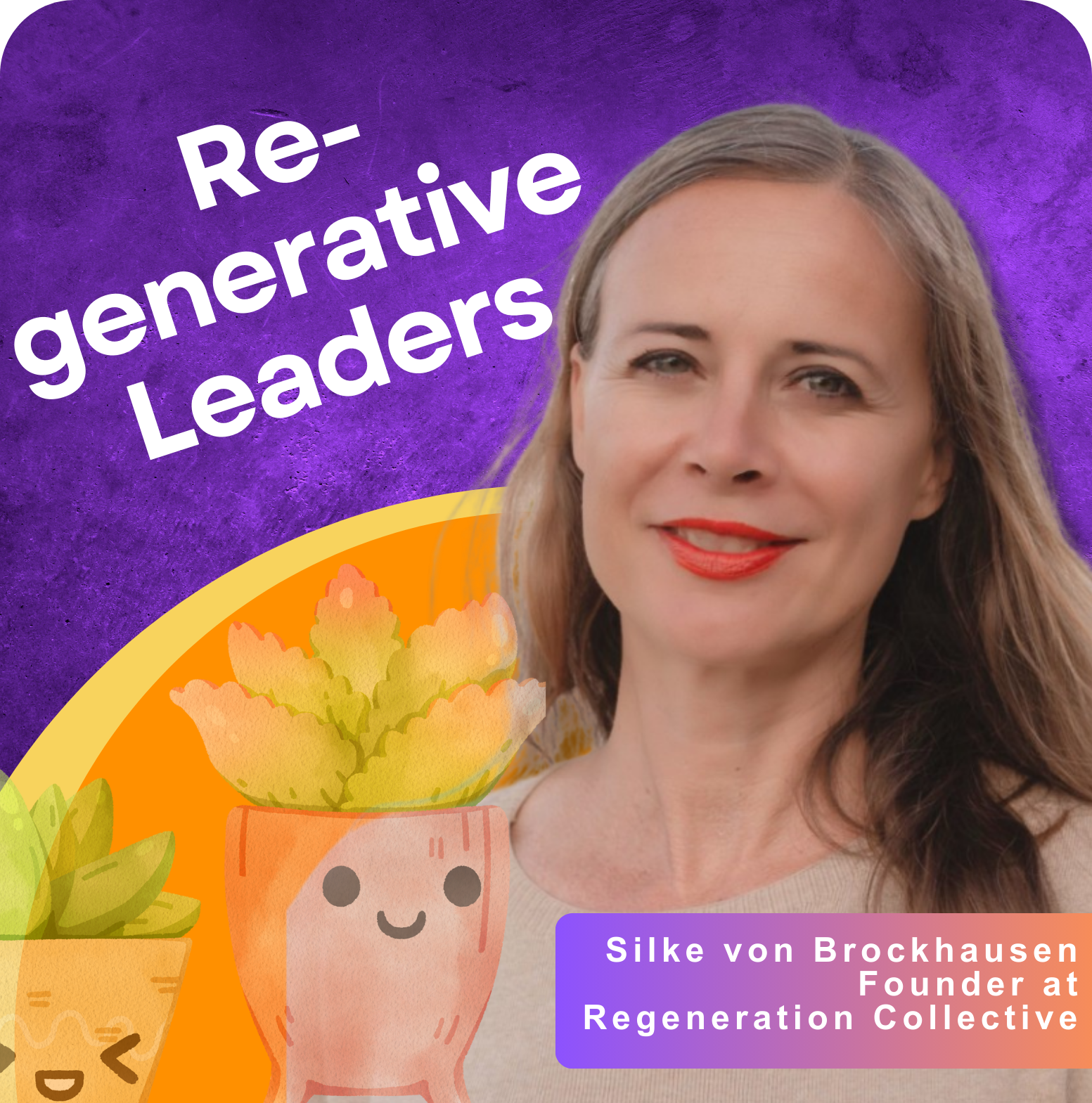
Silke von Brockhausen invested 18 years as a UN insider across a dozen missions—Vanuatu post-cyclone, Ebola in Sierra Leone, Yemen's war zones, Taliban consultations in Afghanistan. In 2025, she founded The Regeneration Collective, convening 450+ changemakers worldwide to reimagine global institutions—shifting from sustaining the status quo to regenerating the whole. Silke's magic lies in her deep compassion for others—a capacity to truly feel and see people, even those she disagrees with, creating bridges where division once stood. This compassion enables her to engage authentically and create spaces where genuine transformation becomes possible.
Creative Process
Discuss Potential Outlines: Human + ai
Create Initial Drafts & Iterate: Human + ai
Ensure Guest Alignment: Silke von Brockhausen
Ensure Final Alignment: Dr. Jiani Wu
Video editing: Kim Castro
Initial Publication: Jan 11, 2026
Disclaimer:
AI technologies are harnessed to create initial content derived from genuine conversations. Human re-creation & review are used to ensure accuracy, relevance & quality.
