Plurality | E. Glen Weyl + Audrey Tang
We selected this book to help us work together in a digital world without losing our diversity.
It offers new ways to vote and share ideas that make sure everyone’s voice is heard, especially the quiet ones.
Its role is to be a "collaboration kit."
It helps us build a society that uses technology to bring us together and help us make better decisions as a group.
Governing the Commons | Elinor Ostrom
This book is selected to show us that we can share things fairly without fighting.
It provides the "rules of the heart" for managing shared resources like water, air, or digital spaces.
It is important because it proves that trust and community are more powerful than greed.
It helps us build a society where we take care of our "common house" together, with fairness and respect.
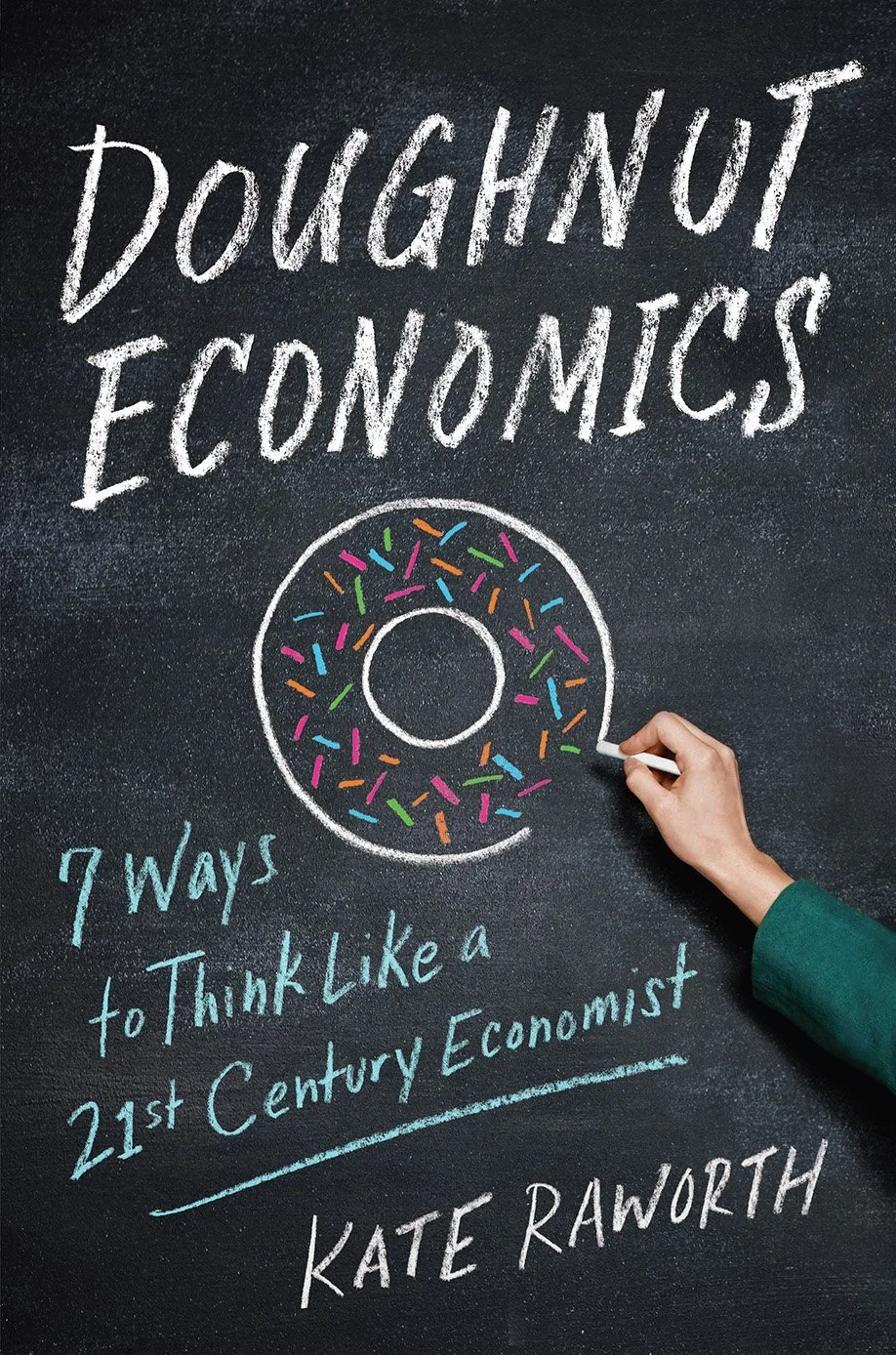
Doughnut Economics | Kate Raworth
This book is here to give us a new "compass" for success.
It shows us how to stay within the "sweet spot" where everyone has enough to live well, but we don't destroy the planet.
It plays the role of a clear goal-setter.
It helps us build a society that balances human needs with the health of the Earth, making sure no one falls into the "hole" of poverty.
Presencing | Otto Scharmer
This book is here to show us how to "lead from the future."
It teaches us how to stop repeating the mistakes of the past and start listening to what the world needs next.
Its role is to help us stay open-hearted and open-minded during big changes.
It helps us build a society where we can face challenges together with courage and a clear sense of what is trying to be born.
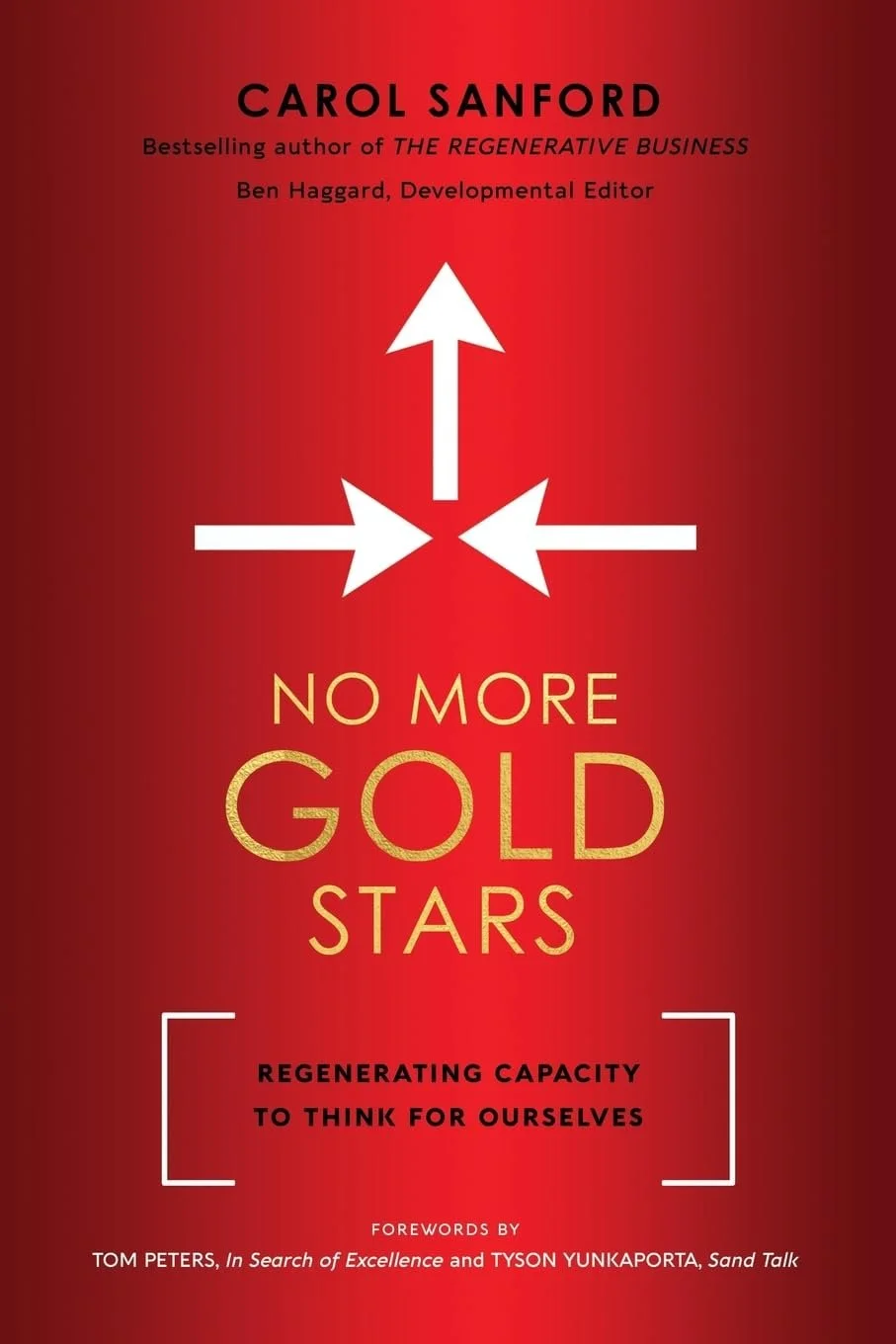
No More Gold Stars | Carol Sanford
We selected this book to help us "think for ourselves in a sovereign way."
It reminds us that we don't need external rewards or "gold stars" to know we are doing good work.
It is important because it builds our "inner backbone."
It helps us build a society of sovereign, wise people who act out of their own clear values rather than just following orders or seeking approval.
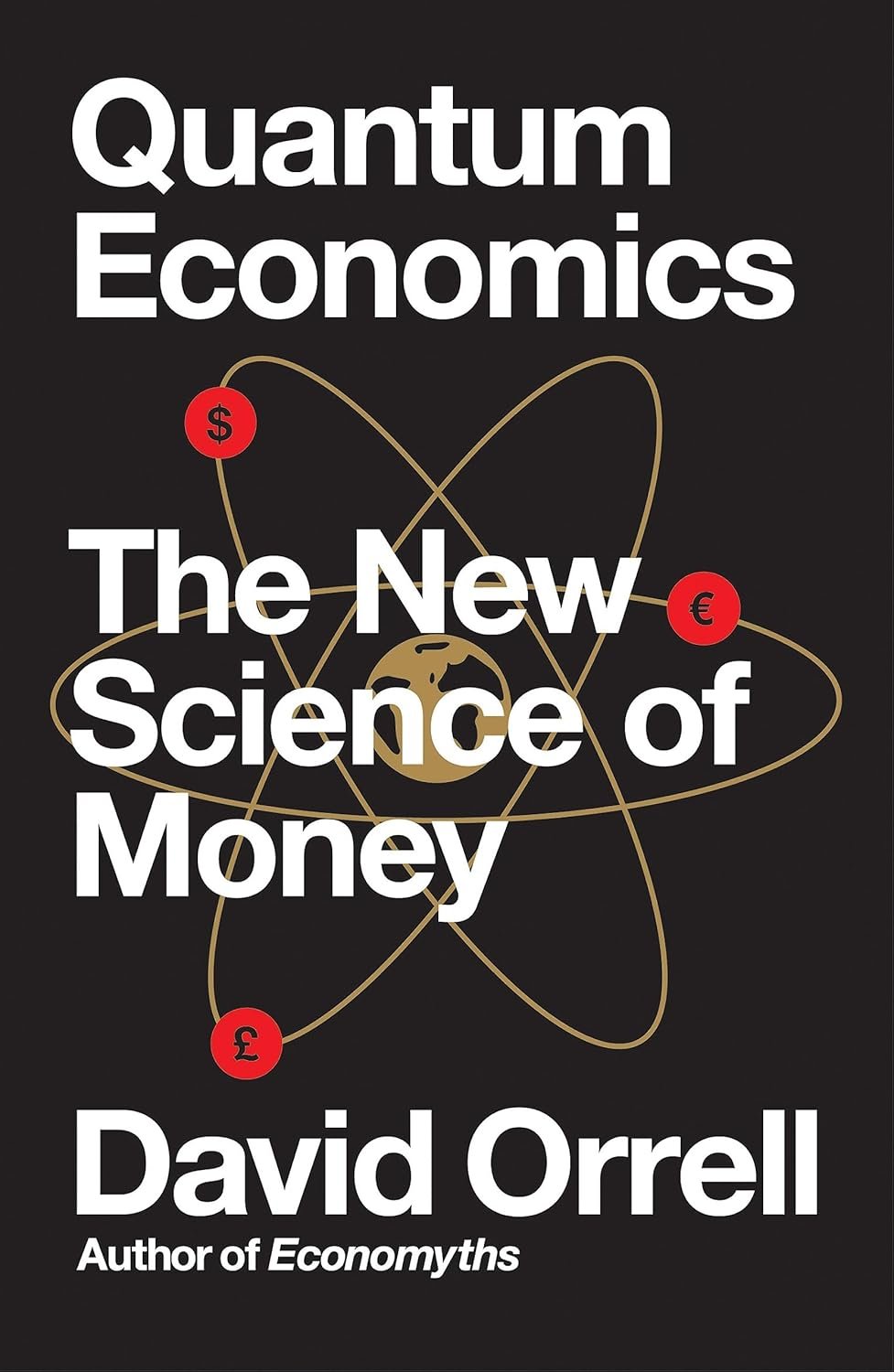
Quantum Economics | David Orrell
It replaces the "Science of Scarcity" with a Science of Money that respects human psychology and uncertainty.
By seeing the economy as a living, quantum system, we can build tools that are more stable, fair, and aligned with nature.
It helps us move from "managing a machine" to "nurturing a field of possibilities," ensuring our financial systems support life rather than just chasing abstract growth.
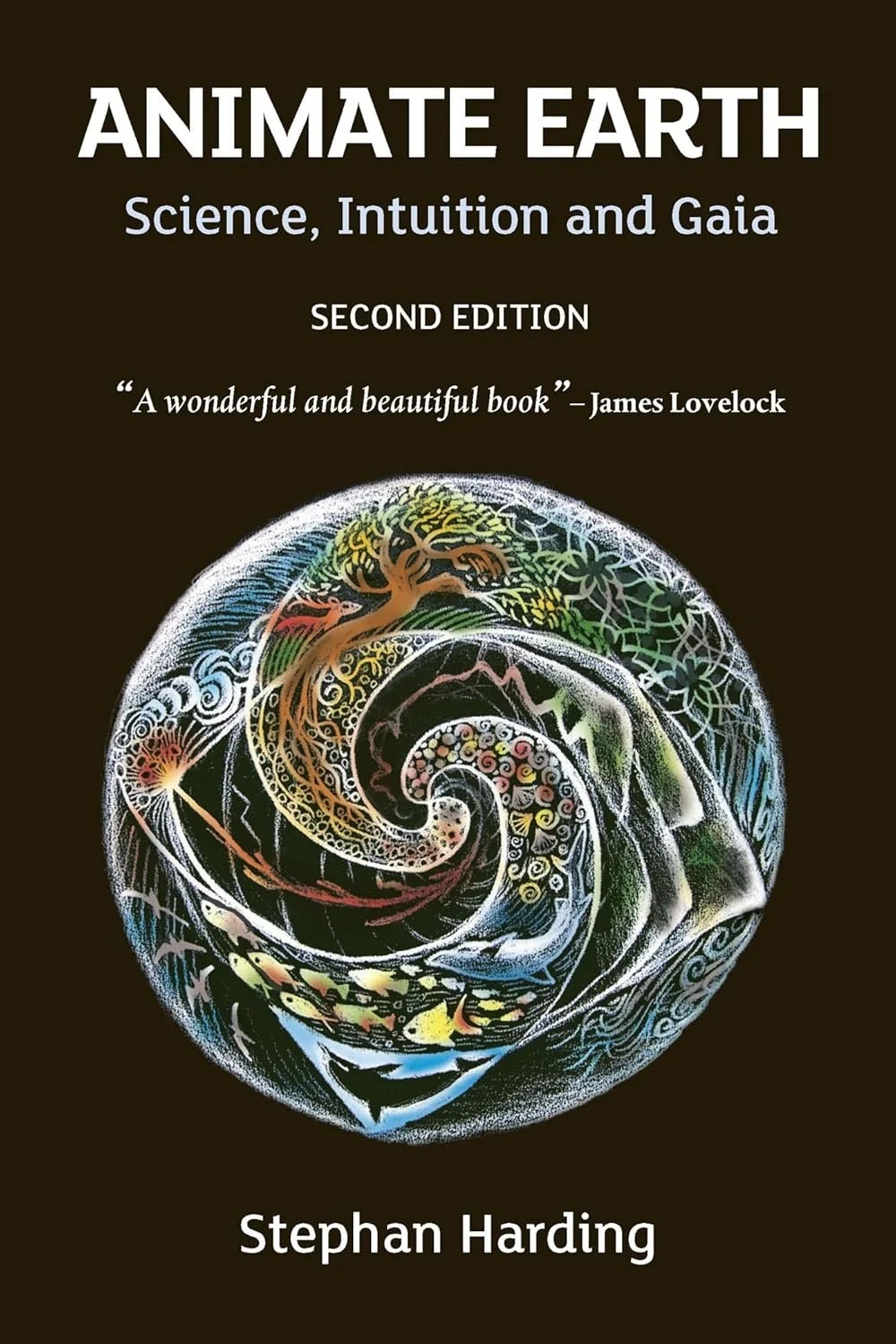
Animate Earth | Stephan Harding
This book is here to help us feel the "heartbeat" of the world.
It explains that the Earth is not just a bunch of rocks and water, but a living, breathing being that takes care of us.
It is important because it shifts our science from cold facts to warm connection.
It helps us build a society that listens to the needs of the planet as if they were the needs of our own family.
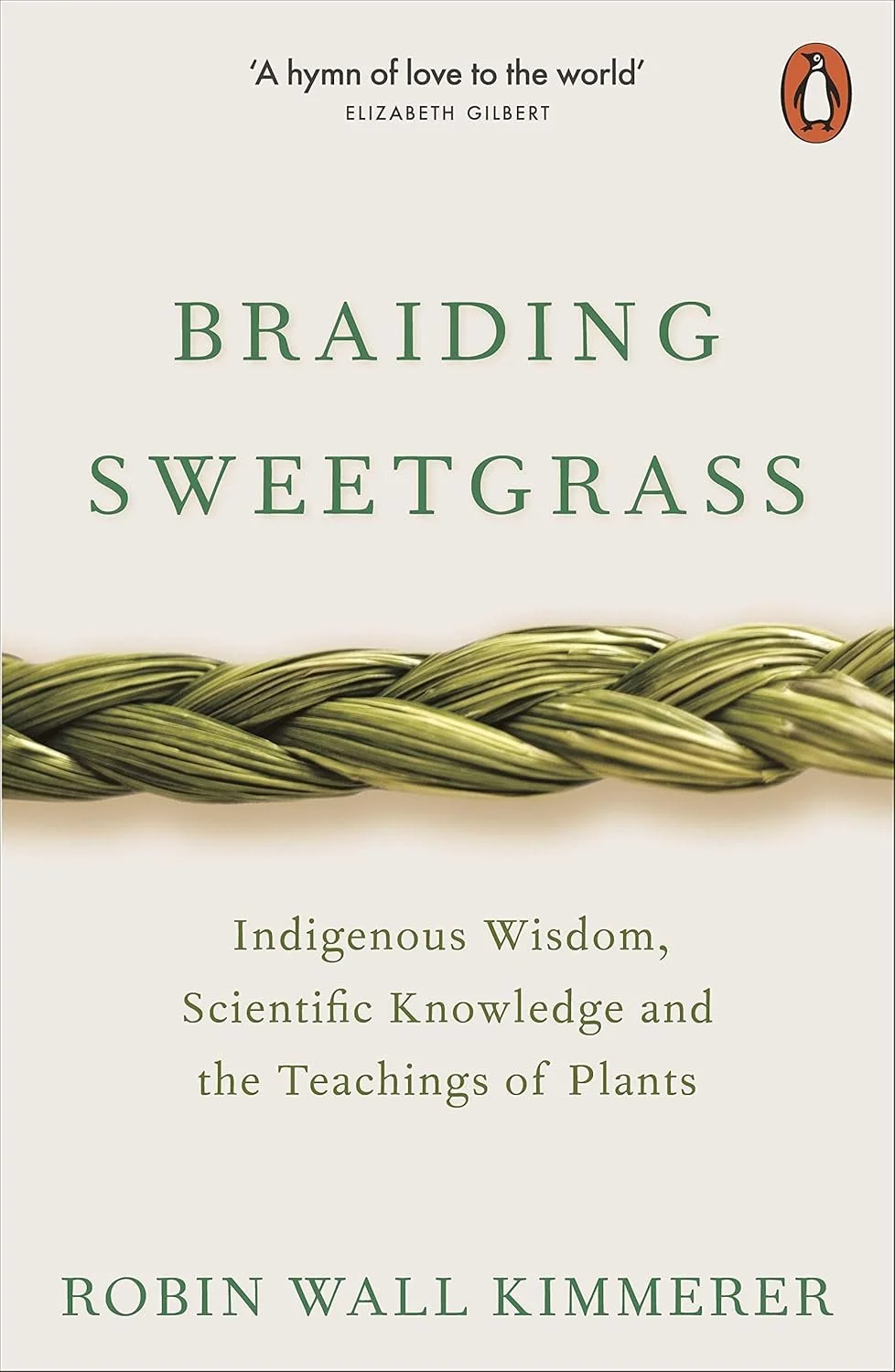
Braiding Sweetgrass | Robin Wall Kimmerer
This book is here to teach us how to be "good guests" on Earth.
It reminds us that the plants and animals are our oldest teachers, offering us everything we need for free.
It is selected to help us move from a mindset of taking to a mindset of giving back.
In a flourishing society, we don't just "use" nature; we enter into a deep, loving friendship with it.
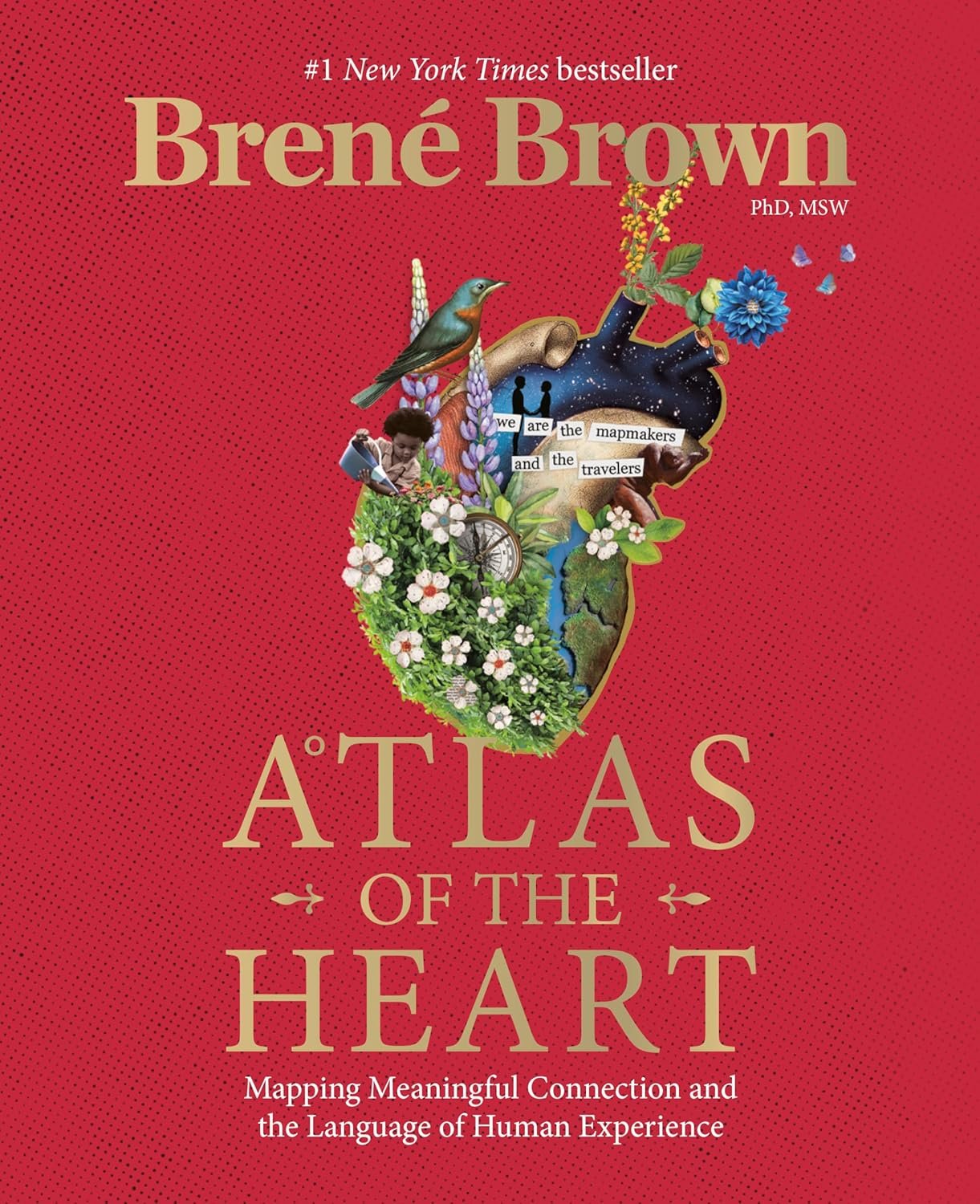
Atlas of the Heart | Brené Brown
Why it is here:
This is the dictionary of emotions.
Before we can build a thriving community, we must agree on the names of things.
Brown maps 87 distinct emotions and experiences, providing the high-resolution vocabulary required to navigate the human experience.
It sits in the Map Room because it acts as the Language Legend for the entire journey.
It ensures that when we talk about "Anguish" or "Vulnerability," we are all looking at the same coordinates.
It solves the "Tower of Babel" problem, allowing diverse teams to communicate their internal states accurately—a prerequisite for Flourishing.
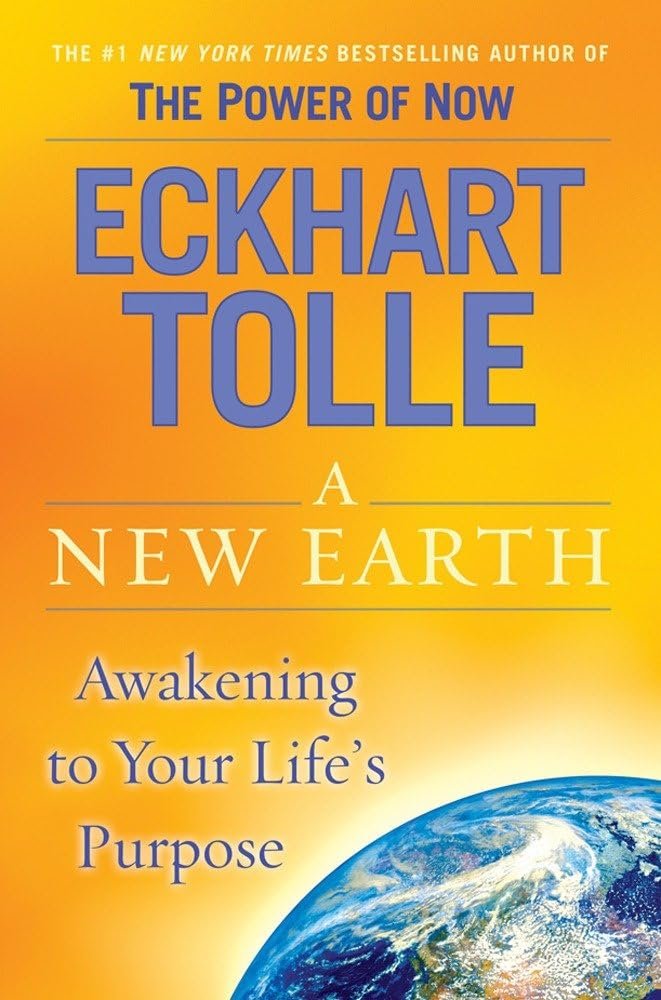
A New Earth | Eckhart Tolle
Why it is included:
This is the diagnostic manual for the "Collective Ego."
Tolle explicitly defines the mechanics of the "Ego" and the "Pain Body"—the repetitive thought loops of grievance, superiority, and fear that drive conflict.
It serves as the essential "Software Patch" for the leader.
It teaches that true intelligence (and the ability to build a regenerative world) only arises when we step out of the stream of compulsive thinking and access "Presence."
It frames the transition to a sustainable future not as a political struggle, but as a shift in consciousness.
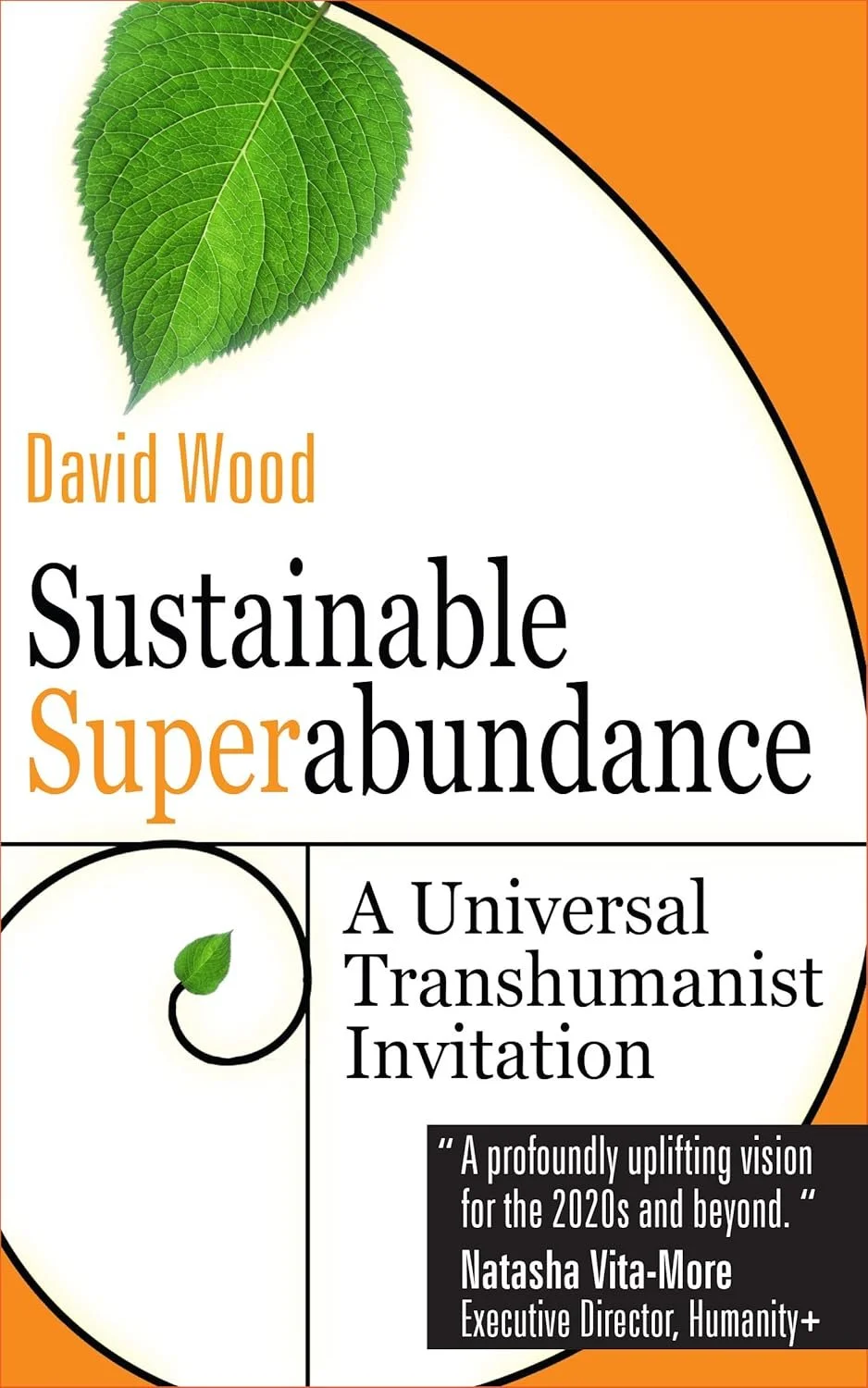
Sustainable Superabundance | David Wood
Sustainable Superabundance is the Resource-Expansion Protocol for the Map Room because it provides a roadmap for shifting from a world of "Winner-Take-All" scarcity to a Type 1 civilization of universal abundance.
It is included because Wood argues that the convergence of AI, biotech, nanotech, and clean energy can provide not just "enough" for everyone, but a Superabundance of health, intelligence, and material goods.
This book provides the necessary "Technoprogressive" balance to environmentalism—it dares to imagine a future where technology doesn't just "sustain" our current level of life but radically upgrades the human condition and the planet's carrying capacity simultaneously.
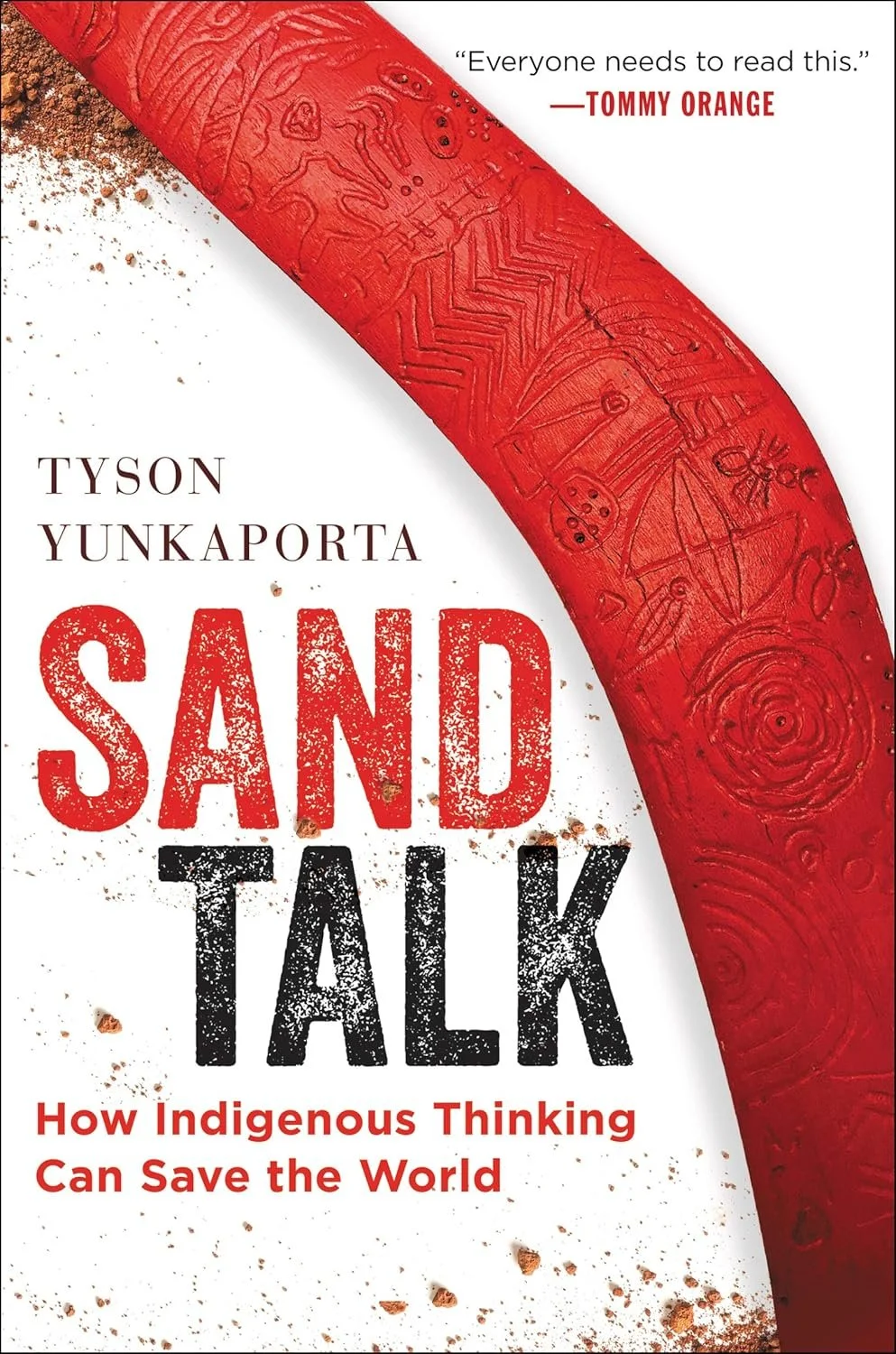
Animate Earth | Stephan Harding
Why it is included:
We cannot build the future using only the linear thinking that broke the present.
Yunkaporta, an Indigenous academic, applies Aboriginal Complexity Theory to modern problems.
He critiques the obsession with isolation and extraction, offering instead a model of "Relational Reality"—where nothing exists in isolation.
This is the perfect counterweight to Western science.
It teaches us how to think in loops, systems, and deep time.
It is a manual for "pattern thinking," ensuring that our solutions don't just solve a narrow problem but integrate harmoniously with the complex living systems of the Earth.
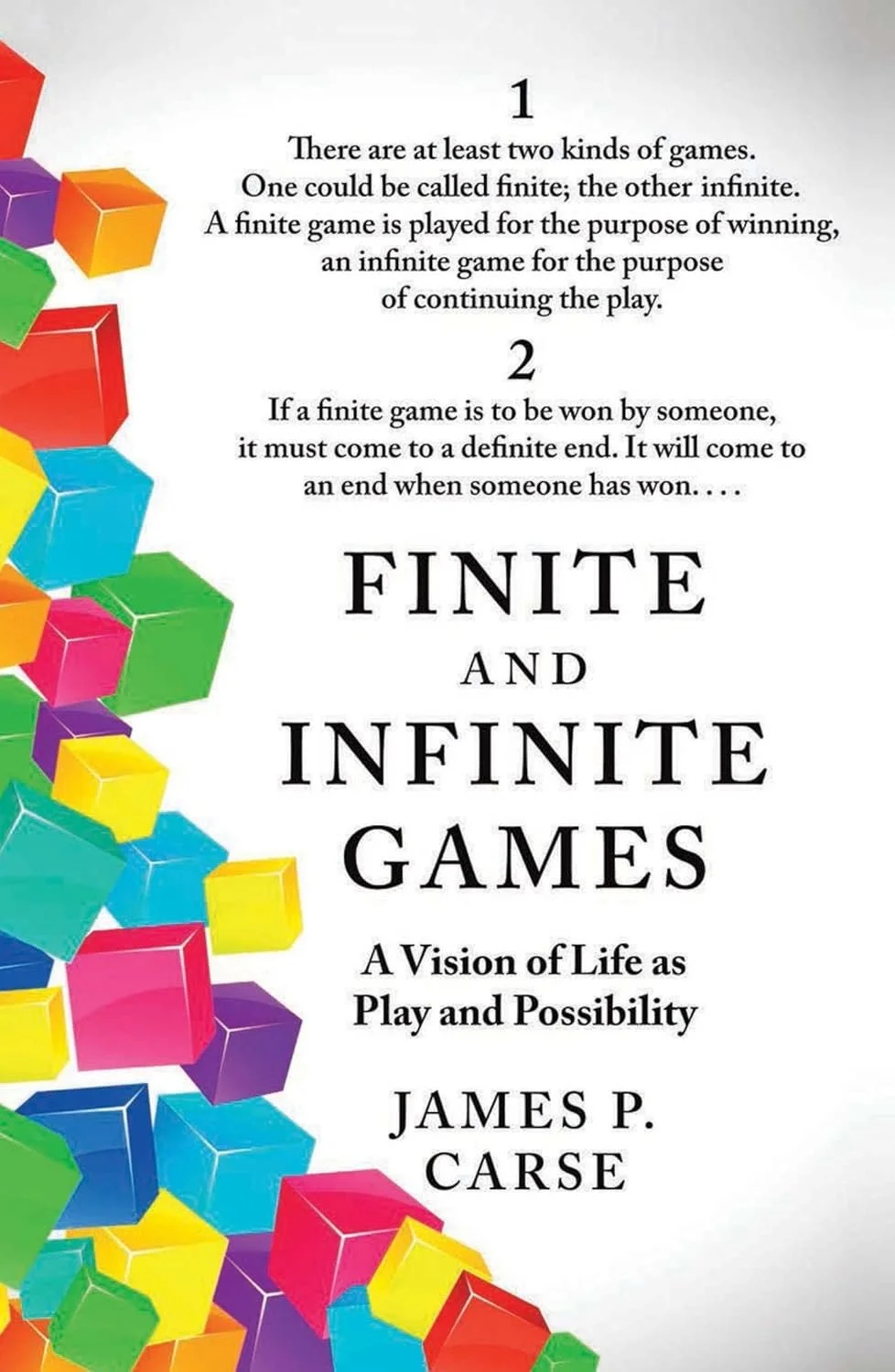
Finite and Infinite Games | James P. Carse
Why it is included:
This is the philosophical source code for the entire library.
Carse distinguishes between two types of games: Finite Games (played to win, ending in a victory or defeat) and Infinite Games (played for the purpose of continuing the play).
War, elections, and markets are Finite Games.
Culture, nature, and evolution are Infinite Games.
We include this to give the user the language to shift their primary motivation.
It teaches us to stop trying to "win" against each other and start playing to keep the game of life going.

The Dawn of Everything | David Graeber & David Wengrow
Why it is included:
This is a dense, academic text.
We include it because it dismantles the single biggest myth blocking our future: the idea that inequality and hierarchy are the inevitable price of "civilization."
Graeber and Wengrow use modern archaeology to prove that for 30,000 years, humans were conscious political experimenters.
Our ancestors built cities without kings, moved between hierarchies and egalitarianism seasonally, and played with social structures.
It proves we are not "stuck" in our current system by evolution; we are stuck because we have lost our political imagination.
This book gives us the historical precedent to reclaim it.
Four Thousand Weeks | Oliver Burkeman
Why it is included: We are obsessed with "efficiency"—the delusion that if we just rush fast enough, we can clear the decks and finally relax.
Burkeman uses rigorous philosophy to prove this is a trap.
We have roughly 4,000 weeks to live. The list will never be done. The more efficient you become, the more work you attract.
We include this to cure "Existential Overwhelm."
Burkeman teaches "Cosmic Humility": the shift from trying to dominate time to simply inhabiting it.
It is "Adaptive Flow" applied to the calendar, arguing that the only way to find peace in a chaotic era is to surrender the need for control, embrace our limits, and fully occupy the present moment.
Antifragile | Nassim Nicholas Taleb
Why it is included: Most people think the opposite of "fragile" is "robust."
Taleb argues this is wrong. "Robust" just resists breaking (like a concrete wall).
The true opposite is "Antifragile"—systems that actually gain strength from disorder, stress, and chaos (like the human immune system or a forest fire).
This book is the strategic doctrine for the transition.
We are entering an era of high volatility (climate shocks, market crashes).
If we build "robust" systems (dams, rigid bureaucracies), they will eventually snap.
To survive, we must build "antifragile" systems—decentralized, flexible, and capable of learning from mistakes. It teaches us to stop fearing chaos and start designing for it.
The Matter With Things | Iain McGilchrist
Why it is included: This is the magnum opus of the new era. While his earlier work (The Master and His Emissary) diagnosed the neurological split in our culture, this book provides the cure.
McGilchrist synthesizes neuroscience, physics, and philosophy to prove that the "scientific" materialist worldview is actually a delusion created by the brain's Left Hemisphere.
He argues that the Left Hemisphere has "unmade the world," reducing living complexity to dead fragments.
He creates a rigorous, empirical case for a thriving reality—one that is interconnected, purposeful, and sacred. It is included because it provides the hardest intellectual armor for the softest spiritual truths, proving that "Wholeness" is not poetry; it is physics.
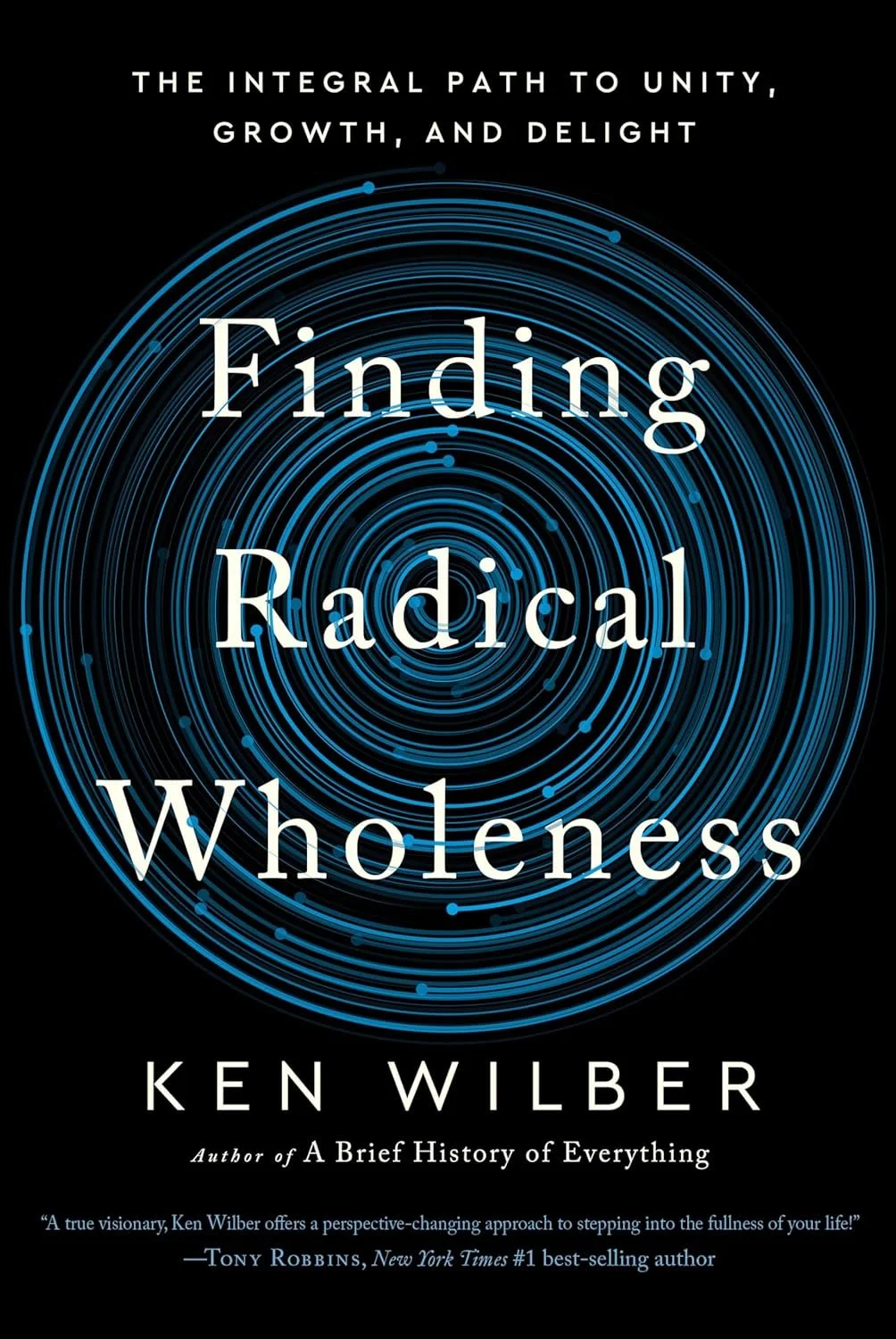
Finding Radical Wholeness | Ken Wilber
Why it is included: For decades, we relied on Wilber’s A Brief History of Everything for the map. But maps evolve. In this magnum opus, Wilber updates the "Integral Operating System" for a new era.
He synthesizes human potential into five specific practices: Waking Up (Spirituality), Growing Up (Emotional Intelligence), Cleaning Up (Shadow Work), Showing Up (Purpose), and Opening Up (Creativity).
It reminds us that we cannot just meditate (Wake Up) and ignore our trauma (Clean Up), or work on our career (Show Up) and ignore our ethics (Grow Up).
It provides the unified "Theory of Everything" for the human soul, ensuring that our transition to a thriving civilization is not just a technological upgrade, but a consciousness upgrade.
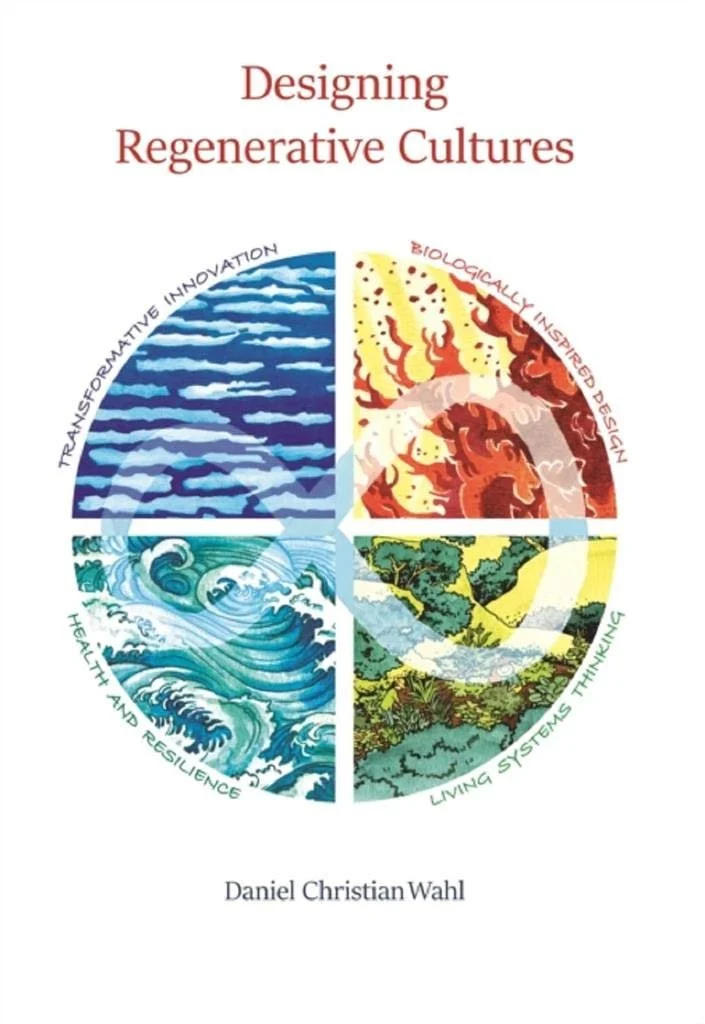
Designing Regenerative Cultures | Daniel Wahl
Why it is included: This is the master textbook for the "How." Wahl argues that "sustainability" is no longer enough—it is simply "doing less harm" or maintaining the status quo.
Because we have done so much damage, a thriving civilization is inevitably regenerative—it heals the systems it touches. We design economies, agriculture, and cities that leave the place better than we found it.
This book is included because it synthesizes biology, design, and sociology into a coherent framework.
Wahl asks the crucial question: "How can we create cultures that mimic the way life itself works?" It moves us from the mechanical questions of "efficiency" to the living questions of "vitality" and "resilience."
It is the blueprint for ensuring that our solutions are aligned with the 3.8 billion years of R&D that nature has already done.
The Great Work | Thomas Berry
Why it is included: Thomas Berry was a "geologian"—a monk who studied the earth. He reframes our current crisis not as a political or economic problem, but as a crisis of cosmology.
We don't know who we are or what we are doing here. Berry argues that we are currently a "disrupting force" on the planet, and our "Great Work" is to transition into a "benign presence."
It moves the conversation beyond "saving the environment" (which implies we are separate from it) to "participating in the dream of the Earth."
Berry gives us a new story of the universe where humans are not the rulers of the planet, but the universe is becoming conscious of itself. It provides the deep, soulful "Why" that is strong enough to sustain us through the difficult "How" of the transition.