Pulse Check on Subjective Vitality
Introduction
This article explores "subjective vitality," defined as a positive feeling of aliveness and energy. Feeling "alive" is a central human experience, yet it varies based on physical (illness, fatigue) and psychological (love, effectiveness) factors. Subjective vitality is hypothesized to be a dynamic reflection of both organismic and psychological well-being. The authors propose that vitality corresponds to energy that is under the regulatory control of the self, specifically relating to experiences of autonomy and integration.
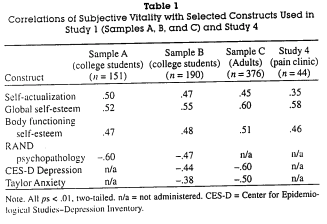
Table 1 highlights several significant statistical relationships between subjective vitality and various aspects of psychological and physical health. Rather than establishing direct cause-and-effect, these correlations suggest that a person’s sense of aliveness is deeply intertwined with their broader well-being.
Vitality: History and Theories
Psychodynamic Perspectives: Psychological health is linked to the availability of "conflict-free energy" for the ego or self.
Eastern Perspectives: Concepts like Chinese Chi, Japanese Ki, and Balinese bayu represent vital forces necessary for life, health, and growth.
Applied Health: A "limited reservoir of adaptation energy" is critical for maintaining health under stress.
Empirical Work: Previous research has used scales like the Profile of Mood States (POMS) to link "vigor" to positive health and lower depression.
Subjective Vitality: A Preliminary Theoretical Formulation
The original concept of vitality is tied to life and organization; living things are "centers" of initiative and regulation. Psychologically, vitality is linked to the basic need to feel competent and to be an "origin" of one's actions. It is the energy that has an internal perceived locus of causality (emanating from the self) rather than being driven by external or impersonal forces.
While physical health supports vitality, the meaning of physical challenges (whether they are seen as threats to agency) also determines felt energy. For example, if someone is going through physical pain, but perceives positive meaning from this experience, this person will likely experience a higher level of vitality versus someone who perceives negatively.
Subjective Vitality Scale
A 7-item Subjective Vitality Scale was developed and validated through factor analysis.
I feel alive and vital.
I don't feel very energetic. (Reverse scored)
Sometimes I feel so alive I just want to burst.
I have energy and spirit.
I look forward to each new day.
I nearly always feel alert and awake.
I feel energized.
It should be noted that this scale assumes vitality as a personality or tendency, rather than a state of being. There has also been additional research that recommends removing item 2 for a deeper aligned integrity (Bostic, Rubio, and Hood, 2000).
Key Research Findings
Individuals reporting higher subjective vitality also tended to report greater self-actualization (the realization of one's potential) and global self-esteem.
A consistent link appeared between feeling vital and possessing body functioning self-esteem, which relates to a positive perception of one’s physical condition and agility. Conversely, lower levels of subjective vitality were associated with higher scores on measures of psychopathology, depression, and anxiety.
Vitality was also positively associated with Extraversion (specifically facets of positive affect and energy) and negatively associated with Neuroticism (a fundamental personality trait characterized by a chronic tendency to experience negative emotions, such as anxiety, depression, anger, and emotional instability).
Variations in symptoms (like headaches or cold symptoms) within a person were directly associated with fluctuations in their immediate sense of vitality. Vitality was not determined by the level of pain itself, but by the perception of pain as disabling or frightening.
The study followed morbidly obese patients for two years after a weight-loss program. Higher vitality was reported by those who had maintained weight loss, exercised more, and had internal (autonomous) reasons for adhering to the program.
Subjective vitality serves as a reliable marker of "health of spirit" influenced by both psychological agency and somatic health. The research suggests vitality is enhanced by contexts that support autonomy, competence, and relatedness.
Additional reference:
Bostic, T. J., Rubio, D. M., & Hood, M. (2000). A validation of the subjective vitality scale using structural equation modeling. Social Indicators Research, 52, 313-324.
How Does it Relate to Regenerative Vitality?
We include this research because it was one of the easiest and foundational studies that explores subjective vitality, a core component of organismic well-being and the "health of spirit" in a system context. Even though the emerging concept of regenerative vitality includes not only individual wellbeing, but also systemic and collective wellbeing, this study is an invaluable contribution. This study describes subjective vitality as the conscious experience of possessing energy and aliveness, which serves as critical inner forces for maintaining mental and physical health on an individual level. It also offers practical value through its Subjective Vitality Scale (SVS), a tool that allows individuals to measure a significant indicator of their own well-being and vitality. (if you are curious, do a simple vitality pulse check on your own right now.)
Disclaimer: The summary story is co-developed with Gemini and reviewed by human.
