On Eating, Place, and Presence | Caroline Hobkinson
We are, most of us, living slightly above our bodies.
Meetings happen on screens. Friendships are maintained through rectangles of light. For many people who work from home, the only moment in a day when another human being looks them in the eye and asks what would you like? is the moment they step up to a coffee counter. Caroline Hobkinson, food anthropologist and performance artist, notices this. She notices it not with alarm but with the careful attention of someone who has spent years watching what people do around food — and what food does to people in return.
"That would be the only person who says, hey, how are you, what would you like, I make it for you," she says of the daily coffee ritual. "That's very intimate."
This is where the story begins. Not with a grand theory of food, but with a queue.
-
MAGICommons Podcast (00:00)
Food is the biggest symbol of embodiment. So, you know, when you see luxury fashion advertising, there's always a random tomato next to it. When you see like, I don't know, like there's like an orange or like an orange being squeezed. It's it's embodiment because we are so over-indulged by like digital imagery of like luxury goods. But if you have something like a cherry with a bit of, you know, like quite seductive, like the juice is dripping over something, it shows me it's like there's an embodiment. There's like something very visceral.
there that you connect with.
MAGICademy Podcast (00:35)
Caroline has a very interesting multi-dimensional identity. She is a food anthropologist. explores the interconnection between the food, our relationship with the food and how that reflects.
to the bigger and more comprehensive realities that we are living. And sometimes when we think about food, it's like, we just need food. We just eat it, give us energy so we can move on. But to Caroline, no, no, no, there's more to it. There's spirituality, there's intention, there is the power of the moment. There is this ability for us to cultivate healthy relationship with the food.
so we can cultivate a healthy relationship within ourselves and people around us.
It's good to have you Caroline.
Caro Hobkinson (01:22)
Nice to be here, really lovely to connect.
MAGICademy Podcast (01:32)
Beep beep beep. In front of you lands a spaceship and out walks a friendly alien. If you were to use one word, one sound or one movement to invite the alien to play, what would that be?
Caro Hobkinson (01:45)
Such a fun question. I think I would definitely beckon the alien or just invite them to come closer for a hug if that doesn't feel too threatening.
a friendly gesture of as a food anthropologist, I have to say that, offer him something to drink because it's been a long journey. And I think that's what people went up on arrival traditionally, like in mankind, you would offer someone a cooling drink and that goes through all cultures.
MAGICademy Podcast (02:13)
Oh, that's so beautiful.
I don't even realize that water is food.
Caro Hobkinson (02:18)
It is, it becomes you. It's like the idea of obviously you take it in. Especially because it's a very intimate way of interacting with our environment, it's through our mouth. Obviously that's a given that the alien has a mouth. I take that into granted as well, because often, you know, like human centric thinking when it comes to the world spirituality or different encounters, as we always assume.
that an alien will be very closely resembled to us. Because we pose ourselves as a center of it. But maybe the alien doesn't need water and obviously doesn't need that. But obviously to keep our human-centric notion, I would like to offer the alien a drink. And then if we get on after maybe water, we can maybe have a spirit.
MAGICademy Podcast (03:04)
So for them, maybe it's water, maybe it's something, maybe it's seawater, maybe it's water to them.
Caro Hobkinson (03:11)
Yeah, I mean, have to say if I go on a space
travel and be as lucky as actually arrive on a planet with semi-friendly welcoming people, I think I'm in need of a stiff drink. So I think I would go for a cold vodka.
So I think that's what I would offer the alien, like the idea of hospitality and welcome. I think by showing and sharing a meal, think that's where you break the idea that to show that you're friendly. I think sharing a meal, the idea of, know, like the word companionship or sharing bread, it's like it's in the true etymology in the world as well as when you share bread with someone is when you put your weapons down to show that you're not friendly. The fact that I dare to eat with you and I share something with
you, whether drinking from the same cup, like at a medieval banquet to show that something wasn't poisoned.
So that's why we cheers as well. The idea of it cheers the left over to show that I haven't poisoned your drink and it's a sign of trust. So think a lot of very old food and drink rituals actually are coming from the idea of when we encounter a new person, which is outside our own realm, it's like that's how we show peace, that we come in peace.
MAGICademy Podcast (04:22)
I love that. It's like when we visit different cultures, like when we travel to different cultures, the first thing that really connects with us is the food that we enjoy in that particular culture. And all of a sudden, oh, have this, now like a portal opens, like, oh, now I wanted to know more. So I think you're right. Like food helps to build this bond of trust, actually really fast.
So why food anthropology?
Caro Hobkinson (05:02)
I started off as an artist creating performances and at the time it wasn't called immersive performances but it's very much now.
deeply anchored in the realm of immersive performances and really pushing people out of the boundaries as an artist by having secret ⁓ dining experiences, letting people eat something while their eyes are closed. And as an artist, always felt actually the main thing that interests me are habits and rituals. So then I revisited food anthropology and I realized that there's actually a really specific realm.
in the world because anthropology, obviously traditionally, it's about meeting other cultures. But I think we can learn about different cultures through the food and through the eating utensils and the drinking utensils that they left behind the most and in the most personal way. And obviously, food habits and rituals are fabulous ways to almost personalize it because I think everything else seems very contrived, like the big buildings we build, but it's very interesting.
It's very close as well to come to different people, to get to know someone. So for my work I thought it didn't really change. So I did exactly the the idea of performance-based art through food. But a food anthropologist, think the intentionality on rituals and habits, it allows me to almost draw closer to that.
MAGICademy Podcast (06:24)
I'm curious, you mentioned about the rituals many times and also in our previous conversation we talked about the idea of rituals and as we eat food we seldom think that every day when we eat food is kind of like a ritual that we do. how do you... and when we think about rituals usually very elaborate and almost ceremonial. So how do you describe ritual?
and and
Caro Hobkinson (06:51)
A ritual is something that you repeatedly do in order to validate yourself or your true self and to be present in your everyday life. Obviously, it's used by bigger religions in order to validate your connection as an individual to part of the, whether it's a cult or an organized religion.
you make sure that you bond and you create those close connections through repeated rituals that are like abstracted versions that heighten something that is quite everyday to something more ceremonial. So whether you have it, obviously a lot of the big base religions, they use actually food and the idea of communion.
in Islam you have obviously Ramadan and the Eid al-Fitr and then you have it in the Catholic Church as well. So it is used in many, many religions. But the everyday, the personal ritual I think it's more personalized because we are often
create them without realizing that there are rituals. It's that morning coffee where we queuing up to that specific moment. And that's our moment we create for ourselves. It's like the queuing up because you can make the coffee at home, but it's very much about it starts the moment when we walk out of the door. And even often people don't mind queuing because the queuing is part of the moment, the anticipation, the barista maybe knowing your name and writing down, making that connection. And I think that's why obviously some of the bigger
coffee shop brands, really tapped into that ritual. There's a very personal collection. They can obviously just give you a number, but they ask for your name and then they call your name. So it is almost like a morning communion. So I think coffee became that morning ritual that is really identified and very personalized and it validates you as a person. So Caroline, this is your coffee in the morning. It's got my name on and I get called up to go forward to the front, almost like to an altar to get the coffee. But obviously the coffee is just a drink.
But the whole thing, and people are willing to spend obviously in big cities six or seven dollars or pounds for that coffee, which is actually just a few beans. The same thing with the ceremony of tea in many cultures, it's elevated, it's elevating something simple to a ceremony, it's a ritual, but I think not just through society, but these days we create these personalized rituals.
The idea of, in the morning when I wake up, I have a glass of water and I have that water intentionally. It's just drinking water, but that becomes a beautiful ritual. I think food and drink are perfect arbiters for creating those parameters that that's like, this is the moment. This is, I'm taking this three sips of water at a very given time in the morning.
in order to center myself because that helps you. It's like punctuation rather than obviously breath work is as well as great, but it's obviously it helps you to have that glass of water and calm down. And in England where I live, I live in London, I love that as well when anything sad happens or someone is upset or some people always say, would you like a cup of tea? No one actually drinks a cup of tea, but always people put the kettle on even in like soap operas or movies,
kettle is always put on and let's make a cup of tea. The cup of tea is the answer to the most biggest world catastrophes, whether personal or on a bigger scale and I think that's really beautiful because it humanizes us.
MAGICademy Podcast (10:17)
Thank
Caro Hobkinson (10:17)
And
I think it's interesting how these weird food rituals as well are used at the moment in advertising or in social media. Obviously, TikTok is trending. It's like what I eat in a day and how people prepare their things are the biggest watched content because it's very personal. Those personal rituals, how people prepare their morning smoothie gets us to be also close to them. It's wonderful.
MAGICademy Podcast (10:44)
It's... When you're talking about the cup of coffee and the moment that we come up to the cash register and start buying it, you compare that with coming to an altar and then as if you are receiving something from the tribe or from the people that you love. I think the same thing happens to like bubble teas. Like there's like a
big trend coming around the globe with all the bubble teas. And I think when we get the bubble tea, does, you do have this building a sense of craving. mean, obviously the sugar helps a lot of that. then, but this anticipation of, yes, I'm going to have this, this, this tea, the tea is going to nourish me. The tea is being prepared with really careful process with love, with heart. And now I'm, I'm, I'm welcoming, embracing this.
tea and water and sugar in a beautiful format into our
So now it becomes part of me, part of my body.
Caro Hobkinson (11:50)
Yeah, it's self-care. It's self-care because you're taking out these four minutes where it takes it out because people in the past would maybe smoke a cigarette. But now the same person or the same demographic, age-wise demographic, would go and drink a bubble tea or queue up for the bubble tea or actually go towards that as well as already the walk. And then you ordered and it's very high puppy spoke, it's very personalized.
MAGICademy Podcast (11:50)
Thank
Caro Hobkinson (12:13)
You have many choices, so you feel heard you feel... and it's holding space, but it's someone holding space for you and you're holding space for yourself.
MAGICademy Podcast (12:22)
Winning the queue is indeed part of the ritual.
Caro Hobkinson (12:26)
But lots of many people actually meet. For many people who live in big cities, there's a lot of the idea of the loneliness epidemic. Obviously during that time, most people say that that's the only real-life IRL connection they have with another human being. Especially if you work from home and you have most meetings through Zoom or Teams. That would be the only person who says, hey, how are you?
what would you like, I make it for you. That's very intimate. It's almost like what you're buying is as well, it's like the idea is someone, and obviously it's the biggest flex for any urban night is that someone already knows your order. If you've gone so many times to something and then it really knows like your usual, I mean, this is a mic drop moment because that means that this is like you've broken through another realm.
almost, like someone knows what you're having without needing to ask. In a very, not very personalized, very isolated, very anonymous city life that most of us lead, this becomes a very personalized ritual and it's almost like the highlight of people's days and a lot of people...
as a biggest alternative to dating apps would be meeting in a queue while queuing up. It's one of the biggest moments where you get to actually really chat to people.
MAGICademy Podcast (13:48)
I think last, next time when I see a big queue forming I was like, ⁓ people are part of connections.
Caro Hobkinson (13:52)
I'm gonna jog.
It is, I think it is like that connection because you're already, you're all appreciating this bespoke, hard to get bubble to your coffee, this coffee that obviously must be special, that it's worth queuing up. Sure, you could go around the corner to get something faster, but it's about the appreciation. And it's the queuing in order to go forward until it's your time to be called that has something deeply religious about it, if you think about it. And then even the way people come forward to the
to the till and then they almost often receive it with both hands, which obviously there is no need for it, but I notice it within myself. often, when people give it to me, because it's by the time I was asked how exactly I want it and how the beans are there, I reach out both of my hands to receive my orders.
MAGICademy Podcast (14:25)
God.
I think they're, you know, I think in order to really fully immerse in this ritual of receiving this, this coffee or this tea, does take some sort of, um, intention because I do, I do obviously notice there's two state of mind when we, when we try to get it. Sometimes when, if I'm in a rush, I'm like, come on, come on, come on, come on. I want to really, really, really fast when there are,
less, less stress and less press of that time. And then I get to be more intentional. think sometimes it is a, like a reflection of our inner state, like what state are you? And then you, you create an experience that matches your inner state per se.
Caro Hobkinson (15:26)
Yeah, I think that's completely valid as well to have something fast and on the go. And I'm not
that people always put so much intentionality towards every single time you eat, but I think it's really beautiful when it comes to...
and very useful as well when it comes to nutrition. The idea that some cultures like in France where you have people eating an ordinary amount of cheese and wine and bread, which obviously by modern nutritional advice and standards is completely divergent from anything, but they are very healthy and they're very lean and they all look very trim. But because there's a lot of intentionality in the French cuisine, people sit down there. It's not culturally
I mean, not unaccepted, but it's not the norm that you eat on the go. And you always sit down and you have your meals together and you don't have and you serve, you plate up your food. You don't do the serving of a big bowl in the middle. Because I think that's something that's very almost in America, it's more like the land of plenty. Let's share our produce is that idea of, you know, it's beautifully celebrated and Thanksgiving as well. It's like, let's big bowls in the middle of the table. And that's
that's really beautiful in the same way that you have it in Italy, but in France it's individually plated and people eat their thing. But I think that's how a whole nation gets away with just eating a lot of cheese and beautiful, quite heavy, heavy food while having incredibly low cholesterol levels. So on a purely nutritional, healthy way, it's interesting that intentionality brings a lot of wellness, mindfulness, but as well a lot of physical
positive attributes.
MAGICademy Podcast (17:10)
Yeah, and I think when I was looking through your work, and I think one of those is the feast. Like the people are consuming without a sense of intentionality and they consume and consume and until they can no longer take. And that reminds me that the ritual does also come with a sense of intention.
discernment.
And the ability to align, like you mentioned, align with our intentionality, with our action, with our thinking and with our feelings and that kind of come through the action, come through the process, come through the ritual. So it's in a way we're priming our mind and our feelings and our inner intentions through the action, the intentional action of ritual. So we can
stay away from catastrophical consumptions like you portrayed in the art.
Caro Hobkinson (18:09)
In my work, obviously, I like to cross boundaries and be shocking, brutal and visceral, because actually that's what I like to question as well with that. But I think in a world where we have limited resources and we all know that we should limit our food intake,
especially if there's an overflow in the Western world towards it. think it's really interesting to question that and to say how can we bring more intentionality towards our consumption, our interaction with food. Because traditionally we would have feast days and fast days. And there would be in the English calendar like...
200 years ago there would be 120 feast days and fast days. what you would eat and what you would not eat would be very heavily subscribed by society. But now with all our beautiful freedom, the individual has to make all these choices, which is a wonderful thing. actually having so much agency, we're overwhelmed. So I think that's really interesting to question the idea of
like feeding, force feeding and the idea of just eating too much and as well the obscenity of over consumption as well.
MAGICademy Podcast (19:22)
Yeah, and also I think the intentionality is really maybe one of the potential solutions to help us overcome or manage a sense of overwhelming by too much agency. And sometimes the agencies are true agencies. Sometimes the agencies are man-made agency to keep us in a box.
Caro Hobkinson (19:42)
I think it's
interesting when you see where I did a lot of research into longevity and blue zones. The blue zones are one thing they have in common wherever they are as well as that there's so much intentionality behind the food. A lot of people grow their own food. They eat a very varied diet, but everything is celebrated. The food is celebrated with a lot of people.
a lot of friends and it's part of a communal feast rather than an individual quick nutritious thing just to keep you going on the desk. I think that's something that and we all know deep down that this is something nice but obviously it's harder to celebrate that and actually activate that as well in our day-to-day life when we obviously live in often in single-person households we are isolated from our friends and family but I think
It is interesting. It's something that actually happened during COVID and lockdown. It's like people started to eat and I had that as well. I had mutual glasses of wine virtually with other people. And then as soon as it was locked in, I would now think about this twice. But I think that's a really beautiful thing of actually sharing
meal with someone and cooking the same ingredients.
who isn't with you and just connecting that way. It's something that actually started up and then I think we just all had enough and the idea of a real life experience is nicer. But using modern technology to connect, think it's a really beautiful way as well, especially if you're at home, to have that. And I think in London there's a lot of...
⁓ new restaurants and even like dating celebrations where people, they're by themselves, they can go towards events we book in by ourselves, so in order to have that communal feast.
MAGICademy Podcast (21:32)
Yeah, and yeah, when you're talking about events, it feels like every event will have a food component. That's how people come aside from everything. Yeah, I think.
Caro Hobkinson (21:41)
It is.
The events in our personal life, they always have food and that's how we remember our past, is through that punctuation. It's like for the last Thanksgiving, that's what we had and people repeat it as well. That becomes like the comma, the exclamation mark of our lives in a really beautiful way. But I think these days as well, it's still harder to, because a lot of immersive experiences or events or anything in that way, it's not that disruptive enough because people don't
dare to actually use food because it's so personal and it's so intimate. So we are bombarded with big screens and Dolby Surround screens but obviously it's yet again just the eye and I feel like our sense of sight is completely over-bombarded because everything is screen-based. So I think that's the last thing I almost want in the real-life world is
is having that as well. It's like the idea of having yet another screen or yet another thing, especially because we are so disembodied.
because everything is digital. I think if you have a real life experience, food is so much more than just taste. It's the smell, it's the sound of the sizzling of the preparation of the eating. And I think it's a really nice geographical connection to the Terroir because it connects you to the place. Knowing where the food is from or the wine you're drinking is from or the cheese is from really has a beautiful bond to something else, almost like a psycho geographical.
connection to something else. I think that's, it plays on so many levels, but I think other than in art performances or smaller events, it's hard to roll that out towards a thousand or two thousand people.
MAGICademy Podcast (23:19)
Is that even possible? to build an event that scales to thousands and thousands of people and still provide them with a venue for them to enjoy the food, is that possible? Like I know it was like a virtual reality. is a sense that as if we are tasting it and sensing it and there's a way to trick the brand to think that you're
Is that even possible?
Caro Hobkinson (23:49)
It's fascinating,
think, because I think where technology is going, think the idea of... But then I think you said something really interesting, because it's tricking the senses. It's not truly. And I think we all know the idea of suggestion of tricking the senses is never as powerful as the real thing. To be truly present because there's something about the idea of the materiality of something truly being there.
versus not there rather than suggested is still smoke and mirrors, still make-believe. So there's something on a almost metaphysical level that
And animals have that, like a dog wouldn't, would understand a screen is not real, but only have the ability to kind of have that, like the park, the disbelief. And because I think what, because animals often have that idea, they have different senses of, of, of connecting on a metaphysical level, not just the side of things. They just truly understand it's not there.
MAGICademy Podcast (24:27)
Yeah.
Caro Hobkinson (24:42)
And I think we have that deep down as well. We know it's make-believe. We know it's not real. So I think having that real life experience is possible. But obviously people these days are hyper aware of...
the allergies and the idea and I think food as well becomes something that we become almost more frightened about because we don't interact with it often. So it almost becomes we become more distant from it, which is I think fascinating as well. So I think it would be wonderful the idea of the communal feast and sharing something on a bigger scale would be really, really powerful. I think so I've done an event for 500 people, but I think it works if you have
things like seaweed that are not allergenic and obviously completely vegan and then it works but obviously you're reduced because again there's such a multitude of food preferences and
allergens as well in a good way but that's obviously catering towards everything else in there but I think I'm always fascinating seeing big celebrations or anything like the idea of coming together and eating together that restores hope in mankind.
MAGICademy Podcast (25:47)
Yeah, and I think coming to that original questions,
how can we potentially create an event that, that allows thousands of people to eat and enjoy the community together? feel like maybe they don't have to happen at the same time. And I, and the travel comes to my mind, like truly traveling and you can travel by yourself with your beloved, with your fur babies and with your family, sort of with a group of people. And then when you.
are in that location, you get to enjoy. So maybe that event is not synchronized. Maybe the event is asynchronous. And however, there is this.
Caro Hobkinson (26:24)
It's like thinking
about time as a
thing, the idea that it doesn't need to be like in a linear time-based thing and then because that connects you. It's like when people say like oh last summer I went to Italy and I had this in their mouth because and then you your remembrance of that becomes as if people share the meal if you have that at the same time.
And that's, think, the success of very good restaurants that have a specific dish that people just love as well. The idea that food brings it out. think it is interesting, but I think it could be done as well, especially using technology and VR in order to transport people to this beautiful vineyard in maybe in Italy, where, but actually you yourself still get to eat it. And I think that's quite important that.
there is a certain physicality of truly eating and the mouthfeel of something that is very hard to replicate.
The thing is, and I truly believe this, when somebody is in a bad mood and they cook, you almost pick up the energy of the bad food into your food. And there's something in there, there's so much metaphysicality between the food. think technology can transport us to the place and bring us together, but actually the physical breaking the wall and having that intimate moment of placing something into your body that becomes part of you, it's so intimate.
and I would say it's more intimate than sex because it physically stays with you. It's something that is very, very powerful and the beauty of this, can't be replicated and I think that's why we remain human and that's where technology falls. But I think technology can give us really amazing and the most beautiful parameters and traveling to the locations and honoring as well where the food is grown and where the food is participated and I think that's really beautiful to see.
the farm yard or the landscape where something's been foraged or harvested while actually consuming us gives so much internationality as well and very like magic to the experience and elevates it as well.
MAGICademy Podcast (28:33)
That's such a beautiful conversation and we had and I feel like this intentionality and this great gratitude that we have also comes with mixed feelings because in one of our initial conversations we were talking about the eating of something alive, like a live lobster. And sometimes the dilemma comes like when we eat
meet, it's coming from a living breathing being and somehow we, our body needs it to sustain our own energy. how do we, how do, how do we deal with this sense that, I'm, I'm taking
a non-human's life and then transfer this life into my own body. How can we deal with this sense of guilt and conflict and confusion with this beautiful intention and gratitude and yeah.
Caro Hobkinson (29:32)
I think it's a beautiful dilemma to think that how mankind positions itself on top of a food chain and that justifies that we therefore eat and freely eat ⁓ from a food chain that's obviously been offered to us in many religions. It's obviously played out that
a God created a world for us where we can feed freely from
we know that there is no need to eat animals in order to sustain a healthy and balanced diet. I myself eat meat and I love eating meat and fish.
very restricted and actually that's when I eat that with a lot of intentionality. But that's obviously a very personal view. I think that the world is not a cozy place. It's not a Disney movie and we obviously have a lot of gratitude, but it is okay to sacrifice other beings for our own pleasure.
It's hard, I think, but if you honor that sacrifice and if you are welcoming it in, because obviously the idea of that animal and the nutrition becomes part of you,
I think that justifies it, but I think for some people that would be a taboo that they would say that they don't want to cross the line. But I think that's beautiful. I think the multitude of food preferences and the ethical questions when it comes around food and food production are fascinating as well. And I think often it's misconstrued as well in the idea of people stop drinking milk and have a lot of oat milk because of basic house.
we're creating too much methane, obviously that's not... It's not like you're not going to save the world and think by not drinking milk. But I think it's beautiful to be mindful of this and to kind of think about different food ways. I think...
Greed towards new foodways always propelled us forward. I think that can maybe help as well sustainability and environmental issues because when it comes to food, and humankind has always been the most inventive. You know, we managed to cross oceans, know, Columbus was given a lot of money by the Spanish Queen because he had beautiful rolls.
of paintings of all the produce you could find there and bring back to a very gluttonous queen. And I thought that was interesting as well, saying like food is the one thing that brought, you know, like the...
like the Italians to China, it's like the idea of bringing food back and pasta back and noodles. It was driven by, I think, just a lust for life and a lust for food and greed in that way. So for me personally, I think it's a good question. to question that constantly, whether it is justifiable to eat
other animals, which we obviously, because again coming back to what I said earlier, we are so human-centric in our worldview that we see ourselves on top of a food chain that we therefore are allowed to eat our way down.
I think that's something that should be relocated, but I think that's something that I see as a brief in my own practice as an artist to make people question that. The idea of, you know, like, let's connect to that cow, that's the cow, that's the life of the cow. Are you still willing to eat the cow when you see, when you personify the cow?
when it's not beef. As soon as we call it cow and a lot of languages obviously differentiate between its pork and not pig. We want to have a certain disconnect from it.
We are not willing to slaughter our own food. I don't think I would be able to actually kill an animal and then eat it. But I think it's something that is very important to question and almost put towards as a performative art thing in order not so much to force the individual to cross the boundary, but to actually almost have that...
quite brutal realization that something gives the life for you and you're consuming it. So I think there's a interesting brief there for something.
MAGICademy Podcast (33:40)
Yeah, it's the...
Sometimes when I think, I think I personally tend to go very emotional at times and if I think that I just took a cow's life so I can feel satisfied, I sometimes feel guilty and sometimes I want to cry too. But the meat is really delicious though.
Caro Hobkinson (34:01)
But I think that's a beautiful dilemma
and the dilemma is a very human idea. That's what we see with lot of theatre and literature is based on having this dilemma that skill and corrupt is of like there's one but it's about choice and I think the really important thing is that we have agency and we have choice and back in the like you know a couple of hundred years ago and even 50 years ago we wouldn't have the choice and I think it's really important to weigh it up.
as an individual but as well as a society to think that is it necessary to do, like to have those ancient food rituals of eating beef? I think it's delicious and when I eat it I really enjoy it but I should question it as well myself and the idea of like maybe push myself, the idea of actually willingly being able to kill the animal to have that, would that be crossing a line and I think that becomes a taboo.
which I think is important for artists and to practitioners in the world to question it.
MAGICademy Podcast (34:59)
So maybe I think just bringing in this intention on this dilemma, I think it's already helping us. We don't necessarily need to have an answer, but we need to bring clarity and intention to the things and then realize that we do tend to live more from a human centric worldview of
Caro Hobkinson (35:15)
Yeah.
MAGICademy Podcast (35:24)
the world and sometimes the human entitlements comes in and we need to be mindful.
Caro Hobkinson (35:31)
The most
important thing in our society now is that we're creating more and more schisms. The idea that there's a divide between the vegetarians, the vegans, the meat eaters, between people who vote for different parties. I think it's really important that those belief systems don't divide us even
but it's more about coming together.
And I think that's a really beautiful thing that, you know, creating a beautiful feast for a group of people and if you make it vegetarian so everyone can eat the same food, that's fantastic. Or if you want to make a different dish, but that it doesn't stop you from inviting those people and coming together. And I think that's what our society is lacking most is the understanding and the
Yeah, coming together of the opposite of the opposite side. So someone has a different belief system and that's okay. And I respect that mutual respect and understanding and empathy. think we're missing a lot of empathy for another worldview. And I think that will can bring us together as well. That people who are
you know, choosing not to have milk, but having choosing to have oat milk that they still don't, you know, project that belief system on the rest of that person. So no friendships and no boundaries across people can still eat that, I think, together. And I think that's, and using food for that is more important than ever, I think, in our world, because I think through social media, we almost get
we're getting hyped up in order to do this. I think then food becomes, rather than a communion and something that we come together over food, like the companionship I mentioned earlier as well, that it almost divides us.
MAGICademy Podcast (37:17)
having the ability to see and acknowledge the divide, hold space for the divide, but at the same time, being able to emphasize from another person's perspective and see that, yes, there are, in the forms, there are a lot of disagreements, but maybe deep down, deeper at the, maybe the soul level, maybe the intention level, it is all to...
be able to live a good life, ⁓ enjoy the life and build a deep connections between us and the environment and with each other. And they just basically just coming from different approaches. So don't let the different approaches divide us that what we all have in common, which is our desire to be loved, our desire to love and our desire to connect.
and our desire to enjoy our being here in this moment in time. It's beautiful.
Caro Hobkinson (38:17)
It is, think it's a...
I think more so than ever it's a really interesting thing because traditionally I think it's connecting over different food and drink and making friendships and connections and different cultures colliding and coming together. It's like the first thing when Indian explorers came back from somewhere they said like what do you have? Like delicious foods from somewhere else. And still the main thing when people buy souvenirs from somewhere after traveling it's a food item.
You can't bottle the space. People stop doing postcards altogether because obviously we share photos through social media and WhatsApp and Instagram. But the one thing that still is there is like this idea of bringing foods from different places, bringing back foods. You can actually buy it. Like in a ⁓ global world, everything is available all the time, but it's still very special to bring, you know, like a special cake or a cookie or a jam from that space because you're giving someone
piece of terroir, piece of that which they can become one. It's an embodiment of the place where you were as well. So you can share that embodiment.
MAGICademy Podcast (39:22)
an embodiment through food.
Caro Hobkinson (39:24)
The ultimate embodiment, it? like the idea of, again, it's like coming back to religions because obviously we are heavy on rituals and communion is the idea of lot of the idea of, you know, in the Catholic Church, you're like...
God dies for you and he becomes food and you physically take him. That's the ultimate embodiment, transubstantiation. So it's something that is played out in like every Sunday all over the world that people physically embody part of part of God. it's like the thing is like that's why probably it explains as well the rising
numbers and people seeking out religion and spirituality is because we feel so disembodied through the digital age. I think that explains as well how why food is on the rise because we feel so embodied and food is the biggest symbol of embodiment. So, you know, when you see luxury fashion advertising, there's always a random tomato next to it.
when you see like, I don't know, like there's like an orange or like an orange being squeezed. It's it's embodiment because we're so over-inundated by like digital imagery of like luxury goods. But if you have something like a cherry with a bit of, you know, like quite seductive, like the juice is dripping over something, becomes, it shows me it's like there's an embodiment. There's like something very visceral there that you connect with. Because I think we don't live in a material world. So
MAGICademy Podcast (40:25)
Thank
Caro Hobkinson (40:48)
any shiny object is really hard to advertise but put a bit of fruit juice or some sort of
thing over that and then people look twice. But it's interesting, I made a study as well, how much random, whether it's bananas, cherries or oranges, just placed next to luxury goods in order to kind of break through that, to help suggest the embodiment through that product.
MAGICademy Podcast (41:18)
Yeah. And also when you're thinking about embodiment, think another words like personalization comes to mind. I feel like eating the food is the most intimate and personalized experiences that we could ever say, among other things. But I feel like that's one of the most
Caro Hobkinson (41:35)
Well, it's not because actually it's more intimate and more personal than sex because unless you become pregnant through sex, sex has no implication on you. But like if someone impregnates you through sex, that's obviously a very, because then it stays within your body.
Because food becomes your body. If I drink coffee, can see literally in my hair follicles that I drank coffee. know, sports people, they get checked for it because it nourishes every cell. So on a metaphysical level, I would argue that food is more intimate than sex.
MAGICademy Podcast (42:06)
become part of us. And then that comes back to the dilemma question, which I'm not trying to provide an answer, but I would like to share how now I understand it or how I now perceive it. It's the animals dies for us, just like according to some religion, some leaders die for us is so, so we can live. So in itself, it's kind of like a
Caro Hobkinson (42:07)
Yeah.
MAGICademy Podcast (42:32)
sort of sacrifice and in order for us to live and maybe the sacrifice for the animals maybe it's not by their will it's forced to sacrifice and for the religious leaders it's by their will they intentionally sacrifice for us.
Caro Hobkinson (42:49)
you
love
the idea of sacrifice and the notion of sacrifice, sacrificing something for love because you love the person so much you don't want to actually enact the love or like the idea. It's a beautiful conundrum I think of mankind, the idea of what is sacrifice and surrendering as well, surrendering towards a bigger force. It's something that is very powerful and I think we often it comes to relearning it as well when it comes to wellness and the idea of spiritual
How do we surrender towards a situation or to someone else? Because in a world where everything is controlled. So I think that's a really beautiful idea. And the idea of sacrificing yourself in a selfless way towards something that obviously it's people experience it often through parenthood. But there's something very, very deeply moving about the idea of true sacrifice and surrender.
MAGICademy Podcast (43:45)
And also,
I feel like there's almost another topic on spirituality and our ability to sacrifice and surrender, but at the same time, our ability to build a healthy boundary, because when you're talking about ultimate well-being and wellness, it feels like I wouldn't want to use the word balance because it's very
⁓ bifurcated, so it's only one point for balance, but I would rather see it as like a harmony. So it's kind of like a rhythm in a way. And how can we maintain our rhythm but at the same time, surrender and sacrifice in a way that does not make us ultimately resentful in the end. And I think when you're talking about this parenting thing,
It's our first time being parents. I haven't yet, maybe in the future. And everybody's just trying to do their best. however, there could be, through this act of sacrificing, there could be mixed emotions and consequences like micro trauma, conditional love, unconditional love, human conditions comes in. So there's a lot of things that...
Caro Hobkinson (44:56)
Fascinating
topic. I think it's like that. But I think it is interesting how you mentioned balance as well and the idea of equilibrium. it is about like, because it's like, I think our
thing in life is not to find the perfect balance as a static state. And I think we always see it's like, okay, they're happily ever after. It's a constant searching and a constant realignment. like the things like it's more like the word equilibrium. So equilibrium is, it's the idea of everything is in a natural balance of equal forces. And then it naturally rebalance itself, what seeks out to naturally rebalance ourselves. And I think that's something that we feel as humans and as societies,
well the idea if it goes one way it automatically there's a counter trend if it goes you know like whether it goes more conservative it goes more liberal so the idea of and i think when it comes to food as well it's like the feast and the fast is the feast and famine it has to almost come together the intermittent fasting is not just a constant and
And I once we understand it's a constant searching for the answers, not about the answers, about the searching. It's about the finding different questions rather than answers.
MAGICademy Podcast (46:05)
And the questions will help us be more intentional, whatever this is.
Caro Hobkinson (46:10)
Yeah, the answer is going
be
arbitrary. I love the book, The Hitchhiker's Guide to the Galaxy, where for centuries everyone was asking for the question of life. And at some point someone gives them the answer and it says it's 33. But they were like, but what was the question? They forgot the question. People ask the universe. The universe doesn't have the answers, but it's up to us. It's beautiful to align ourselves and to keep that equilibrium by
keep on questioning in order to propel ourselves forward because it's a constant journey. It's not like at some point I answer all my questions, I'm going to sit down and that's it. It's not at no point will I going to reach that static state. It's a constant, it's almost like a video game. It's like the idea of once you reach everything, there's another level of mindfulness, of spirituality, internationalities. Like we will never have the answers, but
It's about finding the questions and I think that's your duty as an artist or researcher as well to help people formalize and verbalize the questions.
MAGICademy Podcast (47:18)
And I think in also some religion or some writings, they said once you figure out the questions, you solved your problems 50%. You're like 50 % over there. So the question is, sometimes as you figure out the questions, you kind of know the answer already.
Caro Hobkinson (47:28)
Yeah.
Exactly.
I think that is a beautiful thing. But I think it's really important to keep on questioning. And I think more so than ever when it comes to AI and different ways is to question our sense of presence and reality as well. It's like, what do we believe? And especially when we're being told different truths as well. It's it's very important to keep on questioning.
That's what makes great art. Great art doesn't give you answers but it opens up questions.
MAGICademy Podcast (48:00)
Yes, and also when you're talking about spirituality, feel like spirituality also gives us a sense of trust and certainty in a way as we search questions so we don't, so we still stay grounded and as we searching for questions.
Caro Hobkinson (48:15)
It's
guidance. If it promises you anything more than guidance, would say it's overselling it. It could be dangerous, because if it's over-promising, then I would say it's cult, rather than that idea of that. It's guidance, it's being by your side while you answer those questions for yourself. I think a lot of theologists would agree with that.
MAGICademy Podcast (48:39)
So it's all in you to figure out. So if for people who like, I don't know what my life purpose is,
Caro Hobkinson (48:45)
think it's interesting as well, think it's just to almost look at art and culture and writings and listen to podcasts that help you formalize and verbalize the questions that bring you forward. And I think it's being exposed to art and culture and pushing yourself forward to be
creative in that way of being mindful as well. It's a very important way because then we can be truly present and then we make that choice ourselves rather than following other people. And in a world where we are more more influenced by literally influences and different belief systems, it's very important to stay present within your own truth.
MAGICademy Podcast (49:23)
It's almost reclaiming our own sovereignty in a way that we are all complete, we're whole. We have questions, we search questions and we don't take any answers for a definite answer.
Caro Hobkinson (49:37)
Yeah, and learning
as well, think it's something that is really important to learn that if someone has a different answer, that's okay as well. And that's, I think the acceptance as well, the empathy for the different answer is really important.
love the poet William Blake and he puts it so beautifully in a poem like, Tiger, Tiger Burning Bright It's like, how can a world that creates the beauty of a tiger create a tiger that actually kills and eats other people? how can there be fire that is so beautiful to look at, but yet be so destructive? like holding space for those...
which you think like there are differences dichotomies, conundrums, like that's exactly what the world is, sadly. It's not just a one way happy Disney version of life. It's like, how can that happen? Like how can...
that universe that is so beautiful and should be in constant equilibrium create things like a catastrophe of people who dying or something like this. But I think that helps us to find acceptance for those dichotomies.
MAGICademy Podcast (50:42)
surrender and create space and keep asking questions and some of the answers will come with these beautiful dichotomies and being able to emphasize.
Caro Hobkinson (50:51)
I think you may suffer by other people's
answers. think rather than always being in judgment mode that the answer, is no right or wrong answer. And I think that's exactly what is really
as well. It's like the idea of, you know, I thought your question of like, how can we justify eating meat is a really interesting one. And it's like the idea of like, yes, it's, it's, it's, it's valid to think about it in a different way and be, and to value other people's answers. But the question is an important one.
I don't feel offended by people questioning it, rather than be willing to surrender towards being questioned as well.
Most people don't want their belief system once it's out there. They don't want it be questioned because it's quite scary. It's like how and I mean it's when it comes to food and food preparation is really interesting. People go like oh no this is how we prepare the turkey on Thanksgiving. This is how we prepare that recipe. It's amazing how emotional it is especially when it comes to ethnic food as well. People are like this is how we're going to make the guacamole. This is how we're going to make that dish and but I think it is it is funny. It's beautiful but it's exactly because this is how we identify ourselves.
and this is who we are. How we prepare our food, habits and rituals that go in, the preparation, the way people cut. It's amazing how many, while we're talking, people might have that conversation or that fight over someone cutting and preparing food in a different way. It's funny. And it's humanizing as well.
MAGICademy Podcast (52:28)
It's very humanizing,
What did you enjoy creating so much when you were little that time disappeared for you?
Caro Hobkinson (52:36)
I always enjoy it that might sound quite dark.
playing with dolls, whether it's Barbie dolls or not, and actually cutting off their hair and dyeing them in different colors and changing the whole status quo. And I think maybe that brings us back. It's just the idea of using the everyday objects in order to rearrange them and question it. So that's something that I, as a child growing up in the 80s, obviously, with a lot of plastic toys, really enjoyed making them less perfect.
Let's see whether we can take the arms off and put them on in a different way. Not from a cruel way, just more like in a very playful way of just reassembling everything and taking it apart. Deconstructed, reconstructed.
MAGICademy Podcast (53:21)
So it's like, yes, this is the reality that I initially think I'm living in. And let's try to play with it a little bit and see are there alternative possibilities. So it's like, like if you are exploring possibilities by experimenting.
Caro Hobkinson (53:41)
Absolutely, yeah. And questioning the status quo as well. there's more than just one way to look at it and having fun to see where it takes you, taking it all apart. Maybe in a more destructive way, but I think it's interesting as an artist, obviously, that's exactly what I do in my practice as well. Taking those everyday objects, something that we don't think about and don't elevate and just rearranging it.
onto a different place. mean, I have these forks here, for instance, like the it's like, you know, like a normal fork is such a weird, surreal subject. it's like really big and heavy. just eating with them obviously adds so much weight and just purpose and international intention, like intentionality to it. But I think that's totally I think, yeah, it's like playing with the everyday object and putting a bit more distance between it and reassembling it. So I think that's maybe
MAGICademy Podcast (54:13)
⁓ very geek.
Caro Hobkinson (54:32)
something that I'm still doing and I'm still not not bored with.
MAGICademy Podcast (54:37)
And that's where the imagination comes too. What do you think is your magic in all the work that you do?
Caro Hobkinson (54:45)
I think I'm not sure it's like this because it doesn't sound humble but like but your magic but I think finding absolute amazement and how other people think and finding beauty in something that could be quite gory to other people is probably my magic.
MAGICademy Podcast (55:00)
Beautiful.
How would you recommend people to find their own magic? I know it's kind of like it could be a very big question, through your contacts and your experiences, how can we find our own magic? And the magic may shift, may morph, may evolve.
Caro Hobkinson (55:16)
maybe embrace your faults because the reason we love our friends and the reason we love our partners is because of the faults and the little dimples and the little quirks they have and kinks they have rather than the perfection. No one ever mentions like my god you have to meet my friend she's or he's so perfect. It's the quirks they have and I think
That creates a magic and I think when you apply that to your practice as well as the niche is that quirky little niche away from your norm that will give you the university place, the job or the practice as well. like rather than doing exactly everything in a homogenic way how everyone else is does like it makes it helps you stand out as well.
MAGICademy Podcast (55:59)
So it's a little special stuff.
Caro Hobkinson (55:59)
rather than terrified.
Yeah, it's like that special source and I think really embrace it and really go for it, obviously without offending other people, but like that thing that makes us specialists.
It's our magic really, and it's not the perfect magic of like glitter dust. It's actually almost like that person, I don't know, the friend who has sensory overload every time they go into something or they have to change a train carriage because they can't imagine the ASMR sound of someone else eating. But that kind of makes them really lovable. But I think that helps you look at the world in a different way. And I think that gives the multitude of different practices and different perspectives because that's what
they're new. So rather than these quirks and things often like the idea of we have to normalize ourselves and create some sort of therapy in order to not have that, maybe we have to embrace those faults and live with it to create the magic because yeah, they are the magic.
MAGICademy Podcast (56:52)
Sometimes our faults does contribute, is a secret ingredient to our own magic. That's so true. I feel like that's kind of the ultimate, I wouldn't say enlightenment, because it's such a big world and so many things that attach to the world. I feel like it's ultimate compassion. It's like see someone's faults as cute and as lovable and instead of something that we need to discard, terminate.
Caro Hobkinson (57:14)
But these are
beautiful friendships as well. I think that's when real love starts, when you don't try to make that person into the perfect person, but you embrace them for their faults. And I think that's when real empathy and love starts. I think no one is looking for the perfect partner, but everyone is looking for the partner who sees you for all your faults, warts and all. So I think that's the beauty of it. And I think that realization is a...
is definitely a good way to create your own magic. But I think more than that, your own inner enlightenment. you don't look for other people's validation, but you embrace yourself who you truly are.
MAGICademy Podcast (57:56)
Yeah, and that will help to embrace all the full capacity of ourselves. And sometimes we do struggle with those inner voices of criticism. I think the criticism does come from our desire to separate us from the good, from the bad. And the criticism is this knife to try to cut it off. most of the times it does not work. So the practice, ultimate
intentional compassion is to love ourselves, our quirkiness, our so-called weakness as a full package.
Caro Hobkinson (58:33)
I think in our society people had enough of the constant self help book in order to make yourself a better person, hack.
hacking, I have to present and show up of the best version of myself. And I think one of the biggest best sellers as well, I just let it be. And it's like, let them, it's like the let them theory is like, let it happen. It's that there's certain things we can't change. that's surrender and that acceptance. I think that's when we start growing. Because I think in the last, like 40 years, there's like, there was like one self our book after the other in order to find spiritual enlightenment. It's that becomes a stress. And I think if you
focus and find acceptance, the journey starts on finding acceptance within our faults as well.
MAGICademy Podcast (59:15)
The shadows. Welcome. Love the shadows.
Caro Hobkinson (59:18)
Come into the dark side
MAGICademy Podcast (59:19)
Come to
my goodness, Caroline, it's such a beautiful, my God, beautiful conversation that we have. And we talk about the word of spirituality and enlightenment, but I feel like the true enlightenment and the true spirituality is in the common moment, as simple as we eat food and we have this intention to embrace the food into our body, our intention to...
see and understand the dichotomy, our ability to see and welcome our shadows and our quirkiness and just let it be, it let us surrender and let's just love. I think that's what love feels like. It's all encompassing and all understanding and all deserving joy and
Yeah. Intention, pure intention.
Thank you Caroline for this beautiful conversation. I hope the time still works for you. We're a little bit over time.
Caro Hobkinson (1:00:12)
Thank you for having me and making me go to all these different places.
That's
perfect. Thank you so much. I love that conversation.
The queue, Caroline shares, is already the ritual. The anticipation. The barista learned your name. The moment — she calls it "a mic-drop moment," and she means it — when someone already knows your order before you speak. In cities where life is increasingly anonymous and disembodied, that recognition is not a small thing. It is, she suggests, closer to a communion. You walk toward the counter the way people walk toward an altar. You reach out, often with both hands, to receive what has been made for you. The coffee is just beans. The ritual is something else entirely.
And yet we sense, somewhere, that the ritual is not quite enough. That something more real is being asked for.
Food is the answer — but not in the way we usually mean. Not as fuel, not as content, not as the aesthetic backdrop to a lifestyle brand. Caroline is specific about what food uniquely offers: it becomes you. "Food becomes your body," she says. "If I drink coffee, I can see literally in my hair follicles that I drank coffee." On a metaphysical level, she argues, this makes eating more intimate than sex. You take something from outside the world and it joins you, permanently, at the cellular level. Nothing else does that.
This intimacy extends outward, too — to place. The concept of terroir, borrowed from winemaking, describes the way a food carries the character of the land it came from. Caroline calls this a "psycho-geographical connection." When you eat something grown in a particular valley, fermented in a particular cellar, foraged from a particular forest floor, you are not just tasting flavour. You are taking a place inside yourself. You become, briefly, continuous somewhere. In a disembodied age, that is not a small offer.
It explains why we still bring food home from our travels, even now, when we can video-call from anywhere and order almost anything online. You can't bottle the space. People have stopped sending postcards. But the jar of jam, the tin of biscuits, the cheese wrapped in paper — these still travel with us, because they are not representations of a place. They are pieces of it. "You're giving someone a piece of terroir," Caroline says, "a piece of that which they can become one with."
Of course, because food is this loaded, it generates friction.
The cow. The lobster. The question of what it means to eat something that was alive. Caroline doesn't resolve this — she holds it. She eats meat, she says, but with intentionality and without looking away. The dilemma is the point. "The world is not a cozy place," she says simply. "It's not a Disney movie." What she asks for is not absolution but presence — the willingness to know what you are doing and to honor the sacrifice rather than dissociate from it.
The same friction appears at the dinner table when food becomes identity — when the guacamole recipe becomes non-negotiable, when the Thanksgiving turkey must be prepared this way and no other. It appears when technology promises to replicate the real thing: the VR vineyard, the simulated mouthfeel. These attempts fail, Caroline suggests, not because the technology is inadequate but because we know, somewhere beneath our willingness to be fooled, that it is make-believe. "A dog wouldn't understand a screen is not real," she says — but then again, neither do we, not really, not in the place that counts.
So what do we do with this hunger for presence in a world that keeps offering us substitutes?
Carolyn's answer is quiet and a little radical. A communal meal does not have to happen simultaneously to be shared. Italy last summer. The taste that still lives in someone's mouth. The dish that someone else had, in a different year, in the same village, and described to you over dinner last week. "When people say last summer I went to Italy and I had this," she says, "your remembrance of that becomes as if people share the meal."
Presence, in other words, is not about the clock. It is about intention. The ritual sip of water in the morning. The kettle put on in a crisis. The meal was prepared slowly, with someone in mind.
We are embodied creatures trying to remember what that means. Food, at its most honest, keeps asking us to.
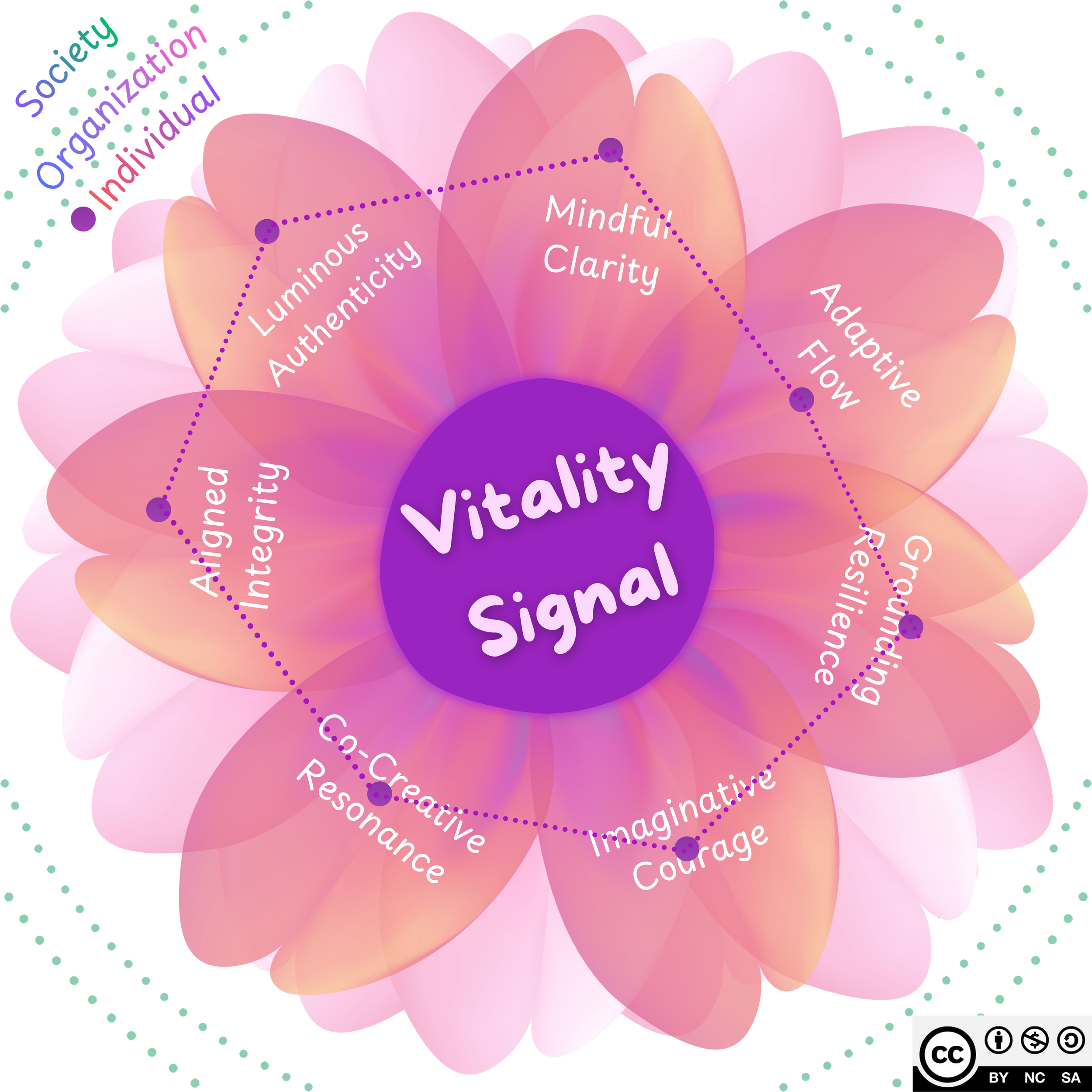
How does this relate to Regenerative Vitality?
Our capacity to be mindful while eating enhances our capacity to hold and ground our physical body. It also provides an opportunity for us to develop a deeply reflective relationship between food sources (non humans), like the plants and animals, the ecosystem ( water, soil, sun, wind, fire, beyond) that created space for them to interact and grow, and the supply chain social systems that deliver such food to our plates at every moment. As we slow down, we turn a mindless consumption process into a mindful presence as human beings in a much bigger world.
⭐Caroline & MAGIC
Caroline Hobkinson trained at Central Saint Martins in Fine Art before earning her master's in the Anthropology of Food at SOAS, and that double formation — the artist and the researcher, the visceral and the rigorous — is precisely what makes her work so hard to categorise and so easy to feel. She has lectured on food rituals for Unilever, Disney, and Barilla; created immersive installations in galleries and public spaces worldwide; and co-founded WhiteMirror, a sensory innovation studio that uses neuroscience to understand how we experience the world through our bodies. Her magic, as she names it herself, is "finding absolute amazement in how other people think, and finding beauty in something that could be quite gory to other people." It is the willingness to look directly at the uncomfortable — the feast, the sacrifice, the loneliness behind the coffee queue — and see not a problem to fix but a question worth holding. She has said that the table is a place where we become aware of who we are, where "all previous meals come together in an endless succession of memories and future associations." That is her gift to the people who encounter her work: the reminder that every meal is also a kind of archaeology, and that if you pay attention — really pay attention — eating is one of the most honest things a human being can do.
Creative Process (non-linear): Develop + Iterate Outlines & Drafts: Human + ai, Guest Alignment Feedback: Caroline Hobkinson, Final Alignment: MAGICommons, Initial Publication: May 1, 2026
