Strengths First Leadership | Maria Laws
In fast-moving innovation environments, strengths-first leadership creates cultures where diverse teams thrive—beginning with authentic presence and the practice of looking closer at what people already bring.
The Smile That Changes Everything
When asked how she'd invite an alien to play, Maria chose "the biggest, most genuine smile I can possibly muster." It's more than friendliness—it's a deliberate signal of delight and curiosity.
This matters when leading teams that blend engineers, educators, and strategists. In rapidly evolving fields like AI and learning technology, everyone questions whether they belong. Maria, VP of Learning Development at AHURA AI, addresses this by openly sharing that she lacks a tech degree. That admission signals curiosity matters as much as credentials. When leaders demonstrate authentic presence—visible belief that everyone brings value—people contribute their unique perspectives.
-
MAGICommons Podcast (00:00)
With every closer look comes an even better question. It reminds me of how people talk about space, that wonder of the horizon of what's unseen. I know that came from our thinking, the wonder of, is this how it is? This is amazing. Wait, what else is there? Let me look a little bit more. What's gonna be my noticing today that's gonna keep me thinking about it for the rest of the evening? Something you can refresh for yourself. You can always find newness, even...
in this zoom screen if you choose to.
Jiani (00:31)
welcome our special guest, Maria
Maria Laws (00:34)
for having me.
Jiani (00:35)
is a award-winning educator, author, and thought leader in the space of AI and skill development. She's currently the VP of learning development in AHURA AI building cutting
to empower communities worldwide. And returned from Dubai she got awarded as a global learning development leader That's cool.
before EdTech and AI, she has been a professional dancer.
Maria Laws (01:04)
you
Jiani (01:04)
and K-12 educator and instructional coach. And she's also taught in UC Berkeley integrating arts and STEM education to engage diverse learners
it's quite an interesting
So the goal of today's conversation is to explore the concept of strength based or strength first leadership. So we'll explore what that means and then how we can potentially apply this strength first leadership within ourselves and with teammates that we play together with. So, all right, let's get started.
Maria Laws (01:38)
Beautiful.
Jiani (01:45)
B B B. In front of you lands a spaceship and out walks a friendly alien. If you were to use one word, one sound or one movement to invite the alien to play, what would that be?
Maria Laws (01:55)
You know, I'm going to go with the thing that is my initial response to everything I'm ever encountering, whether it be a person, a plant, my first coffee of the morning. And that is just the biggest, most genuine smile I can possibly muster. I think that says so much as an invitation and setting expectations that I'm going to be delighted and inquisitive. So yeah, I'm going to go smile.
Jiani (02:20)
That's beautiful.
And I think as you smile, something also is very beautiful is your eyes. Like when you smile, I see sparks coming from your beautiful eyes.
Maria Laws (02:28)
I think you've got me
thinking about what is it, Tyra Banks talking about smizing for her America's Next Top Model that you don't just smile with your lips, right? You're smiling with your whole self. know, that smile is emanating beyond any particular facial feature. And it's sort of, it really is you and an invitation.
Jiani (02:51)
Yes, yes. So you're being you.
That's beautiful. And I think the topic, the strengths first leadership also
reflects the way that you embody leadership in your space and by talking with you, meeting you, and this is the vibe that I get is the, the strengths first leadership. always, you're, always have a keen eye to first witness and spot and also share what strengths that you've seen in the other person that you're talking with. And so this is magical. let's dive deeper So what is strength first leadership?
Maria Laws (03:25)
Yeah, you know, I love this phrasing that you're using. Oftentimes, we talk about like skills base or strength space, but strength space leadership. I love the way you're framing this. And it's got me thinking about, so I have a science degree and I was a science teacher for a lot of years. And then I got an art space degree, in addition to kind of my dance life. And it really there's this one phrase that we talk about in art making practice. And it's called
you know, close looking. And I guess you could say in science world, it's observation, but close looking sounds so much better, right? And the idea is like, you always want to step in and look a little bit closer because the closer you look at something, the more you find.
Jiani (03:53)
close looking.
Maria Laws (04:05)
And so I think being a teacher for so long, you're focused on these gaps and you're dealing with quote unquote, classroom management, which is always sort of a negative thing, right? You're trying to get everyone sort of on the same non-chaotic page. It's not particularly strength-based. That's not what's happening there. And so in that, it can be like that. So this idea of the closer you look, the more likely you are to find something wonderful.
when it was given. And I don't mean their tone. I just mean everything about them. I wasn't sure they were really in my corner. Whereas if it's coming from someone that you believe really wants the best for you, you can have some very hard conversations. And they don't feel like you've been broken down. They feel like offered in the right spirit. So I think yes to strength-based and naming things.
but it has to be in a genuine relationship of care. And that takes time and trust and sort of emotional intelligence for you as a leader to kind of be very intentional about building that. I think that's one. But I would also give an example. I'll give a really simple example. So when I first decided I was going to start integrating art, like modern art and stuff, into my chemistry classroom, which is not necessarily the most intuitive fit for.
for most folks right away. I started really simple. When students came in the room, I might have a picture up on the screen. And it typically would either be something like I took like a microscope, electron microscope picture or something really small, but it's blown up so the perspective is a little different. And then I would ask students not what it was. I wasn't asking them to guess what it was. I asked them to give me a headline, almost like a comic strip or, you know, for this thing. So meaning...
So I might wind up in the room getting to see already someone knew that was a piece of pollen and a nose and a nostril even though it looked like an alien
in space like in the galaxy it did not look anything like that like I could already tell who might have some Expertise in this area or some interest in this area that I wouldn't have been able to get probably as Interestingly enough in a way that invited everyone else in as opposed. that kid got it
Like, this was funny how they named it. And then the students who didn't necessarily have an experience with it already were intrigued about what we were going to talk about. And they got to have another way to impart a contribution to the team, which was some delight, some creativity, some innovation, some humor, things that not everyone has. And I know that might sound like a small thing.
But for a student, we have to remember, particularly for students, in your everyday career life, your goal is to find something you're good at, and then you do it every day. But in school, every hour, you switch to something else that you're probably not very good at yet, and you most likely didn't want to do. So this idea of kind of lowering the expectations for an entry point, you don't have to know the right answer to participate. Let's all share it. And then we can enjoy the humor.
Great idea, love the creativity, and let's move into what it actually is. And what are the things, now let's take another close look at it. What questions are coming up with you now that I gave you this hint? And that space, I think that's what art really kind of like opened my mind about. Even something as simple as if I had done nothing else, Jiani if I had not pursued it any further to create more in-depth like units, just that action every day.
For me, finding interesting imagery, either from modern art or from science, and presenting it with interesting prompts that were not what they were expecting already, that's modeling innovation and other things, and then inviting a different way for students to engage with me and each other and with science. Even if I had done nothing else, I think that has such a big shift in the room around culture.
I want you to win. appreciate everything you bring. Now let's make it bigger and better for all of us across the board. And that is a very vivid memory for me. have goosebumps thinking about that small, brave, like, OK, I don't know if I'm going to be in trouble for doing this thing that does not look right away like it's going to be worth the time. It was very clear within the first week. This was absolutely worth the time.
Jiani (08:20)
Beautiful. My heart is receiving this energy.
So how does that apply in the business context? Because you are leading this fantastic team in an AI education company in a startup world. And I would assume the context will be much more intense. So how do you transfer that?
Maria Laws (08:41)
Yeah
So,
yeah, and I feel like innovation in general, but particularly AI, you know, which is the only thing any of us are talking about every day. And so half the people we talk about don't really know exactly what AI the letters mean. And then the rest of us who do know stuff, it changes in the next hour. Like this is a very rapidly shifting landscape and it's exhausting the fatigue of that. And how hard it is to get to a place of familiarity. And I think one of the things around
close looking, that framing of just look a little closer. What else do you notice? What do you have questions about? What could be possible? That is the way that you can become less uncomfortable with ambiguity. And I think that it sounds, it looks a little different. I'm not flashing up modern art pictures in my product dev team meetings at 6 a.m. on a Tuesday, but it does mean a mindset or a philosophy about what
Jiani (09:32)
you
Maria Laws (09:37)
how I'm gonna approach the problems or the newness of everything every day. Like what's possible? Wait, have we related all the ways? Like, and just inviting the strengths or naming them, because another thing in product dev is things often aren't exactly what you want. My colleagues have told me being an engineer is pretty much the question of the day is what does it work today? The engineering philosophy. Like that's just what you get used to and that can either be funny.
Jiani (09:57)
you
Maria Laws (10:01)
Or it can be sort of like resignation or it can be like intrigue and that close looking vibe or mindset. think for me, particularly as we engage folks outside of product development that are in maybe sales or marketing, business development, that may also not be feeling super comfortable with AI, but they've got to, they're excited to move forward with our mission based work. But how do I remind them that they have a very real place at the table and that.
they do bring strengths. And I think some of that is in the
and the kind of culture of the room that I get to help support and to set. But I also think is also by leading by example. And I know for me as a former teacher, I have a chemistry and biology background in terms of my academics. And then of course, I have a teaching degree and an art degree. I did not have a tech degree. So even by me being in the room and not looking completely overwhelmed.
Jiani (10:52)
You
Maria Laws (11:03)
is a very good place to start. That we are all doing this together. We're happy that you're in the room and we need you. Let's look a little closer and see what's possible from your perspective, your entry point. And I think that that goes a long way of getting some very creative output from maybe places that may not seem predictable at first. But I also know that was done for me, Jiani, like the person that recruited me into the company.
saw something I didn't, strength space. They saw things that I didn't, or maybe I saw them, but I didn't apply them to AI. And they're like, no, you are the person. I'm not integrating anyone else. This is what it is. You are the person. And just really trusting that space, this person wanted me to win, wanted the company to be to win. And that gave me the courage to look a little closer, to think about what could be possible.
Jiani (11:39)
That's amazing.
beautiful. What do you, how do you, how do you think childlike wonder play in this ability to look closer and see those trends? Are they related or?
Maria Laws (12:06)
Absolutely.
think that's, you know, I think even for me in having a science major, you know, at first I wanted to be a music major. played the flute. I was very much obsessed with flute playing in high school. I'm very musical kind of family and I was very much obsessed with my flute. I, you know, I definitely, ⁓ I was good at school in general, but that was the thing I spent time daydreaming about when I probably should have been doing maybe a little bit more.
Jiani (12:16)
I didn't
Maria Laws (12:32)
problems in class, but it all turned out fine. But I will say one of the things that I think art and music and science, the reason why science felt like an okay thing to switch over to. So when I started majoring in college in science, I was a freshman, I switched over. And it wasn't a hard transition. One, I did have a good background in science and math. My mother was a...
chemist with the FDA when she was a young woman. So science was a part of my upbringing for short. But I understood how delightful it was to go, wait, I thought that was just a cell. And we drew a picture of something called the endoplastic reticulum. I know the mitochondria is the powerhouse of the cell. Don't have any clue what that means. But the more detail we got into, the more interesting it became, because I could have better.
Questions about well, wait, what is that? How does that work? And then you a little bit deeper and then I think that idea of With every every closer look comes an even better question I'm even talking about this. I I was so into I feel like the way I felt about cells Was probably it reminds me how people talk about space that wonder of the horizon of what's unseen I felt that way and the other micro direction and so I know that came from
art life and art thinking, or they're so closely related to the wonder of, is this how it is? This is amazing. Wait, what else is there? Let me look a little bit more. Whether it be into the actual concept of science or the scientist and how they figured it out. There's so many ways to think about this. And I think for me, that smile, that welcoming,
What are we going to talk about today? What's going to be my noticing today that's going to keep me thinking about it for the rest of the evening? That is a constantly eternal, something you can refresh for yourself. You can always find newness, even in this Zoom screen, every day. You really can, if you choose to. And I think that that is, I think that is.
a really powerful thing to keep in mind.
Jiani (14:42)
simply asking a question what's new things that you were able to see today where that what where do you see it
Maria Laws (14:48)
Say again, what do I see?
Jiani (14:50)
So what's one new thing that you can see by close look as a prompt?
Maria Laws (14:56)
yeah, so when I say fosuiking,
I also mean like, again, this idea, so we have this little museum thinking routine would say, I'm seeing, I'm thinking, I'm wondering. So I'm seeing is like, I'm seeing it's a blue flower, you know, it's really very like just observation. And then, you know, I'm thinking how interesting it is that it's a very different blue than this one next to it. I'm wondering why, how do they deal with interact with the sun? Or I'm wondering how they, this idea that you have this,
kind of like framework for your kind of exploration or discovery. And it always ends in wonder. Like, wow, that is really interesting. gosh, you those two are related. Like, there's always a reason. For example, my students and I are always really interested thinking about, you know, when you're little, you learn that, you know, leaves are green. But when you look outside of stuff, they're not all the same green. And some of them are decidedly not green. They're very dark brown. They're red. And this idea of thinking about how that led into a whole like,
Jiani (16:00)
Art is the process rather than an end product. And the process itself is action, emotion. And that fits perfectly in a startup world where we are constantly building things together through the process.
Maria Laws (16:13)
I agree. mean, yes, at the
end of the day, you have a thing, right? But that is just literally a small microcosm of the entire build. And it's something replicable, like that performance, that dance choreography, this feature, you know, has, it had its moment, but the way that we work together, how we choreographed, the way that we are kind of attending to the next feature, you know, those things you can expand out.
You move beyond. I think that's been really powerful for me to see this sort of overlap in all these spaces, the classroom, the stage, and now here in the tech, the boardroom, and the tech lab. There is more similar to them than not. And I think the more that I've leaned into that, the more I've been able to give the best value and contribution and also feel
apart in that way.
Jiani (17:06)
One of my biggest hope is for the future generations currently and still at the early stage is to walk into a world where their strengths and talent are being recognized and as the anchor to help them grow and develop. Just there themselves is a piece of art. It's always evolving, always developing. And there are people loving people who
really see their talent and their strengths and really anchoring in that space and bringing that as they grow and they develop and that could potentially reduce a lot of anxiety, a lot of stress, lot of potential depression and everybody get to see their value on a day to day, minute to minute, second to second basis. That would be just
such a heavy weight getting lifted by just by the simple approach.
Maria Laws (17:56)
You know,
I so agree and I think working with teenagers, both high school and university, you know, I feel like sometimes the stereotypes we have around, know, adults are so rigid and kids are so open. No, they're not. They're in this identity space and it's sort of, I'm not my parents, I'm this person, I'm this thing. And they've got like this one central theme that they've centered around in their early stages of thinking about their identity, right? And I think a lot of that
we could do more work to help them see you're so much more than that. Yes, and. The idea that I started a professional dance life in my early 30s, that was not on the bingo card. When I told my parents I was going to be on television, on ESPN or whatever, I think they laughed and it was not rude. think I was the most cooperative. I got the most cooperative award on my high school softball team. Jiani, that's not a good award.
So, you know, why not take it a little bit further? And if you change your mind or it doesn't seem like it works fine, but don't, I think just don't cut off the journey. I would also say, you know, this is not for everyone. You know, I also know I'm a particular, you know, personality type. I am curious. That is going to be how I am forever. But I think I see people taking themselves out of things they care about, feeling like they should. The good on the other side of it is the nice thing about becoming a more mature kind of veteran.
Jiani (19:05)
You
Maria Laws (19:16)
career person is that you do have a lot more confidence in your own competence and you are more centered on what it is that you really want for yourself. So I think just attending to that, again, pay attention to that, give space for that. know, Jiani, you and I were talking right before we got onto the call about this breathing routine that you had us do together to kind of center. And I just, it really got me thinking about how little I've attended to that.
And how powerful that was to have that moment going, wait, why am I too busy to do that four minute thing that just really set us up for an incredible conversation? Once you decide that something has affected you, don't brush that aside. And a lot of things become possible that you had decided were not when that is true.
Jiani (20:01)
Beautiful. So it's kind of like we are close looking and we started with close looking to the outside, the events, the other people, the people that we work with, the product that we're going to build.
And as we evolve our conversation, we're moving into looking close within noticing when we see something, what is our bodily responses to it? How do we feel? we feel the tinkling? Do we feel a desire? Our body wanted to move just like
took on the dance. So it's like, oh, I like how you say you give space. You give space so you can look closely, observe and see how your body and your mind, not just your mind, because we are overly overly using our
But our body, how our body are responding to the things that we see and we experience. It's a close looking within.
Maria Laws (20:55)
You know, you got me actually thinking
about even AI, like I really did not know anything about AI. wasn't really, I'll be honest, my little art and self-self, I really...
did not need to learn AI. I really would have been fine not learning about AI in my mind, right? But then I'm here going, okay, I'm gonna try this new thing. This person believes me and I can see what he wants me to work on. I'm excited. But how do you connect to something that you didn't have a connection to? Well, you do have a connection to. And the reason that was a connection for me that again, I can feel in myself and it's what makes the hard things feel less hard.
Jiani (21:12)
you
Maria Laws (21:30)
And innovation life, startup life is hard. It's amazing, but it's hard. And I realize this now and I say it so often because I don't think I really named it before, which is what really connects me to my best self, my best driving forward, expanding out skills or making a contribution is a sense of impact. This idea of a mission, the thing that we're building is going to help bring learning.
to communities that don't have access. And you're like, okay, that makes this impossible thing that I'm doing that I know nothing about doable. That makes this thing that I don't know anything about. And I could technically go my whole life more probably at this point and not know about it. Just keep teaching cells and art. That would be fine. But I'm here now. And now I really do want to know about the difference between deep learning and machine learning. All right. I do want to be the person on the product dev team that's analyzing the data and creating video labeling protocols. Like I'm going to be that person.
And it's going to be engaging even when it's not because it's connected to something incredibly important to me personally, which is how am I helping? How am I helping the world? And I think you can resonate with that not just around tasks or new ideas, but even things like parenting. Not every part of parenting is great, but you're focused and you're attended to a bigger or higher calling. And so I don't think I...
I mean, obviously I was a teacher before, so this should have been obvious, but naming it this way has really, I think, made, again, it a lot easier to deal with the ambiguity and uncertainty that is innovation, particularly at this leading edge of innovation, and around more broadly even things happening in the country and the world, know, the uncertainty of things, this connection to purpose. I can feel it.
and it gets communicated to others too, which is very helpful in helping again that culture to keep us focused in the right way.
Jiani (23:25)
just feel so content and so happy and so hopeful just by being here listening to you sharing your stories, your approach. So what do you think overall is your magic then?
Maria Laws (23:29)
and we hope this is a good story for some.
You know, it's interesting. think sometimes the way it's told to me, know, because sometimes I think I haven't really, I think all the things I've told you, like the things we see in ourselves, like, that's just Tuesday. It's not a big deal. But then people reflect it back to you. Like I'm getting the same four themes all the time here. This happened to me early on in my career, my startup, I was taking like a women's leadership class and they had us do an exercise.
where they had us ask, they said, pick five people, maybe someone from your home life, someone from your work, someone in your friend group, whatever, you decide and ask them the same question. When I'm at my best or Maria's at her best, she is. And then give an example. And reading out what people wrote that do not know each other in very different spaces or phases of my life, and all of them saying literally the same thing was
really powerful. And I think I'm still kind of even like two years later, thinking about it about it wasn't a surprise to hear it, but to hear it so strongly and the same. There was something really powerful about thinking that I am represent I have been myself my whole life like it hasn't I thought there'd be some changes over time, but this thing still is the thing and it is that idea of sort of
hopeful energy. Energy is the word, but I don't think it even means like upbeat. think it's deeper. Like you said, there's something hopeful. And I do think it comes back to that curiosity that, you know, I don't know, that I, that idea of what, what's possible. What is this? Ooh, I want to know more. I think that that is a very renewing.
Jiani (25:07)
lifting.
Maria Laws (25:14)
mindset to be in and if you aren't in it yourself to see someone else being that way in that moment you get to experience it or to to at the reminder that that is open to you as well and I think that that idea of um energy or uplifting energy I don't know I think that is something that before that experience um hearing from others
would have dismissed uh and said well that's not you know that's not a
work skill, who needs that? I need to work on my computer science degree. That's what need. I need to go learn how to code, but that's not what's needed for, particularly in learning. mean, yes, I work in product dev, but I also do a lot of engagement with learners, even in the AI space. And learners don't need another coding class. There's many experts with many years experience doing that. They're needing something else. And that is sort of the foundational.
sense of confidence in your own competence that I can do. And so it's got a chance for me to reframe what I saw as a personality, I guess a personality trait into something bigger.
Jiani (26:32)
I think sort of a mindset, embodied, lived mindset. Philosophy.
Maria Laws (26:38)
Yeah, even like a, I don't know, it's not even like a philosophy of like, because I'm not
trying to do it. So it's sort of intuitive, but I do think it is a choice. And I will say having to, you know, I taught for over 25 years, I was a high school teacher. And then during that time, was also at UC Berkeley as well with undergraduates for another four years during that time. That's a very long time to be a teacher.
Jiani (26:43)
way of being a choice.
Maria Laws (26:59)
And so I don't know how easy it is to maintain this space when you're doing that same thing as lovely as students are. It can be very challenging to not get jaded, to not feel less hopeful because it's hard to change institutions. know, they're always the same budgeting concerns. There's a lot of the same recurring roadblocks to being your best teaching self or to have students have the most that you want them to have. Right. So
When I think about that, that I did not leave the classroom because I was burnt out. I still engage with students every single week on my own time in a classroom type of setting or experience learning experience. I think it has everything to do with this mindset or this sort of approach to life. Yeah, I think it is bigger than just a personality trait. It's almost like a necessary quality to
engage in a world that can feel like it isn't trying to work with you. Yeah.
Jiani (27:58)
Yeah. What would be one simple daily practice that you would recommend our audience to try in order to keep the sense of wonder, the sense of curiosity, the sense of always being able to look closer, to find something new and get excited and just keep the grind making it more attractive and fun and natural.
Maria Laws (28:23)
You
know, I know, and I'm sorry, I don't remember the name of the book. That's Julia Cameron's book around like an art practice. And I can't remember the name of the book. I feel really bad about it, but I read this book. ⁓ it's a really powerful book, Julia Cameron. can look her up. but, there's this one practice that I really, it's not a daily thing, but I do do it every single month. ⁓ she talks about having, she calls it an art date.
Meaning an intentional time. It's not you and some girlfriends at brunch. It's not you on a date. It's you, you yourself and you. And you do something artful. It doesn't mean you have to go see, you know, the Lion King for a bunch of money. It could be that you go to an art museum and you're only in the, you know, free downstairs space at SF MoMA. It could be that you see a friend at a local like theater production, or it could be that you go on a nature walk by yourself.
And the idea is to allow the world in, in a wandering space. You know what I'm saying? Like it's not for a purpose. You're not taking tourist friends that are here for, you know, the weekend to see the sights. It's you, yourself, and you. And there's something really powerful about that. I just did it last weekend. I got on BART. I went to SF MoMA to see the Amy Sherald exhibit. It was incredible. I stopped by for a coffee upstairs.
And then I walked back to Bart and came home. So it was about two to three hours total time. And it reminds you that things are bigger than the world that you live day to day. And there was something about the quiet space is very powerful and may not be something that most people find that they have time for. Or when they do at home, they're fatigued. So they're just watching television, which is fine. But this is something out in the world, low stakes and it's consistent.
Every time I do it, I feel better about everything. Even if I didn't know I was feeling bad about anything, I still feel better about things. I feel more connected even though I was alone. And I think there's something very
Jiani (30:13)
You
Maria Laws (30:27)
about that. And I do really recommend that people try to find a way, once a month is not a lot to ask, two hours once a month, for you to have some time for you that, no, you're not working out, you're not doing some errands you needed to do that you've been putting off.
This is you and an artful world experience. Incredibly powerful.
Jiani (30:47)
That's beautiful. I'm thinking because recently being able to connect with a few guests that works in the virtual reality space. And I would hope that in the future the devices will be much easier and more accessible and lighter. And then I can just sit there and I would like to venture into.
a creative world that's not being seen before and just go on this two hour of visual and visceral exploration and adventure. That would be very nice.
Maria Laws (31:21)
See, that's really cool. I would not have thought of that. So now that's on my list. And the idea of it being an art form doesn't have to be museum, you know, but that was where I went, right? Or once I took like a pottery class, which was awesome and very interesting because a person asked if I was a dancer and I said, what? They're like, the way that you work with the clay is like it's a partner. And I was like,
Jiani (31:25)
Hahaha
Maria Laws (31:40)
Okay, I may not ever take a pottery class again, but I am on board for how you're discussing this, right? It might be that you take a poetry class or it might be that you do something in science. It's just something that's not a task, something you need to do. It's just something engaging with either a community or with creativity of some kind. yeah, I've always kind of wanted, it's funny, now that I work from home, it's actually been harder for me to do them.
I think because in the startup life, know, I open up my computer when I get up in the morning and it stays up until I go to bed. That's not good. These art spaces are good for me to remind myself about a little bit more balance, a little bit more balance. And also it allows more inspiration. As we talked about earlier, it's hard to collaborate if no one's bringing anything new to the table.
Jiani (32:12)
work.
Maria Laws (32:28)
And so much of our creative life is nonlinear. So who knows? Something could come up at that Amy Sherald exhibit that could wind up a feature. You don't know. You cannot close off that opportunity to allow yourself to have more to think about and to connect to the things you already know.
Jiani (32:44)
always opening the doors for the unexpected inspirations that could come from anywhere. A portal to the universe.
Maria Laws (32:52)
Absolutely.
And it doesn't mean you have to like the thing. I remember once I got invited to a concert of a particular kind of music. I won't say it now because I don't want anyone to be mad about it. But yeah. And after I left, I was like, yeah, never doing that again. But we had a really, I mean, we, meaning the audience and I, it was, it was intriguing. And I now had a lot of curious thoughts about.
Jiani (33:11)
Yeah.
Maria Laws (33:14)
Why? Who? I have questions. Like I did learn something and it was different. And that's okay that I will, I can promise you, we'll never do that again. And also it was worth the time. I think anytime for me, we can expand out that. I love that idea. It is helpful. It can't ever not be helpful to you. So anyway, I really do, I really am struck by this idea of a date night with yourself, if you will, whatever that might be.
even if it's just going to an amazing meal. yeah, once I went to the Culinary Institute, a little further up near wine country, just for like a 4 p.m. like early dinner by myself, and it was awesome. That was an artful experience too. By myself, thinking and observing, interacting. I highly recommend that as a practice to kind of stay grounded beyond your role and identity at home and at work.
The Art of Close Looking
Maria's leadership framework comes from art-making practice. The principle she calls "close looking" is elegantly simple—the closer you look, the more you find. What began as observation in science teaching evolved through art into discovering wonder in the details others rush past.
Applied to leading people, this means actively searching for strengths to name and amplify rather than scanning for gaps. In teaching, Maria displayed microscope images and asked for creative headlines instead of right answers. In product meetings, she asks, "What else do you notice?" In conversations, she listens for what someone dismisses as ordinary that's actually exceptional. This fundamentally changes dynamics—when people feel seen for contributions rather than evaluated for deficiencies, they lean in rather than protect themselves.
Strengths-First Leadership in Practice
Traditional leadership operates like quality control, scanning for defects and gaps. But Maria noticed high-performing students carried as much stress as struggling ones because no one felt seen for their strengths.
"No one is served," she reflects, "if all we ever do is close looking for the worst or the missing."
The shift requires three interconnected changes. First, create low-stakes entry points where diverse expertise contributes. The person articulating how a feature serves communities brings value as essential as the engineer building it. Second, build trust before feedback. Growth conversations only work when they come from someone who "wants you to win." Without that foundation, even helpful advice lands as judgment. Third, name strengths explicitly. When leaders point out how someone synthesizes complexity or asks breakthrough questions, those observations become anchors during difficult projects.
When Strength-Based Leadership Gets Real
Leading from strengths doesn't mean avoiding hard truths. It means balancing support with accountability that expands people.
Maria learned this while transitioning from education to AI. Despite positive feedback, imposter syndrome was horrible. Her supervisor's response demonstrated strength-based accountability. First, a reframe: "The value is in the timing of delivery, not the level of quality of delivery." Delivering 30% in an hour is more effective than waiting two weeks for 100% because the team has 0% now.
Then came practical support: a check-in scheduled for 40 minutes out. That structure broke the procrastination cycle without shame. Maria recognized the pattern from teaching—tight deadlines bypass perfectionism anxiety.
Honest feedback also means addressing when strengths aren't leveraged. If someone excels at strategy but drowns in details, name it: "Your superpower is seeing the big picture; let's structure your role to maximize that."
Sustaining Your Leadership Practice
One essential practice is monthly "art dates": 2-3 solo hours doing something artful and purposeless. Visit a museum. Take a nature walk. Attend a poetry reading. These aren't productivity hacks. They're deliberate pauses that remind you the world extends beyond daily crises, and they consistently spark the unexpected inspiration that reconnects you to creativity and possibility.
Equally important is cultivating wonder as your default stance. Rather than pretending expertise you don't have, make "What's possible?" a genuine question. This curiosity doesn't just make uncertainty manageable—it models the exact mindset your teams need when navigating ambiguity alongside you.
Finally, anchor your work in mission and impact. When you know your work brings value to communities without access, impossible tasks shift from overwhelming to doable. Mission transforms tasks from performances to be judged into contributions toward something larger than yourself—and that reframe changes everything about how you show up.
When you consistently attend to strengths—in yourself and teams—"they go places well beyond what you could predict," Maria observes. The real challenge is maintaining that attention when old gap-finding habits feel more efficient. But where diverse teams must innovate at impossible speeds, strengths-first approaches aren't luxury philosophies. They're competitive advantages that expand what everyone believes they can create—and for whom.
⭐ Maria & MAGIC
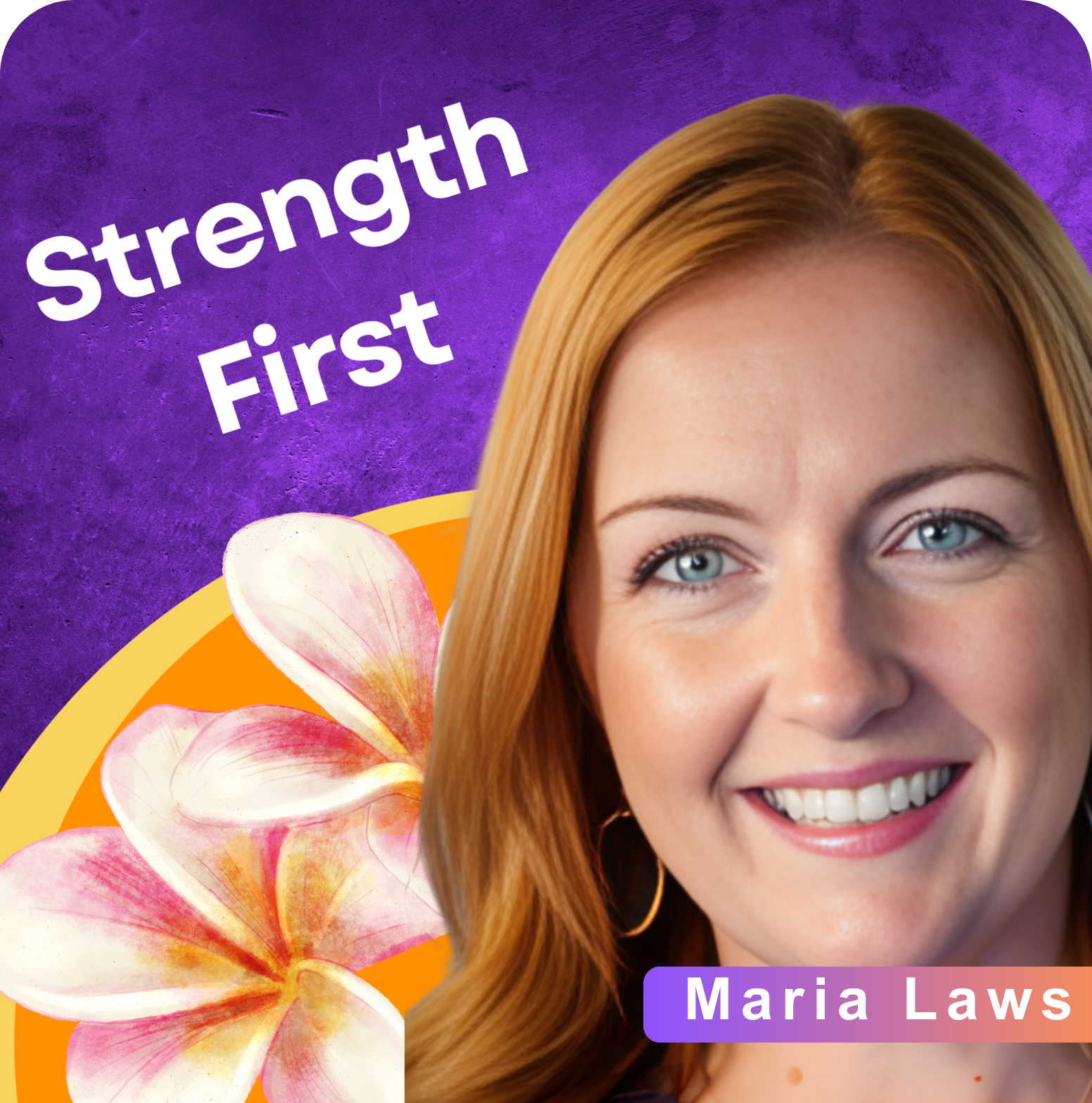
Maria Laws is an innovative educator and leader with over 20 years of experience bridging the arts, science, and technology. From pioneering arts-integrated STEM curricula to her current work in the tech sector, she leverages cognitive science and creative pedagogy to build transformative learning solutions. Maria is dedicated to fostering inclusive, future-focused environments that empower both learners and educators through storytelling and emerging technology. She brings a hopeful, uplifting energy that isn't just personality—it's an embodied philosophy of possibility that transforms every space she enters. Her superpower is making others feel seen for strengths they didn't know they had, while simultaneously modeling that curiosity and wonder are renewable resources at any age.
Creative Process
Discuss Potential Outlines: human + ai
Create Initial Drafts & Iterate: human + ai
Guest Alignment Review: Maria Laws
Ensure Final Alignment: Dr. Jiani Wu
Initial Publication: Feb 7, 2026
Disclaimer:
AI technologies are harnessed to create initial content derived from genuine conversations. Human re-creation & review are used to ensure accuracy, relevance & quality.
