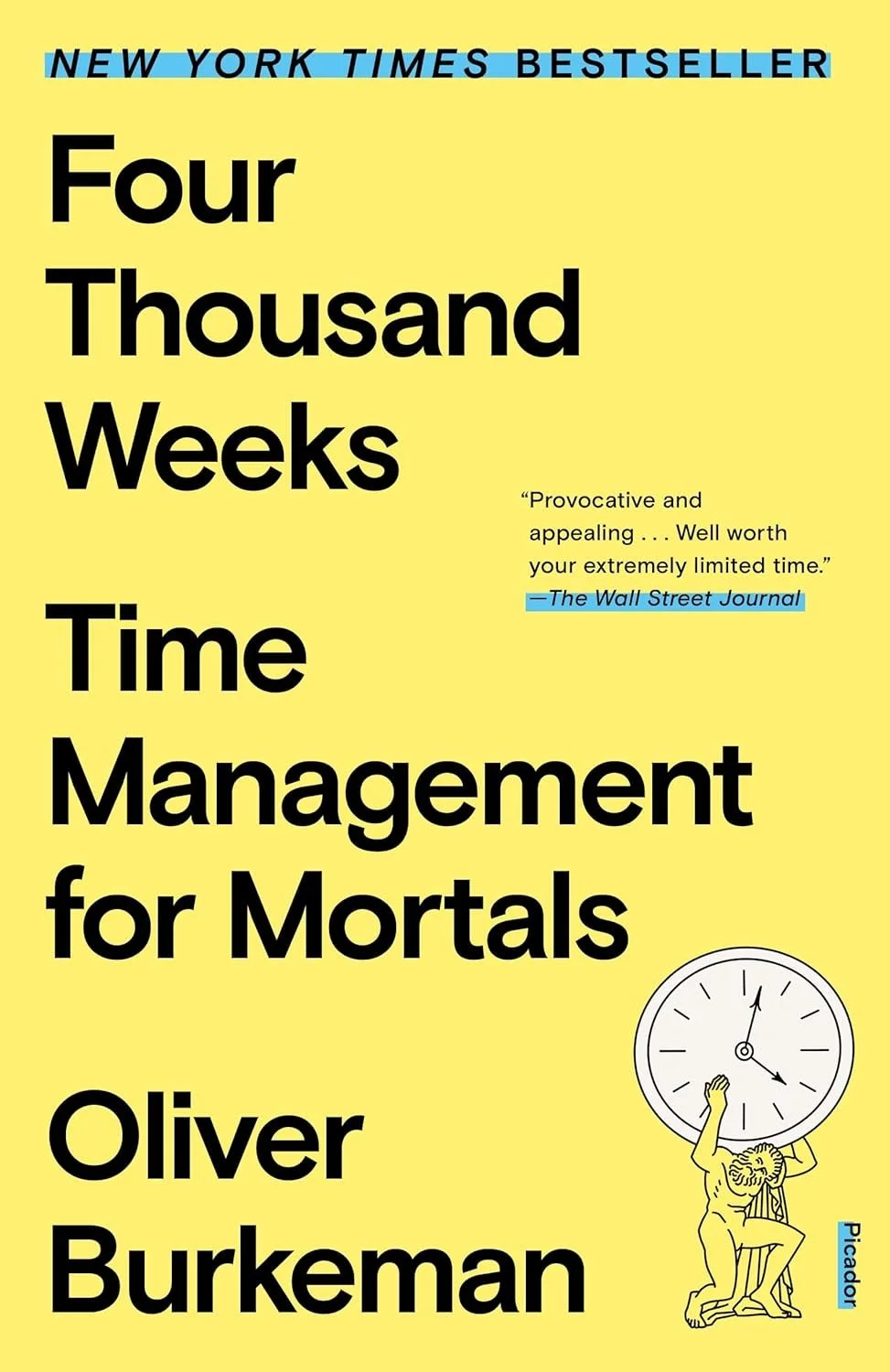
Four Thousand Weeks | Oliver Burkeman
Why it is included: We are obsessed with "efficiency"—the delusion that if we just rush fast enough, we can clear the decks and finally relax.
Burkeman uses rigorous philosophy to prove this is a trap.
We have roughly 4,000 weeks to live. The list will never be done. The more efficient you become, the more work you attract.
We include this to cure "Existential Overwhelm."
Burkeman teaches "Cosmic Humility": the shift from trying to dominate time to simply inhabiting it.
It is "Adaptive Flow" applied to the calendar, arguing that the only way to find peace in a chaotic era is to surrender the need for control, embrace our limits, and fully occupy the present moment.
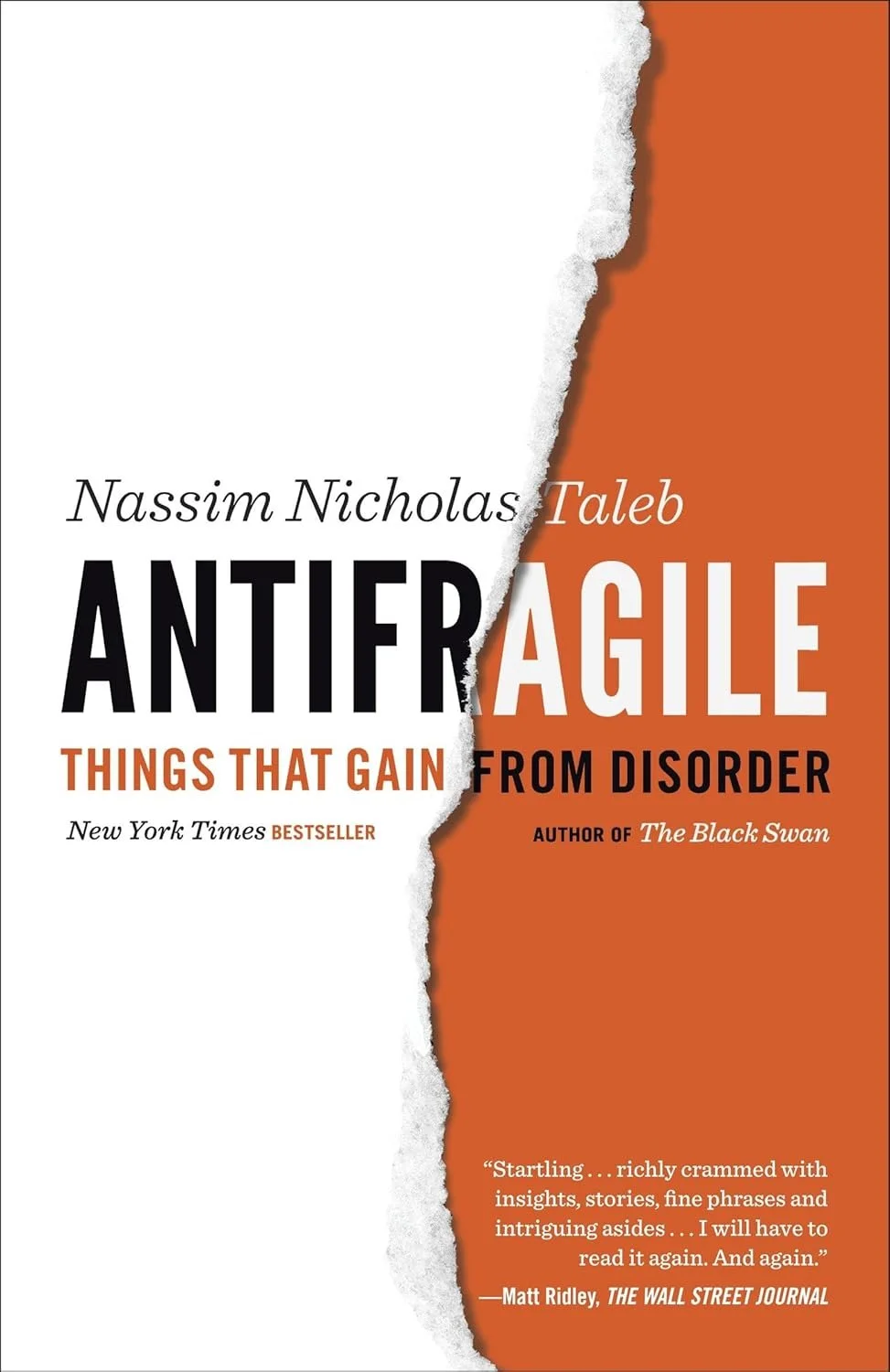
Antifragile | Nassim Nicholas Taleb
Why it is included: Most people think the opposite of "fragile" is "robust."
Taleb argues this is wrong. "Robust" just resists breaking (like a concrete wall).
The true opposite is "Antifragile"—systems that actually gain strength from disorder, stress, and chaos (like the human immune system or a forest fire).
This book is the strategic doctrine for the transition.
We are entering an era of high volatility (climate shocks, market crashes).
If we build "robust" systems (dams, rigid bureaucracies), they will eventually snap.
To survive, we must build "antifragile" systems—decentralized, flexible, and capable of learning from mistakes. It teaches us to stop fearing chaos and start designing for it.
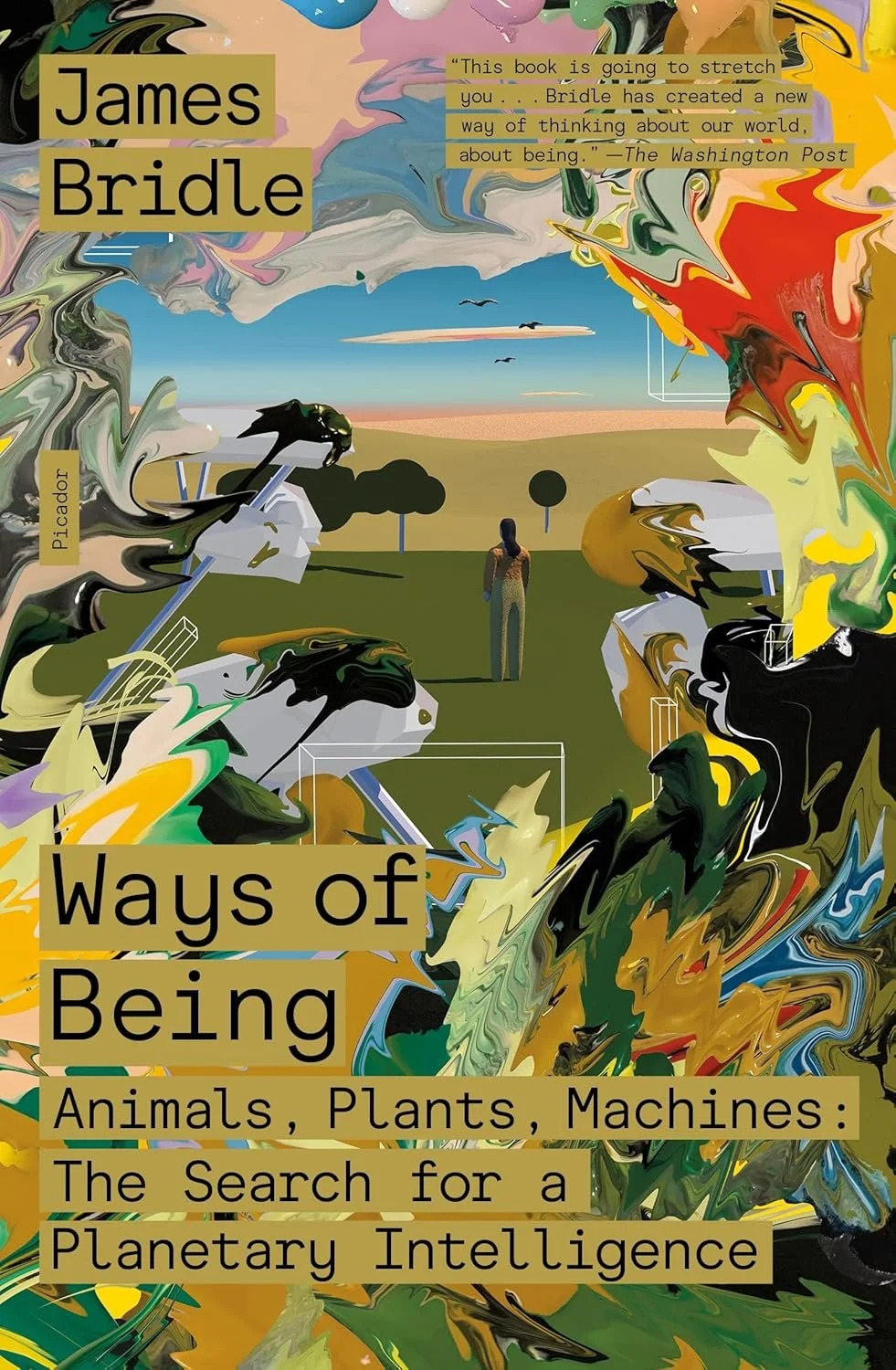
Ways of Being | James Bridle
Why it is included: We usually define "Intelligence" as "what humans do" (logic, language).
Bridle explodes this narrow definition. They explore "More-than-Human Intelligence"—from the slime molds that can solve mazes to the complex social networks of forests, and even the "alien" intelligence of AI.
Bridle argues that AI should not be built to mimic corporate humans, but to help us commune with the planetary mind.
We include this to upgrade our definition of technology.
Instead of building AI to dominate nature, Bridle envisions a "Internet of Animals" and a technology stack that integrates us back into the ecology. It is a visionary text that creates a new alliance between biology and code, moving us from "Artificial Intelligence" to "Ecological Intelligence."
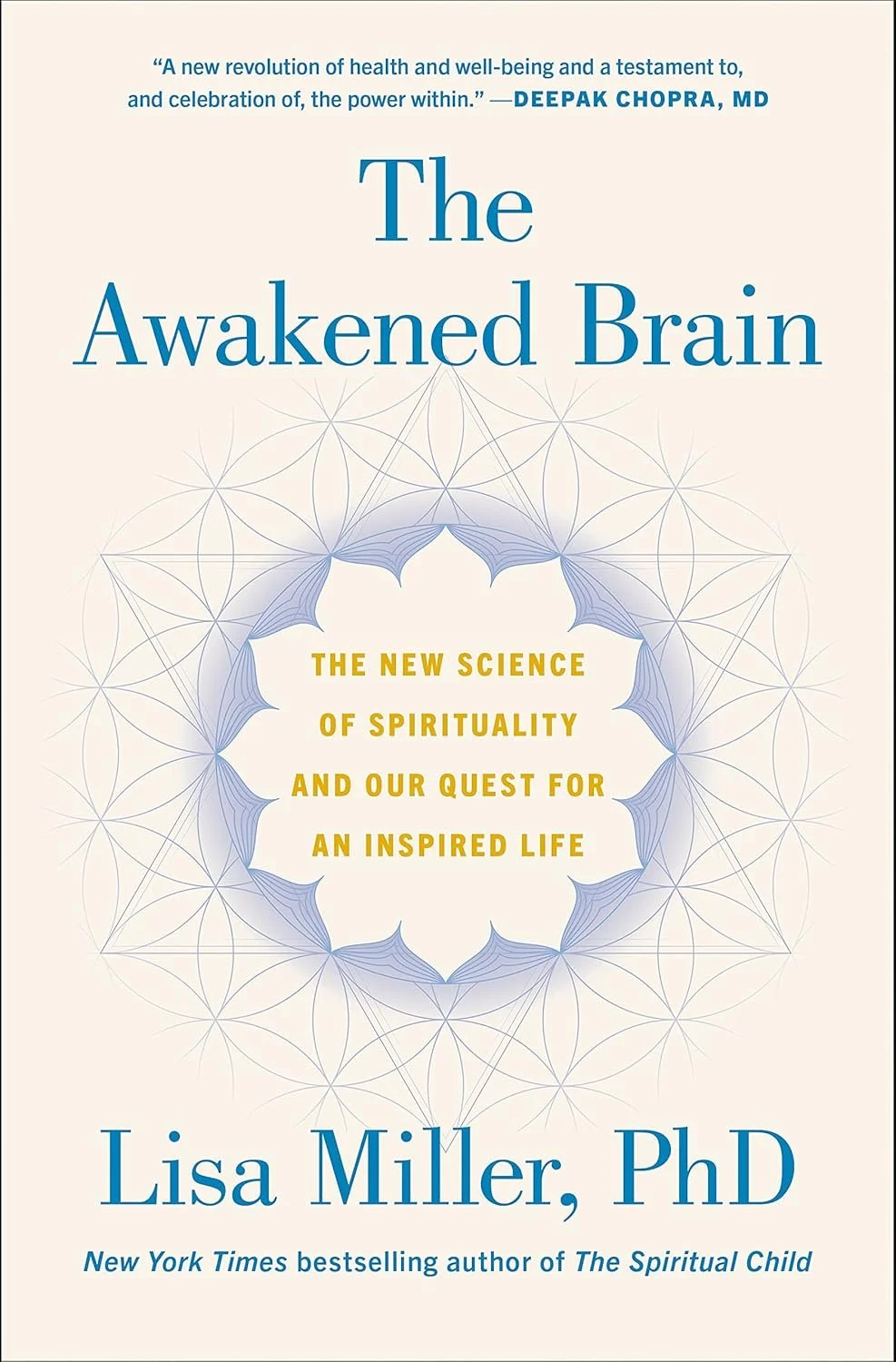
The Awakened Brain | Lisa Miller
Why it is included: For too long, science and spirituality have been treated as enemies.
Dr. Lisa Miller ends that war with data. Using MRI scans and longitudinal clinical studies, she demonstrates that the human brain has a natural, innate capacity for spiritual awareness.
When this capacity is developed, the cortex actually thickens, and the brain becomes significantly more resilient to depression and anxiety.
This book is included because it moves spirituality from a "nice-to-have" hobby to a "must-have" biological asset.
It validates that "seeing the world as alive and connected" is not a delusion, but a sign of high cognitive health. For an emerging civilization, this provides the medical justification for integrating spiritual practice into education, healthcare, and daily life.
The Matter With Things | Iain McGilchrist
Why it is included: This is the magnum opus of the new era. While his earlier work (The Master and His Emissary) diagnosed the neurological split in our culture, this book provides the cure.
McGilchrist synthesizes neuroscience, physics, and philosophy to prove that the "scientific" materialist worldview is actually a delusion created by the brain's Left Hemisphere.
He argues that the Left Hemisphere has "unmade the world," reducing living complexity to dead fragments.
He creates a rigorous, empirical case for a thriving reality—one that is interconnected, purposeful, and sacred. It is included because it provides the hardest intellectual armor for the softest spiritual truths, proving that "Wholeness" is not poetry; it is physics.
Finding Radical Wholeness | Ken Wilber
Why it is included: For decades, we relied on Wilber’s A Brief History of Everything for the map. But maps evolve. In this magnum opus, Wilber updates the "Integral Operating System" for a new era.
He synthesizes human potential into five specific practices: Waking Up (Spirituality), Growing Up (Emotional Intelligence), Cleaning Up (Shadow Work), Showing Up (Purpose), and Opening Up (Creativity).
It reminds us that we cannot just meditate (Wake Up) and ignore our trauma (Clean Up), or work on our career (Show Up) and ignore our ethics (Grow Up).
It provides the unified "Theory of Everything" for the human soul, ensuring that our transition to a thriving civilization is not just a technological upgrade, but a consciousness upgrade.
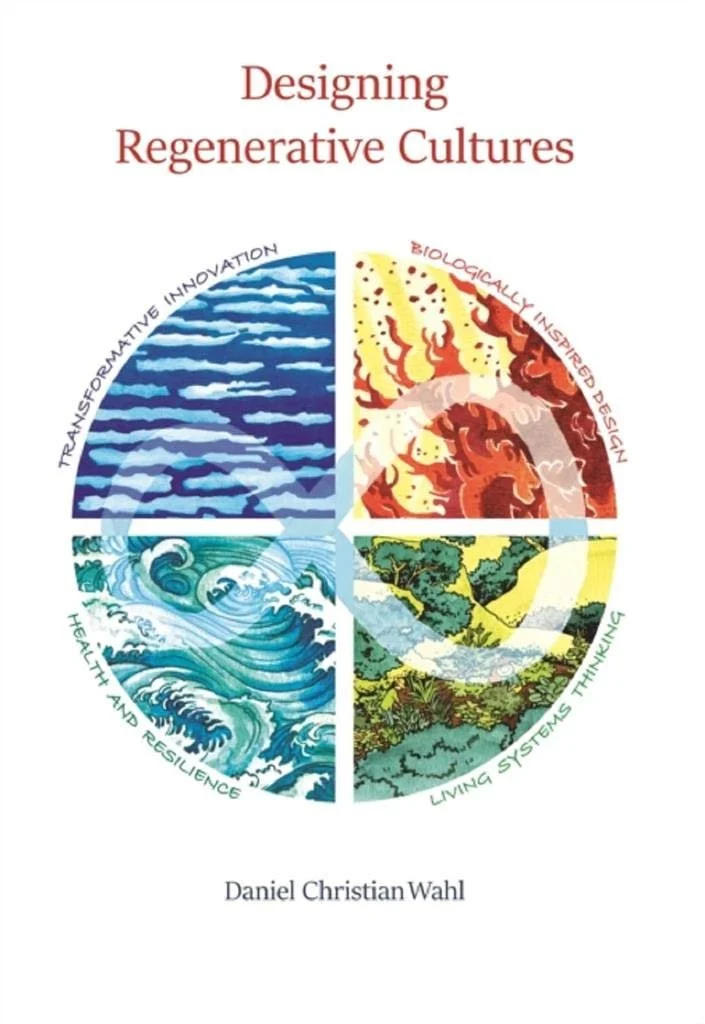
Designing Regenerative Cultures | Daniel Wahl
Why it is included: This is the master textbook for the "How." Wahl argues that "sustainability" is no longer enough—it is simply "doing less harm" or maintaining the status quo.
Because we have done so much damage, a thriving civilization is inevitably regenerative—it heals the systems it touches. We design economies, agriculture, and cities that leave the place better than we found it.
This book is included because it synthesizes biology, design, and sociology into a coherent framework.
Wahl asks the crucial question: "How can we create cultures that mimic the way life itself works?" It moves us from the mechanical questions of "efficiency" to the living questions of "vitality" and "resilience."
It is the blueprint for ensuring that our solutions are aligned with the 3.8 billion years of R&D that nature has already done.
The Great Work | Thomas Berry
Why it is included: Thomas Berry was a "geologian"—a monk who studied the earth. He reframes our current crisis not as a political or economic problem, but as a crisis of cosmology.
We don't know who we are or what we are doing here. Berry argues that we are currently a "disrupting force" on the planet, and our "Great Work" is to transition into a "benign presence."
It moves the conversation beyond "saving the environment" (which implies we are separate from it) to "participating in the dream of the Earth."
Berry gives us a new story of the universe where humans are not the rulers of the planet, but the universe is becoming conscious of itself. It provides the deep, soulful "Why" that is strong enough to sustain us through the difficult "How" of the transition.
The Age of Resilience | Jeremy Rifkin
Why it is included: For 200 years, humanity has been driven by the "Age of Progress"—an ideology based on efficiency, speed, and the domination of nature. Rifkin argues that this age is dead.
The climate crisis has shattered the illusion that we can control the planet.
We are now entering the "Age of Resilience," where the goal is no longer to be efficient (lean and fragile), but to be adaptable (redundant and robust).
We include this because it provides the new economic operating system.
Rifkin details how we must shift from "Globalization" to "Glocalization," from "Financial Capital" to "Ecological Capital," and from "representative democracy" to "distributed peer governance."
It is the comprehensive blueprint for how a civilization survives on a volatile planet, moving the conversation from "How do we grow?" to "How do we last?"

Sapiens: A Brief History of Humankind | Yuval Noah Harari
Why it is included: To align with a thriving future, we first understand the "source code" of the past. Harari’s central thesis is that Homo sapiens dominates the planet not because we are stronger or smarter individually, but because we are the only species capable of believing in shared fictions. Money, corporations, nations, and human rights do not exist in the physical world; they exist only because we collectively agree they do.
This insight is the ultimate tool for a transition generation. It reveals that the systems we feel trapped by—capitalism, the nation-state, the legal system—are not laws of physics. They are stories. And stories can be rewritten. Sapiens permits us to look at our previous structures not as immutable realities, but as scripts that we have the power to edit. It is the foundational text for liberating the collective imagination.
Cosmos | Carl Sagan
Why it is here:
This is the secular scripture. While White describes the shift, Sagan helps us feel it.
He connects our personal lives to the 14-billion-year story of cosmic evolution, reminding us that we are "starstuff pondering the stars."
Crucially, his "Pale Blue Dot" passage acts as the "Overview Effect" for the rest of us.
It grounds us in deep scientific humility.
It is the necessary emotional counterbalance to the ego, reminding us that every "Supreme Leader" and "Superpower" in history has lived and died on a "mote of dust suspended in a sunbeam."
Quantum History | Slavoj Žižek
This is a bit a dangerous read.
It shifts the Steward from a "passive observer" to a "Quantum Agent."
By confronting the "void" at the center of our current crises, we learn to stand at the Zero Point of potential without the need for old ideologies or false certainties.
It harmonizes the conflicting duality between "what is" and "what could be" by proving that the status quo is merely one possible outcome of a deeper quantum field.
This grants each one of us ultimate permission for Pure Intention: the realization that because the system is incomplete, our unique "Gift" has the power to fundamentally rewrite the history of the whole.